
Ron Goodwin
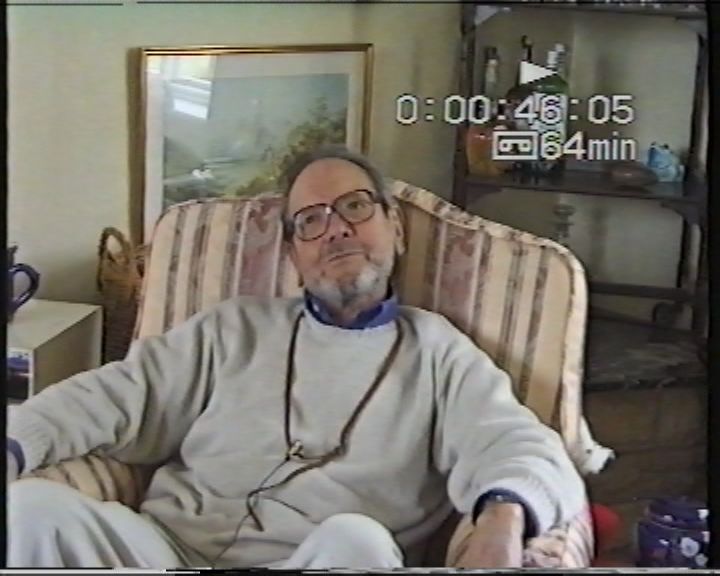
Family name: Goodwin
Work area/Craft/Role: Composer
Industry: Film
Websites: Composed by Ron Goodwin, Wikipedia, MusicBrainz
Unknown Speaker 0:07
Right? So this is, have you done the introduction? So don't need to do that.
Speaker 1 0:18
So it's the ordinary sort of interview about your life and careers. I'm sure you've done 100 times before 99 okay. Where were you born?
Unknown Speaker 0:34
Plymouth in Devon,
Unknown Speaker 0:36
and were you born into a musical family?
Speaker 2 0:39
No, no, my dad was a policeman, and he was actually in the London Metropolitan Police, and in those days they didn't have a ministry of defense police force, so the Met used to do all the government establishments as well, and he and a lot of other policemen got sent to Plymouth to do security work at Devonport duckyard. And they were down there a long time, actually, and he met my mother, and they got married. And then my brother was born, and then another was born, who unfortunately died as an infant. And then I was born, and when I was nine, I think they suddenly realized all these policemen were still in Plymouth, and brought them all back to London. And so I moved to London when I was nine years old, but I was actually the son of a policeman and a sailor's daughter, Wendy. No musical connections, really.
Speaker 1 1:44
So when did you first take an interest in music? Did you have any
Speaker 2 1:48
musical training? Well, yeah, I was always quite interested, although, I mean, in those days, it was the thing to have a piano for the children to have piano lessons, you know. So I used to go from the age of about five for a weekly piano lesson with a lady called Miss Adams, I remember who seemed to me to be extremely old. She's, you know, she's probably only about 40, but when you're young, everybody looks extremely old and but I wasn't really enthusiastic at that time. You know, it was a bit of a bind to have to go every week for this lesson, and I didn't bother to practice. And then I sort of frantically practice for half an hour before I worked for the next lesson. And I wasn't really interested in music until I got to Willesden county grammar school, where they had a school orchestra. And the music master was a tremendous enthusiast. His name was Vernon J Todd, and I heard all these kids banging and blowing and scraping things. And I thought he sounded marvelous, so I went to Mr. Tod and said, Please, sir, I'd like to join the orchestra. And he said, Well, we're very short of brass players at the moment. If you'd like to learn to play the trumpet, you can join. So I did that, and after a few lessons, I mean, it must have sounded ghastly, but they let me join the orchestra, and I really got hooked on it. Then, you know, I mean, I loved playing in the orchestra. I loved the sounds of the instruments made. And unfortunately, that school was evacuated. This was at the beginning of the war, they were evacuated to Northampton. And because I lived out of London, I lived my mother and father had bought a house then in ryslip in Middlesex, so they thought it wasn't necessary for me to be evacuated because there wasn't a lot of bombing going on in rice dick, you know. So they got me transferred to the pinner county Manor School, which is quite near where I lived. And they had a school orchestra, but it wasn't on the same scale as the Willesden one, but what they did have, there was a wonderful music teacher called Mrs. Magson. And she said, Well, if you want to, you can take music as one of your subsidiary subjects in the what we call the matriculation exam, which I suppose would be GS ces now, or whatever they call it. So I did that, and it was kind of the rudiments of music, you know, two and three part harmony writing and the sort of basic theory of music was the in the curriculum for this particular subject. Does it come to you fairly easily? Yeah, I loved doing it, you know, it was a it was something that I sort of felt I really wanted to do, you know, as. Other kids might have been tremendously interested in football or art or whatever. I was tremendously interested in the theoretical side of music, really. And then we formed a dance band at the Pinn county grammar. And we used to go out doing gigs, you know, very poorly paid gig, sort of seven and six a night, you know, and all that sort of
Unknown Speaker 5:24
thing. So playing trumpet, yeah.
Speaker 2 5:27
And it all started from there, you know. So it was really from the age of about 11 that I really became hooked and didn't really want to do anything else to earn a living.
Unknown Speaker 5:43
Were you interested in cinema at the time as well?
Speaker 2 5:46
Well, I was. I mean, insofar as everybody was or appeared to be in those days. I mean, we used to go to the pictures twice a week, without fail. No question, you know, we went on Wednesdays and Fridays, you know. And we saw everything, whether it was good, bad or indifferent. And so cinema was very much a part of our lives in those days. I mean, it was before television. So if you wanted to see anything, that was the way you did it, you know. And I still look back with tremendous affection to the old days of the of the big cinemas. You know, he'd been, maybe be pouring with rain outside, and you would have walked a mile to get there, and but once you got in there, it was wonderful. You know, even though there was steam riding off everybody's wet clothes or whatever, it was a wonderful atmosphere to be in, and particularly if you were in a cinema where they had an organ. That was the icing on the cake for me. So when the organist came up from the bowels of the earth playing his signature tune, and you know, oh, it was, wow. It was a tremendous, wonderful atmosphere, which, alas, is gone. Now, you know doesn't exist anymore.
Speaker 3 7:03
Can I just pause, just check your switch as a black switch on your they're further down the wire. I don't think it's quite No, then switch down No,
Unknown Speaker 7:19
but I haven't said no. Said, Did you
Speaker 1 7:34
go looking for cinemas with all games, yeah?
Speaker 2 7:43
Well, most cinemas had one in those days, all the major ones, you know. And I ll tell you another thing I used to love, which came a little bit later, when they had cine variety. Do you remember cine variety in the West End? Marvelous. You know, when you get
Unknown Speaker 8:01
one? Estelle cinema,
Speaker 2 8:02
yeah, no, I was thinking the one, I think the Leicester Square, was it the Odeon or Leicester Square theater? Les square theater used
Speaker 1 8:11
to, I used to live near the elephant in Castle, and I know they had a big cinema there.
Speaker 2 8:15
Yeah, it was marvelous, because you got a wonderful feature film about, I don't know how long the stage presentation was, but it seemed like about an hour, you know, and at the Big West End center was the standard was tremendous. I mean, I remember George mellacrino, who used to conduct a 50 piece orchestra in the pit of
Speaker 3 8:38
the Leicester Square theater. Billy cotton did him, yeah,
Speaker 2 8:41
that's right, you know. I mean, it was wonderful, and you got the movies as well, you know, it's terrific. That was a really good idea. I'm surprised that didn't survive, really. But like everything else, it had its day, you know? Now, it's a, it's a TV meal in front of the box, isn't it? Which doesn't really compare,
Unknown Speaker 9:03
or one film and nothing else, yeah, yeah.
Speaker 2 9:09
Oh, you got the adverts in those days, yeah. They went on forever. Well, you always got a second feature in those days, which sometimes is better than the first feature. And looking back on those days, I mean, those second features used to be very funny. We thought, you know, people like you Herbert, I was never a great fan of The Three Stooges. I myself, thought they were a bit corny. And I wasn't really a great fan of Charlie Chaplin To be honest, you know? I mean, I could appreciate what he did, but it didn't sort of get to me, you know, but guys like Hugh Herbert used to make me laugh tremendously. And the other, what's he called, was it Edward Kennedy, who used to do the, sort of done the master of the double tape. And. Oh, they were colossal comedy actors and actresses, those people and we just sort of took them for granted, didn't we? They were there, you know, you knew they were going to go up into in the second feature.
Speaker 1 10:15
So what happened when you had to finish? Did you finish school at 16?
Speaker 2 10:21
I really, I think I was 17 when I left school. My mother thought music was all very well as a hobby, but you should have a proper job, you know? Yeah, so I got a proper job as a junior clerk with an insurance broker who was their real office was in the City of London. But because the war was on, they were evacuated to Northwood, which was quite near where I lived in rice. And they had this lovely, big house in Northwood with orchards in the garden and all that sort of stuff. Very pleasant place to work, but that was fine, but I wasn't interested in the work. You know, by this time I was doing gigs in the evenings. We used to do they were known as the USO camps. They were the American army, you know, sort of entertainment section, bit like our answer, really. And we used to go to all these clubs, the Americans ran and all over the place, really. I mean, it staggers me how we sort of kept a job and did all that as well, because we used to go up to places. I remember going to Scunthorpe and, yeah, you know, they would provide us with the transport we either, you know, went on the train, or there was a sort of shooting break that we all piled into, and they sent a driver to drive it and all that. And you know, I was doing all this and doing this job at the insurance brokers, and I was also in those days, everybody used to have to do what they call fire watching, where you had to go on the roof of the building and look out for in Century bombs. You know it was. It sounds ridiculous now, but it's quite a serious matter in those days, and we were on a rota for fire watching at this insurance company. And I happened to be on the rota for the same evening as the boss's secretary, and I thought this was a wonderful opportunity, while she was up on the roof to practice my trumpet, you know. So I used to be down there doing all the exercises from the R van shooter and all that sort of thing. And she must have complained to the boss, because one day he stepped me and said, Go. When he said, You are not suitable here, you'll obviously never be any good at anything but music. My advice is for you to go and get some kind of a job in the music business, but you'll never be any good in this business, you know? And that was that. But fine. Well, I didn't like to tell my mother I got the sack. So one of the guys who used to do these American gigs for me was a chap called Bill Davidson who worked during the day for a music publisher called Peter Maurice. He was what they called their Trade Manager, which meant they sold the orchestrations to
Unknown Speaker 13:28
people just Bill Maurice,
Speaker 2 13:31
M, a U R, like Morris, M, a, u r, I C, yeah, but pronounced Maurice because it sounded posture. Anyway, I said to Bill, look, I've been fired from the insurance company. Do you know of any jobs going in the music business, you know? And he said, Well, I'll have a work with one or two people. And next time I saw him, he said, I spoke to Natt Lewin, who was the head of the arranging department at Campbell Canales publishers, and they need a sort of copyist and trainee arranger. So he says, Could you go and see him at 10 o'clock on whatever morning it was, which I'd end, to cut a long story short, I got the job, which was wonderful because it was
Unknown Speaker 14:20
that because you were so talented,
Speaker 2 14:22
no, I think he knew that I he could see that I knew what I was talking about, and they thought they could teach me to do the job properly. You know, it's kind of an apprenticeship, really. And I mean, that was terrific, because we were working on arrangements of whatever pieces the publisher was promoting at that time for all sorts of bands and orchestras. You know, from when I started, I was just copying the puns, you know, the Natt Lewin and Harry Stafford would do the actual orchestration, and I would copy out the the individual. Parts from their scores, you know. But then as time went on, well, it couldn't be that long. It wasn't there for a year, you know, but they entrusted me with one or two arrangements that they were too busy to do, you know. And I gradually kind of learned the the art of being able to arrange for any combination of instruments really, you know. And after I've been there for, I mean, time seems to have telescoped. Now, I don't know how long it was. Must have been a year or so. I saw an advertisement in the Melody Maker, which was a trade paper, stood around the Melody Maker for a young arranger wanted by orchestration Bureau, so I applied, and found that it was run by two guys called Harry gold, who also had a band called Harry gold with his pieces of eight, and another man called Norrie Paramore, who later became the recording manager for Columbia Records, and they were running this thing called the Paramore gold orchestral service. It sounded great. Anyway. I think I got the job because, not only because I could do the orchestration, because I could play the trumpet, because Harry gold was having problems. You see, his regular trumpet player was in the Navy, and so he could only play with Harry gold and his pieces of eight when he was on leave. So they had to get somebody in to fill the gaps, you know. So I became the arranger who worked in the office all day and played the trumpet with the band at night, you know. I mean, we used to work ridiculous hours in those days, but it didn't seem to matter, because you enjoyed it all. So I mean that that was my first job as an orchestrator, really. And then shortly after that, I saw another job advertised an arranger was wanted by a publishing company, and I applied for that and got it. It was with a guy called Edward Casner, who started this company, Castner music, and I stayed with him for a bit, and then we got other arrangers in, because it all expanded, you know. And there was Jeff love and Frank Barber, Burnell, Whibley, Harry south, you know, John Gregory, we're all in this arranging department together. And I started doing a lot of freelance work with people who liked what I did for them at the publishers. And said, Will you do it for me on a private basis, you know. And then we had a guy who was a singer called Dick James, who came to work at the publishers as a song lover, as we call him, you know, which was persuading people to perform the song. And he was still actually working as a singer at the time, and he got himself a contract to do some records for the parlor phone record label, which was one of the EMR group. And there was a young assistant manager there called George Martin, who was assistant to Oscar price, and George gave Dick James his contract. And Dick James said, Well, I'd like this young guy, Ronald Goodwin, to do my arrangements and conduct for me. So George said, Okay, fine, you know which I did. And then George gave me a contract to record on my own as Ronald Goon and his orchestra and to accompany other artists. So get your own orchestra. Was that, oh, they were session players, you know, we used to, George used to say, I think you should do, you know, a couple of titles from maybe there was a film out at the time, like Shane, for instance, you know, he would say, I think you will record the theme from Shane and something or other on the back. So I do the arrangements. We book The musicians, record it, and that would be go out under the name Ronald Goon and his orchestra. But it I mean they could have, as I said, he's been mountain valley in his orchestra they were the london session players,
Unknown Speaker 19:25
all from Archer Street.
Speaker 2 19:27
Well, no, they were a bit better than Archer street. They didn't have time to go to Archer street. They moved from one studio to another. So, I mean, that was the start of my kind of recording career. And there was a George's secretary at that time who later became his wife. Was a lovely lady called Judy Lockhart Smith. And her father was the chairman of the film Producers Guild, which was. Company that made short films and advertising films and documentaries and so forth. They were down in St Martin's lane. I don't know if there's they probably don't exist anymore. Anyway, he was Ken Lockhart Smith, who was the chairman of this group. And they, I don't know if they owned Merton Park Studios, but they certainly did all their work. And, you know, after some must been two or three years, Judy knew that I wanted to write music for films, and she spoke to her father about this. And one day she came in and said, Oh, Daddy says they're making a documentary about an oil refinery in corinton, and they'd like you to go and see him about it, you know. So I went along and saw him, and that was my first documentary film. It's called the corridor achievement. Terribly boring subject. It was, you know, and then I started doing a few documentaries for them,
Speaker 1 21:07
most of you already were interested in. Did you see it as a full time career, or was it just a sideline to what?
Speaker 2 21:14
No, it was what I wanted to do, really. I mean, all the rest was kind of a stepping stone to that, you know, and I got really involved in these documentaries, and I was fascinated with the actual mechanics of making music fit and film.
Unknown Speaker 21:33
How did it happen?
Speaker 2 21:38
Well, I remember the the guy that taught me quite a lot about all that was an editor called Cliff boot. And not Jeff foot, but Cliff boot. Now, I don't know if Cliff boot still alive, or where he is, or I totally lost touch with him, you know, but he and I used to get in the cutting room and look at the film and, I mean, we sorted it out. The the producer and director didn't anything to do with it, really. And we'd because it was music wall to wall. On those documentaries you did, there was no question of where it started, where it finished. It started at be at the beginning, and finished at the end, you know? And we used to break it down into sections. And he would give me all the measurements and show me how, you know, how many frames per second there were, and all the rest of it. Then he had this big list of conversion charts for converting frames and, you know, feeding frames into minutes and seconds and so forth.
Unknown Speaker 22:40
You have a detailed synopsis for,
Speaker 2 22:43
yeah, well, it wouldn't be that detailed because there wasn't really much in the way of dialog. They were all sort of documentaries with commentary, you know. But we would say, Oh, that's a good place to break the music, you know, because all those children are playing on the swings there. And then it suddenly cuts to a boat going down the River Thames or something. So that'll be section one, you know. And I mean, there wasn't, we know, mark them, one, m1 and all that. So it was only two, two reels for the film, you know. So be section one, section two. But that was tremendous experience in the actual mechanics of making it fit and making it work. You know,
Unknown Speaker 23:26
you had a small orchestra as well.
Speaker 2 23:30
We had quite a big orchestra. For some of them, I'm trying to remember, Cecil Musk produced one of them called Green Islands, which was about the London parks and Jack Greenwood. Do you remember Jack Greenwood? He produced one or two of them, and then I went on to do a few short feature films for Jack Greenwood too.
Speaker 3 23:53
Yes, he went to Pinewood after Gordon Park. Oh, did he?
Speaker 2 23:56
Oh, yeah. He was nice, man. And they were, they started doing short films like The Edgar Wallace series and
Unknown Speaker 24:11
what else.
Speaker 2 24:13
Well, I mean, that's an exam. I can't remember what the others were. Anyway, while I was doing all this, I was also broadcasting for the BBC. I mean, I don't know. I found the time for all this, really, you could do it now, you know. And I was doing a weekly show called Variety Playhouse, summer Playhouse. Rather, Variety Playhouse was the one that Vic Oliver did, and I did the summer one when he was on holiday. It was called Summer Playhouse. I conducted the orchestra for all the acts and all the rest of it, and at the end of this program, every week, they did a sketch. The two compares were Richard Warner, Richard Murdoch and Kenny Thorne. And at the end of the show, there was a sort of 10. In a 15 minute sketch. And they used to invite young film stars as guest artists to take part in these sketches, you know. And they used to bring stars and starlets from the rank organization. And there was a guy who worked for the rank organization in the publicity department called Harold champagne. I don't know if you ever knew Harold Well, Harold champagne was kind of in charge of publicity at rank. And he used to bring these young actors and actresses over to the BBC recording. And he got, he was very interested in music, anyway, and he got interested in me, and it was through him that I got my first feature film. He came to me one day and said, there's this American over here who's kind of minding the office for Colombia. He's not doing much, really, but he's written a film script which is an adaptation of a book he wrote called the Lorelei, and the films called Whirlpool. And he said, I've spoke to him about you, and he liked to talk to you about doing the music for this film. I don't quite know why the script writer was able to make the decision, but he must have had some kind of other influence in being the script writer, you know. Anyway, we went to see him in the office over the Columbia cinema in Haymarket. Forgotten what the name of it is now. Was it called the Columbia? Yeah. Anyway, he had an office over it in, you know. And I went to see him. He's a sort of very serious kind of American, you know, the more the kind of American lawyer type, you know. And we talked, and he said, Okay, if you think you can handle it, you can do it, you know. So I did this film Whirlpool, and we recorded it at Pinewood or at Tennant brother, which was, yeah, when they did all recording. And he liked it, you know, he thought the score was good, which was very good news for me, because it must have been a year or so after that this guy had written the script for Whirlpool. Larry Buckman became the head of production for MGM in Europe, which meant that I started doing all these films for him. You know, I was doing about four or five films a year for him, which was great. I mean, they were all fairly low budget films. We did four Miss Marvel films with Margaret Rutherford, you know, which I think cost about 25,000 quid eaters, I think you know, which is ridiculous. And you know, he made films of Spike Milligan and Eric Sykes and all those sort of things and and then, because I was doing these films, other people became interested, you know, and I found that I got offers from 20th Century Fox and Paramount, whatever you know, You know, the way it goes, you kind of snowball, a bit of a reputation, and suddenly you become flavor of the month, you know. So that's how it all happened, really. But it was all really due to the chain. Was George Martin, Judy Lockhart Smith, the film Producers Guild, Harold champagne. Larry Bachman and that was marker in how long would you work on each of these films would depend on the amount. I mean, an average, average feature film would have, let's say, 40 to 50 minutes of music, if it was a 90 minute film. And in those days, we used to get about six weeks to do it.
Speaker 1 29:09
What stage were you brought in that were fairly late,
Speaker 2 29:12
rough cut stage really, usually, you know, I know editors don't like the word rough cut, do they? But yes, when they had something to show, really, I would usually get a script, which I never liked reading. I mean, I used to sort of speed read them, you know, but I could never really get the feel of a film until I saw it on the screen. Do you know what I mean? Just get it. Just give me some. And they used to change things so much anyway, between the script and the final cut of
Speaker 1 29:48
the film, you know, we started working on something negative. Oh, well, you couldn't
Speaker 2 29:51
do that. You don't have to wait till he got some measurements, you know. But then, I mean, we'd view the rough cut. Maybe two or three times, you know, because you couldn't take a video home in those days. We didn't have any, you know. So you'd have to ring up the studio and speak to the editor and say, you know, Ernie Walter used to do a lot of those things, you know, Jeff foot, all great editors like that, really, you know. But I'll probably ring Ernie and say, Ernie, I need to see the whole movie again, or I need to see reels three to five or whatever, you know. And they'd set up a running in one of the viewing studios, you
Unknown Speaker 30:38
know, contact with the director, yeah.
Speaker 2 30:40
That would come on the spotting sessions. You know what? Once I'd got some ideas going and the editor had got the fine cut, we would then go and run the film reel by reel and decide where the music had to go and what he was supposed to be doing. And in most cases, the director will be there. In some cases not. If he was off making his next Emmy, he wouldn't be there, you know. So you do, you could do it with just the editor and the music editor, or with the editor and the producer and the music editor.
Unknown Speaker 31:21
So pretty much to your own devices.
Speaker 2 31:23
Well, yeah, I mean, if the director was there, they usually had quite strong ideas, you know. They say, I think we need music here because, you know, but it should stop there, because we want to hear all this, the birds singing in the background, or whatever it was, you know. And the phrase I used to hate to hear was, this scene really needs music, because it meant that they mucked up and seen their music was going to save it, you know, which, of course, it never can. I mean, the music can make a bad movie look better, but it can't actually bring it back to life. That's quite a depressing phrase to hear from a director, really. And then, of course, having done all that, the music editor would go away and produce a whole set of cue sheets with progressive timings in feed and frames and in seconds and minutes and seconds. And I will work from those from the cue sheets, you know. And as I say, we didn't have the luxury of a video to to run when we wanted to see anything. Either you had it fixed in your mind, or you went back to the studio to get him to run that particular reel if it was something you weren't too sure about, you know. But of course, the more time you spent running backwards and forwards to the studio, the less time you spent writing the music, really so. And there was always a dreaded deadline drawing nearer and nearer, you know. And then you'd organize with the editor all the peripheral aids that you needed, like click tracks and wipes on the screen and all that sort of thing. And when click tracks very useful if the music was in a steady tempo, because if you'd written it properly, that the, you know, guy got hit on the head on the fifth beat of bar 22 it would work, you know, because if you get to the clip track, it would, it would be bound to happen, you know. But the tricky ones were when it wasn't in a steady tempo, and then you would need a wife, you know, that would you watch it? You'd be holding the note and watch it till the wife got to the right hand side of the screen, then down beating pond. That was very good.
Unknown Speaker 33:53
But it's fascinating stuff. I love it, you know. And I'm only sorry that people stopped asking me to do it really.
Unknown Speaker 34:02
I mean, I did the last film in I did was in 1986
Speaker 2 34:10
and that was in Denmark, you know. And, I mean, I think my final connection with the British film industry, or the film industry in generals, when poor old Hugh Apple retired, because he was Disney's man in England, so to speak. And I used to, he used to invite me to do the Disney Yeah, I think I did five or six. Of course, when Hugh retired, everybody else had either retired or died, and there was a whole new generation of filmmakers, producers and whatever you know. So the phone didn't ring anymore. So I'd had to involve myself in other things, really, but I'm. I'd love to do some more films. Well, we all have our day, don't we, the producers of today. I mean, I'd be highly surprised as a producer, a young, 25 year old producer would be in the standard interest in hiring a 74 year old. It's it's not of a piece, is it? You know, they, they're, they want to work with their own generation. And that's as it should be, really. But I don't have a lot of fun. I wish you had the staff
Speaker 3 35:35
commercials, and they're also animation films that need
Speaker 2 35:41
music? Yeah. Well, you know, obviously new generation. I mean, all the I've got a very good friend, a guy called Jack Stokes lives in main head, which isn't very fun, who's a wonderful, but absolutely marvelous animator, an animation director, you know, and he's worked all his life in animation, but he's not working anymore. Not it's not because he doesn't want to, but, I mean, it's all computerized animation. So Jack and I have a lunch together every now and then and commiserate over but I mean, the stuff he did was beautiful, Mark, the details. I did a Oh, I did three animated films for Reader's Digest that were all made in Canada. And Jack did a lot of the the Animation, Animation scenes those films, and I remember one was the Little Mermaid and the sea scenes that he did in the underwater scenes were absolutely marvelous, you know, I mean, it was real works of art. You know, that's one of his paintings out there. So, you know, I mean, it's, I'm not, I'm not feeling sorry for myself, because I'm grateful for having had what I've had, you know. And I just think that it's right that the young producers should be using young composers. Otherwise, where are they going to get the work, you know? But I think we ought to start a an elderly film production company called the geriatric production company.
Unknown Speaker 37:24
We've got a basis,
Speaker 1 37:28
I was going to say, so we need a set of titles. When we've got our videos, we'll need titles to put on the front of it with a soundtrack so we know where to come Absolutely.
Speaker 2 37:42
I mean, I'm still busy doing, I do a lot of concerts with different orchestras all over the place, New Zealand and Spain.
Speaker 1 37:51
I was listening to the radio sort of not long. One of the times I phoned you, and a new soundtrack of British film music was being, about to be released, and they were reviewing it on the radio. And to talk, they only named about two composers, and I can't remember who the other one was, but one of them, they mentioned his music, definitely yours.
Speaker 2 38:13
Yeah, hello, probably 633 squadron. That's the one they all all pick on battle in Britain. I mean, I and I'm still doing a lot of writing, you know, for library music and that sort of thing. It's not the same, you know, it was a great. It was a great not it wasn't only the work and the what you got paid for. It All. It was the kind of whole being a part of all that was the great thing.
Unknown Speaker 38:44
It was very satisfying working, yeah, and
Speaker 2 38:47
everybody that you work with was an expert and an enthusiast and a teamwork Yeah, that's right, yeah. It was wonderful.
Speaker 1 38:58
Did you feel sort of a bit sort of sad though, that you were sort of only came in at the end, or
Speaker 2 39:07
rather, I didn't came in early. I mean those, well, those Miss Michael films were directed by a guy called George Pollock, who lived over in pinner. Very nice man George was, and he I remember he called me in once because there was a scene in murder ahoy where Margaret Rutherford was or Miss Marvel was supposed to be visiting a training ship for recalcitrant boys, you know, that was where the whole thing took place, you know. And they were all supposed to be singing Rule Britannia. And he rang me up. Said, we tried it today. Ronald, he said it was ghastly. He said that, you know, they're all at the. Boy actors.
Unknown Speaker 40:02
He said, Can you come over and try and sort it out? So I know, and it was bloody awful.
Speaker 2 40:09
They couldn't sing, you know, it was just terrible. So we kind of worked at it for a bit, and then George said, Well, I don't think it's going to get any better than that. Ronald, he said, after all, they're not supposed to be St Paul's choristers. They're supposed to be, you know, backward boys sort of thing, you know. So that he said, let's, let's shoot it, and that'll be it, you know. And that afternoon, she was going to sing along with it to play back my brother. And when she heard it, she refused to do it. She said to hear Rule Britannia sung like that was like trampling on the Union Jack. And in the end, we had to redo it with a choir, with a proper boys choir. And then she was happy. But, I mean, in cases like that, you would get brought in, you know, to do something or other, or if there was, I remember another film I did, which I think was rank, called, it was Morecambe wise, the magnificent two. And there's supposed to be all these Spanish revolutionaries singing the song of the revolution, which I've written anyway, and who was the director of that? Hugh, what was he called you to live over in Denham?
Unknown Speaker 41:36
Oh, known so well everybody would know who it was. So would know who it was.
Speaker 2 41:43
And he got me over there to get all these extras. It was supposed to be revolutionaries singing this song of the revolution. So you occasionally got involved, but in most cases, you wouldn't get involved until the shooting was finished. Really. Well, that was good. You know, it was great to go along and see a new movie, even with scene missing coming up every now and then, you know, a lot of generator noise over the dialog. But it was great. I loved it.
Speaker 1 42:18
Did you get your music into them, presumably. So they weren't studios,
Speaker 2 42:24
yeah, usually they'd be the London central players. Once or twice, we didn't. I did a film for Alfred Hitchcock called friends, and I booked the Royal Philharmonic to play that.
Speaker 1 42:38
How did you happen to get that particular one.
Speaker 2 42:41
Well, I think he had, well, in fact, I know he had a score written by Henry Mancini, which he didn't like. It's not
Unknown Speaker 42:48
really his kind of composing.
Speaker 2 42:50
No, I think it was a question of difference of concept. Do you know what I'm making? I've never heard the Mancini music, so I couldn't give any judgment. I never heard it. Then, I've never heard it now, you know, but I guess it would have been that Henry Mancini's idea of the right music and Hitchcock would be totally different. You know? It makes you wonder why you got him
Speaker 1 43:17
in first place. Really. Well, Mancini think of us, right, like romantic.
Speaker 2 43:21
Yeah, that's right, yeah. Anyway, he rat or the office rang me and said, Would you come and see Mr. Hitchcock tomorrow morning? I think I got it, because I, not long before that, done a film called Where Eagles Dare, and the editor was John Jimson, and John Jimson was also the editor on frenzy. So I reckon, I mean, I don't know this, I reckon that had a bit of a conference, and who we're going to get to do this new score. And he, John Jimson, probably said, I just did this film with Ronald Goodwin. And it was alright, you know. But that's wonderful. That was a nice film, good music,
Speaker 2 44:10
charging around the castle and firing guns at each other. And I mean, it was one of those films, if you stopped to think about it, it was ridiculous. Machine gunners, yeah. I mean, they would have had to have three or four trucks full of ammunition to do all the things they did on the in that first, sorry, I just touched the bike where he was
Speaker 2 44:40
there was there was directed by an American, young American called Brian Hutton. And it was interesting, actually, he kind of knew what he wanted in the music, but he didn't know anything about music, which was quite true of even if Hitchcock, really, you know. Of, I mean, Brian Nutt would say things like, oh, I can hear something in this scene going, boom, boom, boom, boom, you know, well, why you didn't write boom, boom. You knew, knew what he meant. You know, it was quite a good way of kind of conveying with the kind of act. And Hitchcock was a bit the same. I mean, he used musical terms, which didn't mean what he thought it mean, you know, I left there with he sat and talked. We never actually saw the film together. Hitchcock and I, he said, you can run it tomorrow with John Gibson, because I've got to go back to America tonight. Because my if I stay any longer, I'll have to pay tax and all that sort of thing. But I'd like to talk to you about it, you know. And he gave me all these notes which the girl typed up of what he thought the music should do and how he wanted it, you know. And he used phrases like, I'd like the music leading up to the girl leaving the office to be tremolando. Well, tremolando means survival. This is going like this, but I knew what he meant. It gave a good kind of impression of what he had in mind, sort of thing. And in fact, I liked him. I thought he was a marvelous old guy, actually. Yeah, wonderful. But he was so nice. I mean, I think he was worried about the music, and having had this score that he didn't like, you know, so they flew over the first stage recordings as soon as we done, in fact, the first morning the CANS went out to the airport, and, you know, Duke said, Well, of course, you know. And straight off to him in Hollywood, you know. And he called me that night, said, Oh, Mr. Coburn, I've seen the first couple of reels, and it all seems to be going in very nicely. Thank you.
Unknown Speaker 47:08
Oh, that's in the middle of our
Unknown Speaker 47:13
footage in your film career.
Unknown Speaker 47:21
Yeah,
Unknown Speaker 47:23
variety yourself
Unknown Speaker 47:24
with a
Unknown Speaker 47:25
gorilla suit, Robin, Goodwin society too.
Speaker 1 47:28
How can we do a new taping that as well? With a new tape? Well, I wow, I just checked that you're still in faux.
Speaker 2 47:41
Now, there are so many stories about Hitchcock being a miserable old
Speaker 3 47:46
bastard because I did the three films with him during the war. He flew over to do drop some film made some films in French for them. Yeah, that is very particular. He knew exactly yes every set up. He drew it, the storyboards, exactly like
Unknown Speaker 48:09
that, with this music, exactly
Speaker 3 48:13
what he wanted. Oh yes. He knew exactly yeah, because he always used to say he finished the film before, even before it started shooting. He finished it.
Speaker 2 48:24
It's funny to see film clips of him as a young man recently. I mean, he was, he definitely looked better as old man. He was rather sort of fan, funny looking young man.
Speaker 1 48:41
Well, they show a lot that clip of him doing the sound test with any under,
Unknown Speaker 48:46
Oh, that's right, yeah.
Speaker 1 48:49
And they often sort of pick out, you know, the five seconds that he walks past, sort of, uh.
Transcribed by https://otter.ai
Ron Goodwin was an English composer and conductor known for his film music. He scored over 70 films in a career lasting over fifty years. His most famous works included I'm All Right Jack, the Miss Marple films, Frenzy , Those Magnificent Men in their Flying Machines , Village Of The Damned , Where Eagles Dare, Battle of Britain, 633 Squadron and Operation Crossbow.
Images may be subject to copyright. If you are the rights holder and wish any image to be removed, please contact us and it will be taken down promptly.
Disclaimer: The views and opinions expressed by interview participants are personal and do not necessarily reflect the views of the History Project or any of its volunteers, employees or representatives. (See details). Please also see our Takedown Policy.