
Ron Moody
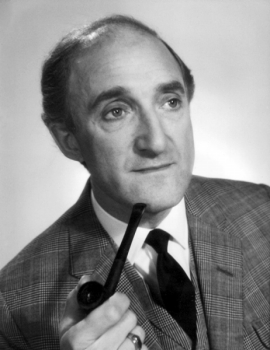
Family name: Moody
Awards/Honours: Golden Globe 1968 Oliver. Moscow International 1968 Oliver. Sant Jordi Awards 1968 Oliver
Work area/Craft/Role: Actor
Industry: Film, TV, Radio, Theatre
Company: BBC
Websites: Wikipedia, The Guardian, BBC News, IMdB
Interview date(s): 24 February 1998, 19 April 1996
Interviewer(s): Joyce Robinson
Production Media: audio
Duration (mins): 191
Please note that the first 5 minites 33 secs of side 1 . are less than satifactory quality. The remainder of the recording is fine.
behp0377-ron-moody-summary
[Transcribed from Joyce Robinson’s handwritten notes. DS]
TAPE ONE
Born 8th January 1924 in Tottenham, one of two children of Jewish immigrants. Ron comments on ‘ethnic/ecological’ movement of same and of being a ‘marginal man’. Inspired to act early by parlour poetry, at home: a successful ‘Shylock’ at school. Evacuated during the war, Ron was called up as air crew. Met Alfred Marks, Frank Muir in Hendon [RAF] Camp shows. Went to the LSE [London School of Economics] as a post-war student, ‘Very happy days’. An ed. Instructor where he had mustered had worked as an accountant for six years previously. Studied sociology, anthropology at LSE. Great friend of Bernard Levin (Chico to Ron’s Harpo in student reviews) such as Place Pigalle, Holiday Farm, Amusement Only, Rigor Mortis and Intimacy at Eight. 1952-53. Marginal Man, Stick it Below the Line; plus performances at ‘hops’ [dances. DS]. Discovered at one by Ronnie Cass and Peter Myers. Torn between working for PhD and showbusiness, when £3 grant ran out. Auditioned for Cass & Myers, and Amusement Only. Replaced Geoffrey Hibberd. Six years of reviews followed. Went on to play a year of Oliver! – seven-year run! (Comments on the ‘hogging’ of long run productions these days in theatres). Next a third Adults Only and Candide. An interest/passion for clowning developed at this stage; began work on Joey. Robert Lewis (director, Candide) very helpful in master-classes. In 1970 ran a one-man show, with success in Westcliffe Move Along Sideways. Bill Bourne, journalist/critic also supportive as well as Peter Coe/Vivienne Martin. Carol Reed a most helpful supportive professional director, taught Ron film acting. Ron supported Sam Wanamaker at Wooden O/Bankside [Globe Theatre. DS] for some 20 years. Ron comments on feeling a little ‘blocked’ at this stage, and thinks he’s considered an eccentric performer, and unlikely to play [King] Lear. Ron played Richard III successfully in Canada; would like own shot at ‘classic’ theatre; he also has thought of a classical clown theatre company.
TAPE TWO
A recent sixth child born since last interview. Ron mentions the recent workshop A Kid for Two Farthings: short run. Still a ‘possible’. Speaks of making The Twelve Chairs with Mel Brookes in Hollywood; also, Dog Pound Shuffle and the horror film Legend of the Werewolf, with Peter Cushing (Rank). Wrote The Showman. Played in The Mouse on the Moon, with Peter Sellers and Margaret Rutherford. Speaks of vital differences working in film, theatre, radio: for radio, The Devil You Don’t. Of books written, 4 novels and 7000 words in ‘My LSE’. (Robson)/ A recently completed The Amazon Box (would make a good film script”) and Very Slightly Imperfect, commenting on American TV. A new musical opens soon. Talk of radio: The Soldiers Tale, Follies, My Fair Lady, Peter Pan. Ron enjoys the feeling of control in radio work and the same applies to TV. Voice-over (works for Telemagination and Telebuys [?]). Comments on present [1998] altenative comedians and their material. On to Sherlock Holmes – the Musical and Nobody’s Perfect. Ron refers to the radio programme Schmooze and Showbiz (1997) about Jewish entertainers. Ron is willing to take on diverse work – with six children to educate. He still worries about his London accent. He has illustrated The Amazon Box himself. Speaks of feelings about unions and of being referred to often as ‘Britain’s most under-rated actor. “The brain’s turned up but I’m still insecure.”
[END]
This transcript has been produced automatically using Otter, https://get.otter.ai/interview-transcription/.
It provides a basic, but unverified or proofread transcript of the interview. Therefore, the British Entertainment History Project (BEHP) accepts no liability for any misinterpretation of the content of this interview.
However, the BEHP wants to make every effort to improve the quality of these transcripts and would welcome any voluntary offers to proofread this and/or other interviews. If you want to help, please contact BEHP Secretary, sue.malden@btinternet.com.
Ron Moody Side 1
Joyce Robinson 0:00
The copyright of this recording is vested in the BECTU History Project. The name of the interviewee is Ron Moody. His last disciplines are h, j and l, being performer in radio and television. The name of the interviewer is Joyce Robinson. The date the 19th of April, 1996 Ron, I think you're Londoner, aren't you? Where and when were you born?
Ron Moody 0:33
I was born in the ancient village of Tottenham, North London on January the eighth, 1924 i Four, which was in a very Jewish area. It was, it was a kind of, not quite a ghetto, but it was all the immigrants had made then their step there. And it was a very thriving commercial centre. And the synagogue that I used to go to, Tottenham, synagogue Tottenham, Talma Tora used to be so packed at the festivals, the High Holidays, that they had an overflow synagogue next door, and you'd have to and you'd have to be admitted by a uniformed security man, a guard, yeah, because those times it wasn't too safe to be Jewish. Well,
Joyce Robinson 1:19
they're mostly Jewish immigrants in that area? Yes,
Ron Moody 1:23
but pretty well all it was the Jewish enclave. And now, of course, it's black. Yes, the ecological movement has taken the Jews into other areas and the blacks moved in. This is quite common, like in the East End in them, in Petticoat Lane that used to be an entirely Jewish market. They've moved out. It's all Pakistanis and Indians selling the same stuff pretty well, but all the families together, yes, yeah. Well, all the immigrants seem to be family groups, and they tend to stay near the ports at first. They stay near the docks or near the East End, which is near the exit route. In case things get a bit hostile in the country they've just entered, they can always take the first ship out nowadays, I suppose they stay near the airport. You're right, yes. So you
Joyce Robinson 2:23
I live there with your parents and one sister. Did you have one?
Ron Moody 2:27
Yeah, my older sister all gone. Now. That's the tragic part time has moved on my mother and father, Kate and Bernard mood Nick was our my name, the name I was born with which my father changed the moody because he was in grocery at the time. I was born in Stoney south, which is the actual shop I was born in, is now a Dickson’s radio shop, yeah. But we moved around an awful lot when I was a kid. I remember changing schools a great deal, and the reason for that, I think, was economic. My father. You know, first he had a business. In fact, he was a rival at the time of Jack Cohen, who's since become Tesco test. Tessa Cohen is Tesco, yeah, I often wonder if my father had stayed in the business, whether this would now be Muco but no cow. Anyway, he didn't. He went back to his original trade of plastering, and he eventually became the master plaster of the head of department at ABC Studios.
Joyce Robinson 3:41
Tell me, about being Jewish and about being a marginal man, as you call it.
Ron Moody 3:49
You know, I discovered this when I went to LSE and studied anthropology, that what they call marginal men or women are those people who are part of my minority group and they are have all their values set for them in the minority, but they live within a larger society which has a different set of values or different cultural behaviour. It's a cultural group within a cultural group, and being on the board of on the border of those become an observer, just as a writer is an observer of his society, strictly a satirist. And you find that lots of the satirists are Irish. The English satirists are Irish because they come from an alien society, and they bring their Gallic wit to England, Oscar Wilde Bernard Shaw, who wrote Gulliver's Travels, all Irish men of great intellect and perception, yeah. Trinity, college, Governor, I think he studied and. So similarly with the Jews, the Irish minority become observers. So did the Jews become writers, actors, producers and lots of them become commercially successful. They go into the trades to earn money, which is quite a common tendency in our society.
Joyce Robinson 5:19
So this ability to observe this
Joyce Robinson 5:24
marginalization, even alienation, you could say, does that work for comedians, too?
Joyce Robinson 5:31
What do you think
Ron Moody 5:33
from the east side and the East End? Ethel Waters, the geranti, all these great performers got their power from performing in the toughest possible areas, just as Joe Grimaldi, the English clown, worked in the Covent Garden and saddle as well. And they were tough areas and tough audiences, absolutely, and they breed size and power and resilience. Yes, to come back, yeah, not to be defeated by an aggressive audience. I also think the same thing applied to Shakespeare. Nobody seems to agree with me. I hope that the new Globe Theatre will try to recreate what was, and that is an audience of drunks, you know, carousing with their women and probably having sex in the on in the pit. They were a vulgar, disgusting lot. They'd be there for the day. A show would run five hours. They'd be there for the whole day, sitting there, getting drunk, drinking pies, which it's it was a lusty life, and that's why I still don't believe that these soliloquies, which all became within the four walls after the Ibsen changed the attitude to the theatre and made put the fourth wall up, sealing off the audience from the action. Before that, the old the actors and the audience were one, and the only area where that continues today is in the music hall and in Cabaret, which I have always worked in therefore, I feel that my approach to Shakespeare, when I've done it, I have contacted the audience. I can't resist. They're there. I don't want to cut them off. I mean, you've got to do it. If it's a straight play, you can't do it if it's a serious, straight play, then you then you do play the the fourth wall game, but if it's a musical or Shakespeare, you've got to contact them. When I did Shylock, unfortunately, it was the wrong production. I did it at Bromley. When I did the speech about ethnois, you know, I sat on the edge of the stage. Great. I did a Danny Kay and I said the words straight to the audience, because that's what it was meant to be. You don't say, have up into the middle distance with a great, heroic create, no performing. That's
Joyce Robinson 7:55
how it must have been. It's that's what
Ron Moody 7:57
it It couldn't have been anything else if the audiences are as we understand them to have been. You know, that's one of the great things about history, is it illuminates so much, and you find so much perspective about the past. You don't just take what you're given. You don't take what's thrust down your throat at drama school, and you don't let directors who are on the wrong track tell you what to do if you've got a mind of your own. Doesn't make you very popular. But I think this is this is a game of collaboration, and a director is just the man who is guiding us. If he's got a good point of view, terrific. If he's got a concept, we'll go with it. That's why I worked so well with Peter co he always had a concept, and I found a way to fit United Oliver, didn't he? Yes. And Richard the Third I did with him in Canada.
Joyce Robinson 8:54
We mustn't forget them, because we're still in your childhood. Yes, did you go to a Jewish school? No, no.
Ron Moody 9:02
And my parents were very English in a funny sort of way. They weren't very ethnic. They were strictly religious. They were traditionalists. There was my mother did things because they were done. That was it. You did you carry you observed the festivals, you went to the synagogue on Saturdays, you got be mitzvahed and all that, strictly in accordance with the Jewish faith, the Orthodox Jewish faith. But she didn't have any idea of theology. I don't know why she just did it, because it was done. My father had more knowledge of the theological background, and he wasn't quite as strict as my mother. It was always the mother, the woman that they say that
Joyce Robinson 9:46
of Jewish families in particular, well, they
Ron Moody 9:49
the ones that keep the family together. Yes, successfully too. Yeah, the father's the master in the synagogue and his work. But in the home, it's the mother that tends to i. Guide and keep, keep the moral standards, if you like, yes, big
Joyce Robinson 10:06
family. No,
Ron Moody 10:07
just me and my sister, just four of us. The story about the Jewish mother being dominating and unpleasant is absolute nonsense. So they were motivated by overwhelming love, yes, for their family, yes, and they lived for the family, the ones that I know, they had no career apart from the family, but they were not dominating. They just adored the family and wanted to give them everything. That's why I never left home. I love my parents. And what about the acting? Oh, well, that probably comes from this small group. My father was born in Hackney, and we used to go there sometimes to visit my aunts on you know, on his side, my mother's family lived in Tottenham, but my father's family were from Hackney, and there was no television, no radio when I was a kid. So you you went round to somebody's house, and you'd sit there, and they were entertaining the parlour. It was the old original parlour poetry. And when we were in the Hackney area, the group that was my father's group, we would get the monologs. My father and uncle were both really stage struck. Were they? Yeah, this was the time of Henry Irving was still alive, and what's his name, brands V Williams was the popular version of Henry Irving, brilliant man. In fact, he overlapped into television brands V Williams, and I think some of his performances are on record. Hope they kept them. And Erwin was the great actor of the time. So with beer bone tree, who, incidentally, I think I look like because somebody sent me a photograph of beer bone tree as Fagin. And I thought that's me. Yes. Really strange, great. And in fact, I was recently doing a workshop in the Her Majesty's theatre on the top floor, which was beer bone trees apartment. And I went, walked into this medieval kind of room, this huge room with great beams, and I felt a great rapport with whatever beer bone tree was. Don't know if that's you must have got this quite a few
Joyce Robinson 12:26
times. There must be so much emotion played out in well,
Ron Moody 12:31
you feel a link with some figures in the past, and it's probably all in the mind, like Roy had got a great thing for Dan leaner, apparently.
Joyce Robinson 12:39
Well, it's an imponderable, isn't it? Nobody knows whether
Ron Moody 12:43
it's, yeah, it could be that it's, if you believe in reincarnation and the Hindu concept of SAT sarma, sets, not sat, I think of karma and karma. Karma is the moral side of it. Yeah, you get what you've done, you get paid off for what you done, but sat Sarah is the concept of transferring transmogrification of the soul. So when you die, you have another go, and you keep you get keep coming back for more and more, until you get 10 out of 10, when you're perfect, then you can sit by a Brahma.
Joyce Robinson 13:17
But so you would, you joined in. Did you win this parlour?
Ron Moody 13:21
No poetry. I was shy. Were you i was the shyest creature in the world, but I well, I did join in. Yes, that was the first time I never joined in openly. But I always liked dressing up. So when there was the family there, I would disappear with my cousins. We'd raid their wardrobe, and suddenly the parade would start. We come down with me at the front with hats on glasses we picked up. Walked through the room to great applause from the family, and it was Ronnie set it again. I was the leader, very strange, but only at stirrings, very young, but only behind the mask, only as long as I was dressed up as myself. I'd sit there really terrified of people, and I'd sit there when my father and uncle used to perform. They were so serious when they did the bells, for example, they were so serious. I mean, they were living out. They were they were Irving, they were beer bone tree. They were the great actors in the drawing room and performed it the bells, the bells. And my aunts used to laugh. My mother's sisters, they were the popular side of the family. The Acting side was my father's side, although he used to do a very funny monolog called a scene in court, he also did the face in the bar on the floor. And one day when I was in show business, after I started, he wrote them all out. He wrote out about a dozen of his personal pieces. We still got them? Yes, great. I've not only still got them, I started to use the face on the bar, on floor in Cabaret. I adapted it a bit, made it so that the old man reciting it was forgetful, and kept forgetting where he was, because I didn't think it would work straight if you if you expose yourself in Cabaret, if you're not in charge, if you expose yourself with Roy emotion, you're very vulnerable to heckling and to mocking laughter. But if you're on top of it, if you're showing them that you are having fun and that if they interrupt you, they're going to get one back, they'll let you get away with it. And it used to finish with a fearful shriek, he leapt and fell across the picture, dead, absolute silence in the toughest in the toughest nightclubs. Because this piece of material was, in fact, created in tough clubs. Yes, it was in the music hall. It was, you know, raucous and wild, even even in my Father's Day, even before, you know, after the Shakespearean times, music all stayed rough and pretty violent. They used to look Collins used to have a bar. People would go and stand in the bar drinking. They'd go in there for their drinks, not and watch the show from the bar.
Joyce Robinson 16:24
So did he do it professionally at all? Never, no, never. What did he do? What was he Well,
Ron Moody 16:29
he, first of all, he was a grocer, and he found that my sister was getting rather ill. They said, You've got to go out grocery, because some could be very dangerous. So he became a plaster which my uncle was. My My uncle was, in fact, a very fine artist, and he found that he used to model. My father model too, and they used to model and then cast. And it's an old trade, which is not great. It's a good trade. Oh, yeah, we still got models at home that my father made. And he used to cast things. And in fact, he used to do up the house that I don't know what plasterers do now, I think they put plastic moulds up now, don't they?
Joyce Robinson 17:09
A lot of them are plastic. Yes, the walls
Ron Moody 17:12
are no longer plaster and wood. Was it named for it, but plaster,
Joyce Robinson 17:18
they're doing the globe like that. Incidentally, they are. They're doing it in the the original style.
Ron Moody 17:23
Very good. Well, that's what it should be. But now it's all plaster board. And yes, you can't knock anything into it. No, you
Joyce Robinson 17:33
certainly can't. So you went to school and you did you do anything at school in the way of acting? Nothing.
Ron Moody 17:38
I was very shy at school, although, when I got to secondary school, I because that was a change of schools, and I liked it better. I began to blossom and became I used to, used to be a very good student.
Joyce Robinson 17:54
They say boys are Late Starters.
Ron Moody 17:56
Yeah. Well, I started at nine. It was when I moved from Tottenham to um was to Ponzi. We moved to Hornsey. And as soon as I got to this new school and got away from the old area, and this horrible headmaster named Mr. Pope, who looked like a skeleton. He had a bald head, frightening figure. I suppose that was the thing of the day to have a frightening headmaster. I got the cane a few times for being naughty, crafty, naughty on a slide, yeah, because you're a quiet boy, yes. But when I got to secondary school, and I never forgotten the time we were doing Merchant of Venice in class, I was asked to read Shylock, and I suddenly performed it. I just and the teacher, to my astonishment, said, No, the only actor in the class, and that must have been when I was about 1112, it didn't encourage me to do any more acting, but
Joyce Robinson 18:56
you remembered it later, I bet well, you remembered it now. I could do it
Ron Moody 19:00
as an exercise reading in class, because I'm still buried in the book, yes, but no public performances unless we did the dressing up pit. Yes, you know. And also, another thing was apart from this shyness, which made me terrified, I would deem always put on accents. That was the era when I used to go to the cinema and come home impersonating everybody. And I didn't realize why I was so bold when I was putting on accents and impersonating people, because I was adopting a mask. So right back from those early days when I dressed up, I was already learning, unwittingly, unconsciously, that the mask frees you from shyness and fear because you're somebody else, and
Joyce Robinson 19:46
the mask can be a whole costume, of course, yes, not just the facial Well, I found,
Ron Moody 19:50
as long as it was something on my face, some glasses or a little whiskers or something,
Joyce Robinson 19:55
it's interesting, whole new subjects. I wasn't expect.
Ron Moody 19:59
Closed. In fact, I used to sleep at night with the sheet right over my head, like that.
Joyce Robinson 20:04
You weren't self conscious about yourself. Were you? Were you? Oh yeah. Got
Ron Moody 20:08
a terribly low estimation of my low self esteem, very low, didn't I thought I was an ugly, bow legged pop chested pigeon chested, unattractive little boy, which lasted well into my adulthood. Yes, well, there you are. Oh, goodness.
Joyce Robinson 20:29
Well, I hope, I hope you feel better about yourself now. You jolly well ought to.
Ron Moody 20:32
Oh, yeah, I think when you've achieved a certain amount and you've built up a sort of a backlog of achievement? Yes, then you can feel that you've done I don't feel I've done enough, but in which we're jumping in again. Yeah, I don't feel I've achieved enough to justify writing a biography yet, although I write one every day with a diary, but I haven't committed myself to any kind of biography. I don't think it's worth doing it. No, it's
Joyce Robinson 21:02
got to be when you feel like unless you find the journals a good idea. Good idea. I'd rather have
Ron Moody 21:07
Boswell doing it for me. One do
Joyce Robinson 21:12
great, if you could. So what did you do when you left school?
Ron Moody 21:16
I didn't leave school. No, where were we were talking you were telling me I was a county school. The war broke out in 1939 most of the school went to wis Beach, evacuated. I stayed in London because my mother, who was terrified of the bombs, wouldn't leave London was our home. So we stayed in London and used to go down the tube when it was a bad night, the turn bike lane tube. And it was there that I met a chap called Iver who used to come down there and play his uku lady and his guitar to entertain the crowds. And of course, that was it. I started learning, he taught me the UK and I started learning the UK Lady and the guitar. My mother bought me my first guitar with a sunburst finish for three pounds, because my mother always encouraged everything I did right through, whereas my father was more sceptical. He wanted to see results. He didn't want me to get lost in any kind of silly ideas that weren't going to lead anywhere.
Joyce Robinson 22:26
So probably a good balance, actually, yeah. But
Ron Moody 22:29
my mother want if I wanted to, if I wanted to be an actor, which I did really at the age of five, because all that dressing up and imitations of people
Joyce Robinson 22:39
was all leading up to it wasn't it? Well, it was already
Ron Moody 22:41
beginning to discover that the sense of normality in being somebody else, and that the feeling of nothingness as myself, very common with
Joyce Robinson 22:53
I was gonna say, I've heard this said so many times. And what would we do without actors? I mean, you're just so vital
Ron Moody 22:59
to what would actors do without their trade? I mean, I think you can call it a neurotic basis for acting in that sense that it's a need. It's a need to normalize because of this basic neurotic insecurity,
Joyce Robinson 23:15
yes, and fear and looking inwards,
Ron Moody 23:17
yes, yes, introspection is another great thing with people like that is that you need some kind of public performance to be accepted as normal. And I found all through that, huge laughs, huge applause, great praise did not go to my head. It just made me feel normal. Yes, I see people say, Oh, he's so modest. But it wasn't modesty. They come and say, You were fantastic tonight. I was only sinking in slowly. Thank you good. I just did a performance, and I got the joys of I think the greatest joys I've ever had is in solo performing. When you get an audience that you tear up, they roar with laughter. They cheer at the end. You do encore after encore. And I had that with my one man show, and then you feel well. I feel good now. I feel normal. This is me. Yes,
Joyce Robinson 24:15
terrific. Yeah, thank goodness you found it Yes. Well, come on, wait. It's
Ron Moody 24:19
inevitable, but I don't know about that. I think it's a lot to do with luck. Anyway. So when the war broke out, and I learned the guitar on the ukulele, and after that, I went into the Air Force. Did you where there was a great deal of activity and entertainment?
Joyce Robinson 24:33
What branch we of
Ron Moody 24:37
any air crew? I was training as air crew, but then they said the war was nearly over. By then they said, Would you like to re muster to any other side? Chose radar, which interested me because it sounded fascinating. And in fact, by the time I'd finished the course, I could have built a television set. Now I wouldn't even remember. I remember one formula. One over, one over omega L minus omega c is the impedance of reject a circuit. Is it? Yeah, I remember that I used to do. I used to make mnemonics to learn difficult formula, one over, one over omega L minus omega c is the impedance of a rejecter, but it means all to me, terrific, because I used to write tunes. Once I learned the guitar, I immediately began to compose music. And did you use any of this? Yes. Well, I've been I've written about 10 musicals, but
Joyce Robinson 25:38
at that time, I mean, did you start to use it.
Ron Moody 25:42
I did one concert. I was talked into doing one concert with the ukulele. I did a George Formby impression, impression at the local church hall I walked on, stood there, plank, plank, plank, plank, I don't suppose they heard a word. I said, Oh, Mr. Wu, what shall I do? Finished it, forgot the lines, went back and did something, walked off to nothing, no applause, nothing. I don't think they knew I was on. It was the total self effacing nobody, because I was me doing a ukulele thing. Although I was doing a George formula, I was it was still me and I was I hadn't learned that I should have put something on Yes, yes, and that didn't come to LSE anyway.
Joyce Robinson 26:27
So you went to LSE. Was that? Am I jumping? You? Sorry,
Ron Moody 26:31
no, after the war, during the war, in the Air Force, there was Alfred marks on Camp, Johnny, who's it? Who's the writer? Speed, no, the there's couple of them. They used to do, Frank. Frank Noel, oh, yes, was he was a whole load of performers and people. There was very famous Henlow camp for its shows, that's right, I've heard of it, and I sort of made a little inquiry. But I was I would never have got into the show. I was too nervous, so I didn't do anything in the Air Force. And then I came out and went to London school of economics as a post grad, as a post war student. I got a next serviceman as grant.
Joyce Robinson 27:15
And this pleased your father. He wanted you to No, no. He wanted
Ron Moody 27:19
me to be a plaster like, get a trade going to university. What for? Didn't see the point. My mother, of course, encouraged me, and he was supporting me all the time, but you said he was practical, so they bought me my first briefcase. I didn't I spent my first term at LSE as a part time student. I was still in the Air Force, and I used to go to LSE at night, but for the Michaels term, then the first year, I became full time and had five years of absolute bliss. I think the happiest time of my life was as a student at the London School of Economics, because I was learning I was a privileged member of society. Undergraduates think they're very special, the most terrible arrogance, undergraduate arrogance, I think they know everything. And because they university, they know what they they're there for. They know what's in all the books, but they don't. They're there to read the books to learn, and it's not till they get their lower second or their past degree they suddenly come down from the clouds and realize that they're not as clever as they thought they were. Then they begin to learn. Yes, yes, but the process of learning is something which you have to learn, learn how to learn, how to learn. Yes, and I never forget the impact of these books. When I first went to LSE of I was reading psychology, and I read McDougall social psychology, and I annotated that book from beginning to end, not realizing it's an outdated theory. I was told to read it in one class. It's an outdated theory of instincts, an atomistic theory. In other words, it divides everything up into maybe 1000 sections. It's not an organic theory, which is a unified theory. It's saying there's an instinct for this. And McDougall specified an instinct for every single emotion and action nonsense. There was no form to it, but I made notes. And all that I went spent me about a month, two months writing out all the notes on this book. And then I began to learn how to pick bits of books. And slowly, through the years, you you learn, and you argue in the coffee over coffee with other students, and you find you've got strong opinions which you have no right to, because they're the opinions you form before you went to university. It's only by the the hammering of other people's minds on yours that you you you have this eruption. That you burst through this block of outdated ideas, this this war against study, you like my granite, granite extrusion bursting through the earth. So you burst through and become an intellect. I would I think it's a bit presumptuous to call myself an intellectual, but I think that means someone that has dealt in great depth with all the subjects you don't you're not interested in superficial study. You're interested in the philosophical depth. So this grabbed you, obviously. Oh, I loved it. Scientific Method was my favourite subject, which is not science, but scientific method, which applies to everything. There was this misconception about the physical sciences being the only valid science is nonsense. Every subject is susceptible, or you can be treated in a scientific way. It's merely a method of approach, and I loved that. I'm still reading it. I'm reading Sophie's World at the moment. And if you read this, we heard you talk about it once, version of the history of Western's philosophy. Very clever, not, not too good on the on the plot. He's trying to make this a plot of our little girl learning philosophy. But the materials brilliant. Anyway, that's what happened to me. Did you
Joyce Robinson 31:25
have any glimmering so what were you proposing to do with this?
Ron Moody 31:29
I wanted to be a sociologist. I've left one thing out, and that was when I was a student, when I when I was in the Air Force, I became an educational instructor because we were waiting to be moved on to the next phase of training. And then we they said, you want to remaster to um, where you can since you've taken an interview intermediate Bachelor of Commerce degree. Because I was going to be an accountant, I missed out the four years in an Accounts Office at the beginning of the war, from the age of 16, and then I joined up about three years I think it was at these years in the Accounts Office that
Joyce Robinson 32:10
was a long time, wasn't that? Yeah, I wasn't. I was that was
Ron Moody 32:13
a trade, and I think my dad would have been happy if I'd been an accountant, useful
Joyce Robinson 32:18
to have it as a school though I used to do my own accounts,
Ron Moody 32:21
yes, indeed, yeah. And then I went into the Air Force. I took an intermediate, intermediate Bachelor of Commerce degree because I was a student, and I used to study for that in the evenings. Went into the Air Force and stopped that and began to read Bernard Shaw in the Education Department. And this the incredible power of this man's mind, his ability to stand above society and satirize it. And the paradox is that Shaw was able to develop made such an impression on my mind that I thought I must study this. I don't want to do commerce now. I want to do sociology. And when I found out that Bernard Shaw was one of the founders of the London School of Economics, Shaw Graham Wallis and the webs were the founders, that was it. The only place I wanted to go to, and I got in. And it was five magnificent years as a student. I did three years to get my degree, and then two years post graduate work, oh yeah, but I loved it. I would have done that forever. But while I was at LSE, I was nobbled. I was dragged into a smoking concert, and I still had pretensions to performance. I was still the clown. I was still making funny voices, nice, especially in university, where there were some very well spoken students, you know, and you suddenly thought, oh god. I mean, wasn't, thank God. It wasn't Oxford or Cambridge, where they're all terribly upper class. We had a few knobs there, but also a lot of foreign students. But I used to always speak like that. I'd adopt other accents because I was so ashamed of my cockney voice, which I've still got, which I refuse to change, because I don't see why I should absolutely I could be, I could have, I mean, as an actor, one could, I could be speaking like this all the time. It's very easy to sort of adopt a character and an accent. And so many actors have done this. Yes, they haven't, I don't want to mention their names, but I know that one particular one is always speaking very much like this. In fact, was brought up like this, and that's where he comes from, but he didn't want to be remembered as that, besides when he talks to royalty, when he's after his bloody night, or he wants to be able to be known as Sir Timothy, Archibald, Finkelstein, or whatever it is,
Joyce Robinson 34:56
must be strange.
Ron Moody 34:58
No, yeah. Yes, just switch. You just might not to an actor, of course. No, no, you just make that move into the other other class, if you like.
Joyce Robinson 35:10
So you had lots to send up at LSE. Oh, yeah, did you were there? I mean, that's
Ron Moody 35:15
the most fantastic place for the development of the satirical mind. I was always a mocker from childhood. There was always something about me that mocked in disguise when I was but at LSC, you were in the student union, a great deal of wit, very clever wits. Bernard Levin was one of the stars of the Union. We were great friends. In fact, the first time I actually spoke to them, I was my first year. I liked I just felt I know I knew him when he spoke at the Union, he had such a Whitney. Was so funny and very warm and friendly, a nice man, yeah. And I walked up behind him, walking away from elsee towards the tube in Hoban. He was walking along with the girl, I think. And I walked as I walked up behind him, I said, Did you know that finsry Park spelt backwards is Erwin sniff, crap. And I walked on, and he said to me later, he said, actually. He said, I think you're wrong. He said, I think fins Park spelt backwards is crap, Erwin sniff. And we were friends from that moment, in fact, when we did the Marx Brothers impression, I was Groucho and he was Chico, and he used to do a marvellous impression of Lasky. But that's another story. That's that's, yes, the LSE story you'll find in a book called My LSE, 7000 words. Well, Robson, have got Michael Roy give you a copy. Yeah, and there I account, I detail what happened to me as a student when I was got in to do the first show, suddenly, reluctantly, because I was very shy about it. But then they
Joyce Robinson 36:58
when you felt you water, did you feel that you walked to? Was it? Was it? Well,
Ron Moody 37:01
I thought it's a smoking concert. I still had this urge to be an actor, but I'd virtually thrown it away because I'd never really done anything, and I'd had a few shocks and blows that where things didn't work. I've been turned down for I did a play reading once in the Air Force, and they turned me down. You know, all disaster. So I did it, and it was a huge success. I mentioned this the other on the at the clowns gallery, yes, the first night of this show called plaspigala, which was my idea, because I just had my first holiday in Paris with a couple of other students, and that was still on my mind, the incredible feeling of Paris and plaster Gallo mon March. I was still sort of glowing with these. So I suggested we call it Place Pigalle, and we all start off by singing em starting The Metron to the best Tropi Galle, and that was an I wrote the sketch called the four grouchos, where I had this idea of having four people as Groucho Marx, because I was a shy to do it myself. And that was a great success, because I, you know, we were great Groucho enthusiasts at the LSC there was the Film Society where the Marx Brothers were continually being played, and we were all adored, the Marx Brothers, the wit grouchos, wit his student wit, the mockery they were the iconoclasts. They took the mickey out of society, and students do that because we're privileged. We're special. We can mock the world. We can go on marches because we're students. And I think it's a shame that students really lose, not lose the arrogance that can go but lose this marvelous perspective on society, because they are a privileged minority, as I said before, the minorities are the people who observe best. And so being a Jewish student or an Italian student or a, you know, any kind of minority, minority, gives you a very, very sharp perspective on the world you live in. And so I found that I was a natural review writer. Began to write sketches and satirizing things, and that after plaspigala, we went on to do one review a year. Then we started writing musicals, and I developed I was doing more of that than I was studying. Although I did, I studied pretty consistently, but I, you know, I wasn't working that well as a student. Well, you certainly can't do both. No, and I found that I was drawn more and more into the excitement of performing and writing and directing too. Can
Joyce Robinson 39:59
you give. Many names of plus Bega. He just mentioned plus Bega
Ron Moody 40:03
was the first. There was a musical called holiday farm, which I wrote with Albert Bemel, who is now a professor of drama in New York, and Cyril Wiseman, who became a solicitor, an excellent pianist, but he never did it professionally. He preferred to earn a living as a he went the other way. Yeah, he did what his father wanted. He got a trade. But when, when I had these shows, my parents came along, and my father was sort of things thinking, you know, well, what's it all for? Already, he was pretty sceptical about university, and my mother loved it, did she Yes? Oh, to see her son on stage, Roy, she said, when you're off stage, they're all waiting for you to come back. Total loyalty from the first day. Lovely, wonderful. This total support that you you need because you, in fact, I found that an actor because of his basic insecurity, needs super praise. To come around and say that was good is an insult. If you go backstage, you've got to say you were superb. What a brilliant performance, and that will make the actor feel good. And he said, bless you, darling. But you're making him feel good. You're making him feel maybe I'm not as bad as I suspected I was. They're very insecure people and praise, well, everyone needs praise, but an actor, particularly, or a comedian, maybe comedians more than actors. Comedians need the laughter. An actor can spend an evening in silence, hoping nobody can cough, whereas the comedian needs belly laughs. That
Joyce Robinson 41:44
is a big difference. I have thought about it. He needs the along the way, continuous
Ron Moody 41:48
approval of the audience. That's why, once he gets his laughs, he fixes them. I said that. I think the other even too, that you explore your experiment in a script, but once you get your laughs, you never let them go. They are pure gold. So little by little, you build up putting the laughs in, and that's the process that I've used all my life as a performer. Is never to stop on the first night, but to begin on the first night. That's when you get the audience in. That's when you can explore areas.in, things, until you finally filled out the canvas with the high spots, the you know, the the white she Constable uses in this painting, these moments of peak where you get the belly
Joyce Robinson 42:36
laugh, and they're not hard to remember, to guess You. They're
Ron Moody 42:40
hard to keep. Sometimes you lose them dear, but sometimes you get a big laugh, like in the Vagabond student in the review amusement only, there was a laugh in that where I was a silent the silent singer, and I used to, sort of, he asked me a question, and I said, and then began to develop it. And night after night, I added new bits, like chopping the air like that, for some reason, got a huge laugh, then chopping it back. They didn't know what I was saying, but they knew that this idiot in this white uniform was making a big speech to the surrounding. And it went on, and Ronnie Cass has got it on tape. It must have been five minutes of laughter. That's a lot. What it was the exploration, the exploring, the scientific attitude to this scene. How much more can I get from it? And without becoming too indulgent, and Ustinov used to work the same way get him. He explored silence. He would stand on the stage. I think I remember in Romanoff and Juliet, stand there and say something, get a big laugh, and then just and wait, and the laugh would go on. And he'd do the same thing, because he'd basically a clown in his in his approach.
Joyce Robinson 44:05
Were you getting paid for any of this? Was this
Ron Moody 44:08
student? No, you go and get paid in so these were student all student reviews. Yes, I wasn't
Joyce Robinson 44:13
sure. There was
Ron Moody 44:15
holiday farm. Then I wrote Rick and Mortis was the last one. I can't remember the others. One called free zester. That wasn't very good. But these are all in the book my LSE intimacy at age. That was professional, okay, that was 5052 I think 53 now, these are all student shows, and they were my training ground, so I wrote them
Joyce Robinson 44:43
and acted in them and performed in yes and music as well. Yeah.
Ron Moody 44:47
Began to write music. Well, I'd started writing music on the guitar. Absolutely as a student. In fact, I played the UK in a number called marginal man, and I wrote the tune. And Albert Bermel wrote the Lyric, which was the marginal man is the economic concept as well as the the anthropological one man at the margin, you know, existence. So we did another one called stick it below the line, which is a economic concept, you know, and below the line, above the line, and they were all satirical things about university. Very stimulating. Oh, yes, we used to do cabarets. The four of us before the four mates, used to get together and do cabarets, the student hops and the foundation ball. We were the the comedians and the stars, the light entertainers of LSE, just as the beyond the fringe crowd that was a quartet of but we didn't go professional, and the others all went off on their own directions, and I was the only One that was discovered while at LSE, I was discovered by Roni cast and Peter Myers. Is that how it happened? Who just happened to come in? I got I was doing a thesis, and I wasn't working at it, and I said, I can't do any more shows. I've got to get down to it, because I want to write a thesis and become a PhD. I wanted to get a job as a lecturer in sociology, and I would have done if I'd worked, but my mind was in show business already, too many places at once. Yeah,
Joyce Robinson 46:34
that's the end of tape. One side one of Ron Moody's interview. Run to the end. I.
End of Side 1
Born Tottenham in London to Jewish parents on Jan 8th 1924. Parents were grocers. and then fatjer became master plasterer at ABC studios. An advocate of the removal of the fourth wall when playing Shakespeare on stage. Moody family were stagestruck. Moody dressed up for the family at gaterings although very shy.Wanted to ba an actor at 5. At secondary school aged 11 read Shylock in class. Stayed in London in WW2. Joined airforce trained for aircrew and went into Radar and as an instuctor...Did George Formby impresssion on stage with ukelelee.. LSE after war. Marx brothers film watched continously at LSE (London School of Economics). Involved in amateur theatricals at LSE. Writer of book " My LSE". Temporary job as Postman at Xmas. Became professional in 1952 in Peter Myers review. Did reviews on stage at various venues. Auditioned as Fagin for Oliver 1960. Lionel Bart wanted Sid James or Max Bygraves.for Fagin originally. Rumour was Lionel Bart wanted to play Fagin himself. Moody did many workshops after Oliver. Toured Canada and played Shakespeare for Peter Coe. Visited Hollywood after Oliver film. In 1979 lived there for two years doing TV. series Nobody's Perfect. Various TV roles as well as writing. Played at Hackney Empire to preserve it as a theatre.Radio programmes with other contemporary actors. Voice overs for cartoons and some commercials. Some illustrations. Member of NATTKE. Comments on Jewish participation in Entertainment.
Images may be subject to copyright. If you are the rights holder and wish any image to be removed, please contact us and it will be taken down promptly.
Disclaimer: The views and opinions expressed by interview participants are personal and do not necessarily reflect the views of the History Project or any of its volunteers, employees or representatives. (See details). Please also see our Takedown Policy.