
Roy Lockett
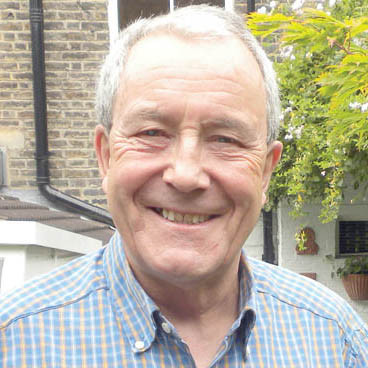
Forenames(s): Roy
Family name: Lockett
Work area/Craft/Role: Union Organiser
Industry: Film, TV, Radio, Theatre
Company: ACTT, BECTU
Family name: Lockett
Work area/Craft/Role: Union Organiser
Industry: Film, TV, Radio, Theatre
Company: ACTT, BECTU
Interview no: 316
Interview date(s): 5 March 1994
Interviewer(s): Alan Lawson, Sid Cole
Production Media: audio
Interview date(s): 5 March 1994
Interviewer(s): Alan Lawson, Sid Cole
Production Media: audio
Full Name: Roy Lockett
Date of Birth: 15 August 1939
Place of Birth: Croydon, South London, UK
Early Life & Education
- Roy was born just as World War II was beginning. His father was a plumber (and later manager in a chemical piping firm) who served in the Army from near Roy’s birth until ca. 1945. His mother worked in factories, including watch factories and accounting/tabulation type factories, and rose to positions of responsibility.
- The family lived on the Waddon Council Estate in Croydon.
- He attended Waddon Infants and Waddon Juniors schools. He was evacuated during the war, briefly in Doncaster, then returned.
- He failed the “eleven-plus” exam, so went to a secondary modern school. But ~age 12-13 he won a scholarship to the Croydon School of Building, a technical school where he learned carpentry, bricklaying, elementary plumbing, welding, and draughtsmanship.
Apprenticeship & Early Career
- When he left school (at about age 15), his aunt (who was a bookbinder) helped him get an apprenticeship as a compositor in a printing works in Croydon (Heywoods printers). He joined the trade under the London Society of Compositors.
- His apprenticeship lasted six years, during which he also attended college one day a week, and did night school two nights weekly.
- During those years he developed not only technical skills but also interests in design, typography, history of printing, and politics. His apprenticeship also radicalised him somewhat: there was a strike in 1959 which he was involved in.
Further Education & Shift into Union Work
- In ~1961, after his apprenticeship, Roy obtained an Addy-Hopkinson scholarship to attend Ruskin College, Oxford. There he took a diploma (Politics & Economics).
- After Ruskin, he went on to Wadham College, Oxford, as a mature student. He completed a degree there in two years (thanks to prior learning and diploma credit). He graduated in 1965.
Union Career & Contributions
- After returning from university, Roy worked for a while at HM Stationery Office (HMSO) as a compositor, became shop steward (Father of the Chapel) there.
- In ~1966, he shifted to a full-time union role, becoming Research Officer / Journal Editor for ACTT (Association of Cinematograph, Television and Allied Technicians). His skills in printing/design and writing helped.
- Over his long union career, he became Deputy General Secretary of ACTT / BECTU (the merged union for broadcasting, entertainment, cinematograph and theatre).
Themes & Campaigns
- Roy was very active on issues of equal opportunity: training, pay equality, pay for women and for ethnic minorities. He helped build the union’s work around those issues.
- He was also engaged in negotiations over pay in TV, film, documentary, broadcasting etc., often for freelance as well as salaried workers. He did research, wrote in the union journal, helped negotiate.
- He was strongly in favour of union amalgamations (integrating smaller unions / combining roles) and often argued that the many unions in film/TV/media broadcast sectors should have common positions.
Later Career & Retirement
- Roy Lockett served in union office for over 30 years. He retired as Deputy General Secretary, ACTT / BECTU, on 15 August (his 72nd birthday presumably) after more than 30 years’ service.
- His work was recognised widely within the industry. For example, the UK Secretary of State for Culture, Media and Sport (Chris Smith) praised his contributions upon retirement.
Personal Qualities & Legacy
- Roy Lockett is remembered as someone combining strong technical/compositor skills (his start in printing), intellectual curiosity, lifelong learning, political commitment, and trade-union activism. He bridged “manual skills” and scholarship.
- He was also central to the BECTU History Project (originally ACTT History Project), which collects and preserves oral histories from the film/TV/media industry. His “bureaucratic skills,” energy and institutional knowledge helped the Project grow.
Images may be subject to copyright. If you are the rights holder and wish any image to be removed, please contact us and it will be taken down promptly.
Disclaimer: The views and opinions expressed by interview participants are personal and do not necessarily reflect the views of the History Project or any of its volunteers, employees or representatives. (See details). Please also see our Takedown Policy.