
Shaun Sutton
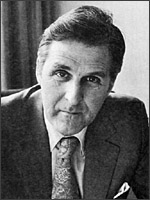
Family name: Sutton
Work area/Craft/Role: Actor, Director, Producer, Writer
Industry: Film, TV
Company: BBC
Websites: BFI, Wikipedia, IMDb, BFI Screenonline
Interview date(s): 31 January 1992, 1 April 1992
Interviewer(s): Alan Lawson, Norman Swallow
Production Media: audio
Duration (mins): 166
behp0239-shaun-sutton-summary
SIDE ONE
Born 1919, Hammersmith, London. Mother and father both stage people. Father became a master at Latimer School where Shaun went to school. He describes his early experiences on the stage in some amusing anecdotes. He then went to the Embassy Theatre School at Swiss Cottage as a student, and later became an SM [Stage Manager] there as well as appearing in various plays. In mid-1940 joined the Royal Navy; on demobilisation went back to the Embassy Theatre as Stage Director; in 1947 went to the Buxton repertory company as Director. In 1952 he appeared in Vivian Milroy’s TV production of Huckleberry Finn as well as being PA [Production Assistant]. He was able to stay with TV as an assistant as long as he also appeared as an actor. In 1955 he started writing scripts for children’s serials on TV as well as producing them; then in 1962 he was asked to produce some of the Z-cars series: he did 24 of these.
SIDE TWO
As well as making Z-Cars, he was put in charge of Series by Andrew Osborn. When Sydney Newman arrived, he was offered Head of Serials Department, there is a good story about Sydney Newman here. He then took over the ‘classic’ serials including The Forsyte Saga. Later he was offered the Head of Drama [post] by David Attenborough, where he stayed for twelve years. He fought for the system of ‘rehearse and record’; he also introduced English Regional Drama under David Rose at Pebble Mill studios; this then extended when Scotland and Wales got Heads of Drama [posts]. He talks about the ‘Golden Years’ of TV in the 1970s. In 1981 he ceased to be Head of Drama; then was asked to produce the last of the Shakespeare season, of which he did 14 and Jonathan Miller did 10. He also produced some 30 Theatre Night productions. On leaving the BBC (he was never part of the permanent staff), he started working for Primetime and Noel Gay Television.
SIDE THREE
He talks about his first viewing of TV, and having no intention of going into it, the whole idea very much frowned upon by ‘theatre people’. He then talks about the advancement of the techniques and about the ‘top personalities’. He also talks about the problems of co-production.
Interview restarted on 1st April 1992. He talks about his early days as a children’s programme producer and his experiences working with Freda Lingstrom.
SIDE FOUR
He talks generally about working in television.
[END]
Shaun Sutton OBE was born in Hammersmith, London and worked for BBC Television for nearly 30 years, He began his television career in 1952 producing and writing children’s series.
His major break came in 1962 when David Rose asked him to direct the police series "Z Cars". He went on to direct "Softly Softly” in 1966.
In 1966, he became head of serials for the BBC, and was responsible for the costume drama "The Forsyte Saga (1967) He also supervised BBC2's first colour productions including Vanity Fair ( 1967).
As head of the BBC’s drama group (1969-81) he launched such classics as " The Six Wives Of Henry VIII "( 1970), "Elizabeth R" ( 1971) "Colditz", "The Mayor of Casterbridge" , "War And Peace" "Tinker, Tailor, Soldier, Spy", "Smiley’s People" , "Crime and Punishment" , "Pennies From Heaven” (1978) "I, Claudius” and many many more.
Other major series included "Doctor Who” where he oversaw the casting of three Doctors, Jon Pertwee, Ton Baker and Peter Davison , "When the Boat Comes In", "The Onedin Line" ( 1971) , "Poldark "(1975-77), "Colditz"
He worked with directors including Ken Loach, Mike Leigh and Richard Eyre ; producers included Kenith Trodd, Tony Garnett and Michael Waring. The writers ranged from Dennis Potter to Joe Orton from Simon Gray to Alan Plater, from Alan Ayckbourn. to Colin Welland.
In 1981, he was appointed executive producer of the BBC Shakespeare series, in which all 37 plays were adapted for television.
He wrote several books including the ultimate guide to television drama, "The Largest Theatre in the World" in 1982.
Images may be subject to copyright. If you are the rights holder and wish any image to be removed, please contact us and it will be taken down promptly.
Disclaimer: The views and opinions expressed by interview participants are personal and do not necessarily reflect the views of the History Project or any of its volunteers, employees or representatives. (See details). Please also see our Takedown Policy.