
Alan Hume
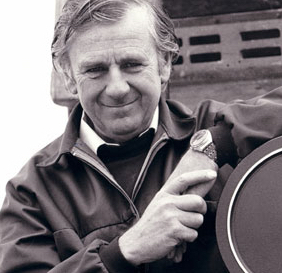
Family name: Hume
Work area/Craft/Role: Camera, DoP, Laboratory
Industry: Film, TV
Company: Beaconsfield, Rank Olympic Laboratories; Denham, Shepperton
Interview date(s): 6 February 1992
Interviewer(s): Alan Lawson, Syd Wilson
Production Media: audio
Duration (mins): 165
behp0236-alan-hume-summary
[Alan Lawson says this was one of the most enjoyable interviews he had been involved with]
SIDE ONE
Born in Putney, London 1924. Local school. Evacuated in Sept 1939, returned in 1939 and starts apprenticeship with LPT [London Passenger Transport] following family tradition. Whilst travelling to Acton on the tube [underground] he met an Olympic Labs man and, as he was getting bored with LPT, he went to Alf Skitrell (Manager, Olympic) and was given a job as a general ‘dogsbody’. One of his jobs was to go to the studios and help collect the rushes. On one trip he met Bert Easy, Denham camera department manager, and describes what he saw when he went on the [studio] floor. Whilst at Olympic Labs he was moved to the printing department where they were using the ‘multi-printer’ to print off four copies of Paramount News at a time. He got bored with the Printing Department and managed to move over to Denham as a ‘clapper-loader’ and he talks about those days. At the age of 18 he got his call-up and went into the Navy. After basic training he went on the photographic course. Demobbed in 1946 he eventually went back to Ealing, where he did have reinstatement rights. He was made very unwelcome by Gordon Dines, the Head of the Camera Department, and stayed there for four months with virtually no work to do. Went to Denham where he stayed for two years, then to Pinewood where he stayed for 6 to 7 seven years. He talks about working on Oliver Twist as focus-puller. He then went to work with Peter Ellenshaw who had been trained by ‘Pop’ Day (the master of all mattes); also there was Les Ostinelli [BEHP Interview No 266] he relates working with Guy Green {Interview No 233], then he got a chance to operate with Wilkie Cooper. Later he got a contract with British Lion (Shepperton) as camera operator (£25 a week). He then started working at Beaconsfield with Peter Rogers and Gerald Thomas as operator on the Carry On series and eventually became lighting cameraman.
SIDE TWO
Still talking about Carry Ons; of the 16 he lit 14. Then he decided he needed a change and went on to make some of The Avengers series. He then got his first real break, Bear Island, directed by Don Sharp, [Interview No 304] then after that some other films until John Glen [Interview 747] asked him to go on to For Your Eyes Only, then Octopussy. After those he went to work with Richard Marquand on [Starwars Episode VI] The Return of the Jedi, then another James Bond, A View to a Kill, etc., etc., until A Fish Called Wanda, on which film, he got three-quarters of one percentage [royalties?]. He talks about the use of an agent. He also talks about working with Lewis Gilbert [Interview 386] on Stepping Out and Shirley Valentine. Then he talks on technical matters.
SIDE THREE
He talks about Guy Green, Otto Heller, Jeff Unsworth; film stock, light meters, the position of the camera operator. Working at the National Film School, he also talks about the encouragement from Directors and other cameramen, laboratories and ‘gaffers’ [chief electrician]. He has an amusing story about yellow tape which he wears on his arm.
SIDE FOUR
He continues his ‘yellow tape’ story and then talks about Harry Waxman.
[END]
AL: The copyright of this recording is vested in the BECTU history project. Alan Hume, lighting cameraman. Interviewer Alan Lawson, with Syd Wilson, recorded on the 6th of February 1992. Side one.
AL: First, where and when were you born?
I was born in 1924, and I was born in Putney - well, I think that's where I'm registered, in Putney. My mother and father lived in Fulham, and I think I was actually born in - well, I thought of it the other day, I knew you'd ask me that… no, I can't remember the hospital, but somewhere near Putney and Fulham, very near there.
AL: And what about schooling?
I went to the Huntingfield Road School in Roehampton. And, well I guess I started there when I was about five or six, and I was there until the war started, and then I was evacuated with the school. That was in September, or just before the war started, so it would probably have been August 1939, and then my schooling more or less stopped, really, because I was evacuated with my brother and sister to Reading, and I guess I was there about three months and then my mother and father took me home, left the other two there, because I was the elder one, left the other two there, and I came home and my schooling more or less stopped. And I just was sort of odd job boy round the house and doing everything.
AL: And when did you start actually then— were you called up?
I was called up, but I started work - my father worked for London Transport, he was an electrical plumber jointer, he used to lay those big cables all over the railway, and my elder brother was apprenticed, electrician to the London Transport; my grandfather had worked for the London Transport, and naturally I got a job with the London Transport. And that’s— I was at Acton work— sort of pending doing an apprenticeship. I was a sort of dogsbody round the workshop, waiting to do something, and then— I used to go up on the train from Uxbridge to Acton Town every morning, and I met a chap who worked at Olympic Film Labs.
AL: Can you remember who it was?
I'm just trying to remember, I know that Alf Skitrell was the boss of Olympic Film Labs at the time, and it was next door to Paramount News, and I think— I don't know if his name was Dan— Wright— Mr Wright was in charge of, a big noise at the Paramount News office
AL: Jimmy Wright, Jimmy Wright’s father
Jimmy Wright, Jimmy Wright’s father, that’s it. That's right, well he was, he was the big noise there, I got a job as a— running the tins all up and down all over the labs, you know, dogsbody, and— well, first of all I met this chap and we used to talk on the train and, he told me what he did, and I said, “Ooh, that sounds interesting, so-and-so and so-and-so,” and over the course of a few weeks, he said to me, “Look, if you want a change of job” - because I used to moan about what a rotten job I was gonna get, and he said, “if you want a change of job, come and see me,” so I went down to Olympic Labs and they gave me a job there. And I was there - altogether I was there 13 months.
AL: And what— can you remember what they paid you?
Yes, they paid me— I think they paid me, it must have been about two pounds a week I think. Because, while I was there I used to go down in the film— in the van, or the car, to the studios at Denham, when they collect the film at the end of the day’s shooting, and that was Bert Easey's office at the back of stage seven at Denham Studios.
AL: So that's where you met Bert Easey?
Yes, well. I sort of used to see him around, but of course I didn't know him, he didn't know me, but I used to go and collect the film, and while they were waiting, if some of the film wasn't off the studio floor, I used to go into the studio and just stand there and look around, and see what was going on. And it was very interesting actually, because I remember one of the first people I ever saw there was George Formby. They were making a film called, I think it was, I think it was Get Cracking, I'm not sure, maybe that was later. But I went on the floor and I remember seeing this big camera over in the corner, a big black box and I know it was a Vinten now, looking back, and the operator was… Morton Lewis, because— I remember watching this scene and I remember— all the shouting, and the director was… Varnell, Max Varnell— Marcel Varnell, [AL: the father] Marcel Varnell was the director, because I remember him, all calling out and people were walking past the camera and everything, and then they started to shoot, they put the number on and were doing this shot, and I saw Morton Lewis walk away from behind the camera, he came out from this black cloth, put it down, walked in front of the camera, and then walked past the camera, and then came round, and got back under the thing and carried on operating the camera. And I thought, “cheeky bugger!”. That was the sort of, very early days of what I saw going on in the studio. Then, I'd been at the lab about 13 months and I started, my— the job I got in the end was working on a multi-printer: you used to put the negative in a tray at the top of this printer, it would go through the machine - it was a Bell and Howell machine, I think - and it would pass four rolls of film— it was newsreel, we were printing the newsreel, we used to print it every Tuesday, and— I think it was every Tuesday and Friday - I’m not absolutely positive, it was twice a week anyhow. And I became sort of assistant to the chap who ran that printer, and my job was sort of bringing all the raw stock in and taking it up to the developing machine and all that sort of thing, and… I quite enjoyed that, but whilst I was, whilst I was going back and forward to the studio, I heard that one of the lads working there had been called up for the army, and therefore they were sort of in need of another clapper loader, clapper boy, so I went down there on a Saturday morning, and I went into Bert Easey's office and just told him my story, that I'd heard they needed somebody there, another clapper boy, and he said, “No, we don't need anybody, I don't know where you heard that, and so on and so on and so on”. Anyway, I talked to him for about 10 minutes, and he said, “what are you doing?”, I told him what I'd been doing, he said “well, come with me”. So we walked down in the studio, walked down to stage three, where were they were shooting some of First of the Few. And the cameraman was George Perinal, operator was Jack Hildyard, focus puller was Ray Sturgess and director was Leslie Howard - he was acting in the film, he was directing with, he probably had a co-director, I don't know who it was, and P. C. Samuel was the production manager. Anyway, I saw Bert chatting to Ray Sturgess and Jack Hildyard and they were giving me funny looks, and anyway, Ray came over and spoke to me, and then Bert said to me, “okay, you can have a job, if you, er, can you start now?” [laughs] - having said to me there was no job. I said, “no, I can't start now, I have to give seven days notice at the lab, where I'm working”. He said, “oh, well if you, if you can start Monday, you've got the job, if you can't start Monday, there's no job,” so I said, “right, I'll be here Monday”. So I took off back to the lab at Acton, found Alf Skitrell in there, on Saturday afternoon, and told him that I was leaving, and he said, “you can't leave,” I said, “well I'm going to,” I said, “this is an opportunity for me to sort of progress and get somewhere”, and he said, “well I'm sorry, you can't leave, I won't give you your cards” - because I had to have employment cards and all that in those days - I said, “well I'm sorry, I won't be here Monday,” and I just left, and I went to the studio on Monday morning and started work there. And I don't think they ever did send me my employment cards, because later on, I'd been clapper loader for about— oh, I've got something a bit wrong… I was clapper loader for only about 13 months and then I got a job pulling focus because the focus puller— one of the focus pullers had been called up, they gave somebody else the job as focus and he made a bit of a mess of it, so in desperation they turned to me, because you know there was such a shortage of people, they were all going in the service, you probably went in the service yourself, I don't know, but there was, there were holes in the department, you know, and I used to see the chaps turning up sometimes who'd been working there in the past, like Johnny Mills, and [Galai] Hatchard and [Henry] Henty-Creer [two cameramen killed in the war], and all people like this who had heard them talking about, who'd been called up, all young chaps. Anyway I got, I got a job, and got on, pulling focus, and I worked on Thunder Rock with Jack Hildyard and Mutz Greenbaum—
AL: On the Boultings?
On the Boultings’ picture, that was the Boultings’ picture, yes, I think that was the second film I worked on, I was clapper loader on that. The first film I was focus on was Flemish Farm because as I told you, one— they gave one guy, whose name I won't mention - a chance, and he blew out, so I got the job focus and I managed to hold it long enough till the film finished, then I got another film.
AL: On that pull focus, how did you get on with that?
How did I get on with it? [AL: yes] Well it was—
AL: Who— did anybody— who was the operator?
The operator was Jack Hildyard.
AL: Well he would have helped, I’m sure.
And he helped me a lot, yes, because I remember doing one shot where there was a chap holding a pony - in the studio, it was all at f2 - Eric Cross was the cameraman, as it happened. It was all at f2, and I remember we had this 75 on, which was our go-in at the time, because depth of field was next to nothing, and the chap was— we were shooting a close-up of the chap, and there was this horse's head just behind him, and I remember we went to rushes and I said, “oh my god, the horse’s head is sharper than the man, you know, so-and-so and so-and-so,” so, I sort of said to Jack, “is that going to be alright, Jack?”, and he says, “yes, well, don't worry about it,” he said, “that’ll be alright”. But I had to learn very rapidly, you know, I’d only been in the studio for about 13 months, as I was saying, so I jumped from clappers to focus and I managed to survive. And I think I did about three or four films. I did Tawny Pipit which was, the director was— there were two directors, co-director— ah, Bernard Miles, who was acting in the film, was director with Charles Saunders, who was an editor and co-directed the film, and we were on location in Burford for about six, six weeks I think. Herbert Smith was the producer, Billy Boyle was the assistant director, and we shot there for about six weeks. And then I did other bits and pieces of films, sort of second units. And then I went to Ealing Studios: there was a call, Bert Easey said they’ve— he's had a call from Ealing Studios, they need someone to pull focus on a film there, and he's recommended me, would I like to go there, so I said, “yes I would”, so I went up and I met Sid Howell, who was in charge of the camera department. And he just asked me a few things and spoke to Bert on the telephone and so on and so forth, so I got a job as focus puller on a film called They Came To A City, which was J. B. Priestley's story. It was directed by Basil Dearden, the cameraman was Stan Pavey, it was the first film he’d photographed, Stan, because he'd been a— he was a pilot, air transport pilot, auxiliary air transport, and he was delivering aeroplanes from factory to airfields, and he had an accident, broke his back, recovered that and he'd been working at Ealing Studios and they gave him a job lighting, and he made a very good job of this film, I remember that, that was his first movie as a—
AL: He'd been my operator.
Had he? [AL: Yes.] Oh, he was a lovely chap wasn’t he, Stan, smashing chap. And anyway, I remember— Austin Dempster was the operator, and Stan, he got on very well, I mean everybody was very— it was very difficult, when I look back, on what he had to do, they had this enormous set on quite a small stage going quite high to the roof, I remember, and a lot of lock— wide shots running back and forth across this big open terrace, it was supposed to be the gates to heaven. And I know it was a heck of a job for him, but he did very well - survived! [Laughs.] And when I did that, to start work at Ealing, I had to go and get some more employment cards, so I went to the office, I think it was in Acton, the employment office, and got some employment cards because I didn't have any after leaving the lab. So, they took these employment cards, and then - I was then about 18, and by the time I’d got to— I'd been at Ealing about six weeks - the film only shot for about six weeks I think - I had my call up papers. So, what had happened, is because I'd lost my employment cards, they'd sort of lost trace of me a bit, and then I got some new employment cards, and lo and behold my name came up on the call up list a bit quickly, so I was called up. As a youngster, in my spare time I was in the, in the air training corps. And I was dead keen actually to go in the army, believe it or not. But then I went to the— sign at the call-up office, and they put me in the navy! They said, “What do you want to do?” - I said, “go in the army” - I had three choices, army, air force and navy. And lo and behold, about a couple of months later I got my call up papers - for the navy! Which sort of shook me a bit, that was the last thing I wanted to do, anyway… anything… anyway, I was called up on the first of March 1944. And went to Skegness, joined the navy, did my general training and then they sort of sorted us out and said, “what would you like to do?” and they had some categories and they had photographers, so I said, “oh, I'd like to be a photographer”. So, I got put onto a course as a photographer. So I went from Skegness to Malvern in the Midlands, did my general training, then I went from there down to Lee-on-Solent which was the naval photographic school, and I was there for about three months, then I got pushed from there to a place near Bognor Regis and near Ford, a naval air station, RAF station, where we did photographic school training, for four months I was there. And then eventually I got passed out from there as a Photo A, which means you're a photographer and you were capable of doing aerial photography and all that business. So from there I went up to Scotland, spent about a year up on the naval air station in Scotland and travelled around a bit, you know, doing things— never went abroad … I got foreign draft, to— I was going to Ceylon, and four of us went up there on this draft, four photographers, and two went and two stayed behind - I was one of those who stayed behind. And then I was— I stayed at this transit camp for about three or four months.
AL: Where, up in Scotland?
Up in Scotland, waiting to— whether I was gonna go somewhere or stay where I was, because the war was in a, sort of state of flux, then. Anyway, VE day came along, so very quickly all the people at this transit camp was asked where they'd like to be stationed, and I sorted out my nearest, nearest naval air station which was down at Winchester, a place called Worthy Down, so I applied to go there, and in a week or two weeks they sent me down there. So, that was the last place I was at, and I was demobbed from the service about 19— very late 1946 I think. But one thing I’ve forgotten to tell you, is when I was— I had some leave, when I did my training, had some leave and I went down to Denham Studios to see Bert Easey and a few of the people, just to let them know I’m still alive, you know, and around, and he said to me, “Would you like to go down to Romney Marshes, on location, for a week?” I said, “well, I've only got 10 days leave,” he said, “well you can go for a week,” I said “yes alright, I'd love to”. So I went down on location to Romney Marshes, and they were shooting Great Expectations, Bob Krasker, and Bobby Huke was the cameraman. So I spent a week down there when they were doing location on Romney Marshes, as a clapper loader, and doing, erm, doing hand tests and things which they did a lot of in those days. So I spent a week there, then came back and went back up to Scotland again. Then eventually I was demobbed.
AL: So, on that, you— you would have met David Lean then.
Yes, yeah, David Lean, Bob Krasker… and then later I was a bit shocked to hear, because I remember seeing some of the rushes that they were shooting, and they— these early morning sequences they'd done on the marshes, and they were absolutely wonderful stuff, you know, you probably remember all those wonderful skies, and the boy running across the marshes and all that stuff and so on, it made a big impression on me. And, I was a bit shocked to hear that Bob Krasker had left the film, when they got back to Pinewood, or Denham, he left, and Guy Green had taken over the film. I think Bobby Krasker had a falling out with David Lean over something or other. Anyway Guy Green took the film over, and Guy eventually got, he got an Oscar for the picture. And I still think a lot of it was probably down to these wonderful exteriors that had been shot by Bobby. But Guy was a super cameraman anyway, a really wonderful cameraman, and I was lucky enough to become his assistant later on. About, at least five pictures, three or four with David Lean. There was Oliver Twist— well, I’m jumping ahead. I got demobbed from the navy, and I went back to see Bert Easey, and he said, “Well I’m very sorry” - he was at Denham then - he said, “I’ve got nothing at the moment,” he said, “'cause quite a lot of guys have come out of the service now” - and there were people like Reggie Morris, and… let me just think now… there was, focus pullers - Jackie Atcheler, Reggie Morris, a chap named Henry Slagter, Norman Warwick, Peter Newbrook, lots of guys who’d been in the army, the navy, the air force, had come out and got— so he didn't have a vacancy for me, so I thought, well, I'll try and get another job, and I went to see Tubby Englander, who was doing documentaries, and he offered me a job, but I didn't want to do documentaries, so I said, “well, look, no, I'm going to go to Ealing and see them because they've got to give me reinstatement” - having been there for a period of time, I was entitled to reinstatement back at Ealing. So I went and saw them, and they sent me down to see Gordon Dines who was in charge of the department, because, it was all ex-navy then, I found out that although I'd been in the navy in the photographic unit, Ealing Studios was all ex-navy film unit: there was Gordon Dines, Paul Beeson, a camera maintenance chap, Reg— I can't remember… give me a second - Chic Waterson, another camera operator, I can't remember his name. Anyway there was about five or six ex-navy chaps working in the department and also Lionel Banes, Jack Parker, Jeff Seaholme, one or two guys out of the army film unit, and anyway I know that— I didn't get a very warm reception. I was taken on very grudgingly by Gordon because I had reinstatement rights. Gerry Turpin was there at the time as a clapper boy. Anyway, I stayed there for about four months, in which time they hardly ever gave me a job to do. They used to give me the very odd day to pull focus on something - rather grudgingly - and the only little bit of— little tiny piece of bitterness in my life happened when I actually got a call from Bert Easey saying to me, “I've got a job for you Alan, would you like to come back here, at Denham?” so I said, “yes I'd love to, thanks very much”. He said, “okay, well you start on so-and-so,” that was in two weeks, so I went and told them I’d be leaving - told them at the studio, told Gordon I'd be leaving at the end of so-and-so week. He said, “ah, but I've got a job coming up for you,” I said, “well, you know I've been here for four months and I haven't had a job,” and he said, “ah, but I've got a job coming up for you now”. So I said, “well, no I'm sorry, I'm going to leave”. Anyway, came Friday and I went into the office and they were— a lot of the lads sitting there, Lionel Bains and Paul Beeson and Gordon and so on and so. So, I just went in the office out of courtesy to say goodbye, about half past six on a Friday evening, and, so I said, “you know, I’ve just popped in to say goodbye” and so on and so on. And Gordon Dines said to me, “we work on Saturdays you know Alan”. I said, “yes, to half past four,” I said, “but I finish on the Friday, my week finishes today, Friday”. He said, “we work on Saturdays, Alan”. I said “yes, but I haven't done anything for four months”. “We work on Saturdays, Alan.” So the bugger made me go in there on Saturday at eight o’clock and stay there till four o’clock. I didn’t do anything. But it was just— that was the sort of experience I had at Ealing, so I was very pleased to leave there.
AL: He wasn’t an easy person.
No, no, he wasn’t, he was a— I found him a very difficult man to get on with, I had one or two little run-ins with him, but, which I won’t even bore you with… there was one quite— one quite funny one actually. We were doing a very difficult thing, one of the very odd jobs they gave me, we were doing a very difficult thing with a rig that spun the camera right round, and tracking in from here to there, doing a— I’m pulling focus, I'm trying to get my arm inside this thing on a 75 to pull focus, and I made a mess of it two or three times, and… and Gordon sort of said, “get off! get off, get off there!” and he jumped on the camera, and did it himself. But he got his arm caught in the machinery, and damn nearly broke his arm, and he was taken off to get it all sorted out and everything, which sort of made me smile a little time, but you know, it was just one of those things that— he was a difficult person. Anyway, that was that and then I went to, back to Denham to join their camera department there, and there was— really, very well organised department, had their really big department for the Rank Organisation. George Ashworth was their chief maintenance, they had a wonderful maintenance shop, and they were building the split beam camera at the time, and very progressive: they’d got the new Rank copy of the Mitchell, and there was a— there was a very buoyant atmosphere there, that, they were going places, they were setting up department, and you know they had about five or six real good crews all gathered together, and all the gear, and it was a real pleasure to work there. And I worked there for about a couple of years, and then I got sent over to Pinewood, because one of the guys had been made up to camera operator - John Godar, Godfrey Godar's brother, was made up to camera operator on a film with Ernie Steward, and Wilkie Cooper was busy there then, and so it left a hole - John left Oliver Twist, which was the David Lean film which Guy Green was doing, so I went over there, and took over on the focus on that job, Oliver Twist, and then that led to pictures like The Trial of Madeleine Smith and Passionate Friends, and… another David Lean film, but I spent then about six or seven years at Pinewood as a camera focus assistant. Anyway, then hard times came along and there was nothing doing, and I was offered a job doing matte process work with Peter Ellenshaw. I'm not— you want me to go on and on like this, don’t you?
AL: Yes sure. With Peter Ellenshaw.
Yes, Peter Ellenshaw was an artist, he had been tutored by Pop Day [AL: Oh yes.] Pop Day, who was at Denham with Wally Veevers, and they used to do these matte shots - painted glass shots - all different ways, usually using the original negative… and… mostly black and white, but then when they did Black Narcissus they did Technicolor matte shots, and they used to do some wonderful work, old Pop Day, and he was really a sort of, I think he was about the leading guy in the business, I mean, other than possibly in America, but I still think that the type of work he was doing was sort of admired all over all over the world, in America and everywhere. And anyway Peter Ellenshaw, Peter Ellenshaw’s mother married Pop Day, and Pop Day gave Peter Ellenshaw a job in his department, sort of helping him, and trained him as an artist, at which he became very very successful, and he was— he joined the air force and trained as a pilot and came out and so on and so forth, and went back and he was working for Poppa Day again, and he’d married— and meanwhile Peter had married an American lady and they came over here… anyway, the upshot of it all was that Peter became a very very good matte artist in his own right, and he did Quo Vadis, did all the matte shots on Quo Vadis with Tommy Howard at MGM, and then he did Treasure Island for Disney, and then he did a series of Disney pictures, and during that period I think Les Ostinelli was working with him at one time doing that sort of process work. And then Peter was taken on by Disney to do Robin Hood at Denham Studios, and he set up his own department, and he was looking for someone to go and work with him, rather as Les had done, and I went to see him and got the job working for him as his camera technician - well, I didn't know a great deal about what the process was, but Peter, and Doug Hague at Technicolor, showed me the whole rigmarole of how to— we used to get these black and white separation masters from Technicolor and then do all these triple exposures through the camera with glasses and so on and so forth and do all these matte shots. And so I spent 18 months, nearly two years, with Peter doing that type of matte painting process work on three Disney Pictures: there was Robin Hood, Rob Roy and a film called Sword and the Rose. And I remember, we started off, we did about 30 odd matte shots on the first one, we finished up doing about 50 odd matte shots on Sword and the Rose, and the credit titles and everything. It was very involved, wonderful process, but very involved, it meant passing the film through the camera about nine times, the same piece of film. But I learned a hell of a lot, I learned probably more about the business doing that— more about the camera department business - doing that, than anything. But then, I thought, came the time, I'd had enough of that, you see! I was very keen to become a cameraman, always was very keen - having worked for Guy Green, I used to sit there when I was doing my job, focus, I used to sit and watch him lighting the set and I was always very keen to sort of, get to be a cameraman myself.
AL: Because he painted with light, didn’t he?
[31:37]
Oh absolutely. I remember one day watching him, I was sitting behind the camera, and I remember him getting up from the camera, walking right across the set, very big set at Pinewood, and he walked about 30-odd yards, 35 yards, to the end of the set, and all we were doing was a close two shot of two people at a table, night, chatting, with a candle, and then, I watched what he did, and I looked through the camera and saw the girl sitting there, against this wall, and suddenly a light came on, on the back wall, and it went over this way a bit, and suddenly her hair sort of, appeared, which had been all dark against dark, and suddenly her hair was silhouetted against a light piece of wall in the background and he came back, fiddled about, and put a tree up and was sort of, put a little wind machine and it was blowing the thing, and there was this lovely light on the back wall, just coming and going, and her hair was all silhouetted and everything. And I used to watch quite closely all those sort of things, hoping one day that I’d be doing that sort of thing myself, you know, so… what happened… well, anyway, I went to, as I say, work for Ellenshaw, and spent a couple of years with him, and then I got the chance to operate. I got a chance to operate on a film for Wilkie Cooper. It came about because a production manager I knew, who I'd worked with a lot, he was production manager on some of the David Lean pictures, was doing this film called— erm, oh - it’ll come to me in a minute, I’ll tell you in a minute. It had Joan Collins, directed by an American, Noel Langley his name was, he was a famous writer, but he hadn’t— he hadn't directed many movies— he hadn’t directed any, this was his first— this was his first movie. It had Robertson Hare, Hermione Gingold, Kenneth More, Joan Collins, and they were supposed to be shipwrecked on a desert island, it'll come to me soon, what the hell was— [Our Girl Friday / U.S. The Adventures of Sadie] Wilkie was the cameraman. Anyway, I got the job as operator, and we went on location to Majorca for six weeks, I think. From Walton-on-Thames studios. So, I survived that. And then I did another two or three films for Wilkie, I'm trying to think of the titles… one was with Deborah Kerr and Van Johnson, at Shepperton [The End of the Affair, 1955], for a— the director— I can’t remember the director’s name. Anyway, I did pretty well camera operating, kept sort of progressing along, then I got a contract at Shepperton for British Lion, as a camera operator—
AL: What were they paying by this time?
They were paying - that’s funny you should say that, because they were paying, I think the rate was something like, something like £25 a week for a camera operator, and if you earned over, if you earned over £30 a week, you didn't get paid overtime. Anyway I know— I was under contract there for about £26 a week, or some— £25, £26 a week, and then I, I did a Disney film with Harry Waxman, and also I worked on Three Men and a Boat with Eric Cross again, as his operator, and of course we used to do quite a bit of overtime, and sometimes my weekly wages were probably coming out from 26 with about £10, £15 of overtime or something on it, and the company refused to pay, because I was employed by— anyway— I was employed under contract to, to British Lion at £26 a week and that was their agreement to pay me, but in fact my salary was working out about £40 a week or something, so there was a row about who was going to pay it. I used to get paid, but the company [laughs] used to have a row about whether the company I was working for or British Lion paid. But anyway… I worked that, I worked that year as contract out, and while I was there, I was offered a job by Peter Rogers and Gerald Thomas, who took over Beaconsfield Studios. And I had, during that period, moved out to Gerrard’s Cross myself. And it was very near, and they were not renewing my contract at Shepperton, so I thought, “well, that's nice I'll go—”, I was offered this job with Peter and Gerald, and so I went over to see them. Because I had done a bit of work with Gerald, and— Gerald had shot second unit for his brother, Ralph Thomas, who did a lot of the doctor pictures, The Doctor in the House and all of those and so on, and Gerald used to edit those films, and I, I went to work for Gerald as his camera operator when he shot second unit, and we got on very well. And when he took over Beaconsfield with Peter Rogers, they asked me over in— would I like to join them, and I said, yes I would, but, I’d just like to let them know that I was very keen to start lighting, see— a bit cheeky. I was— I think, I was only about 32, I can't really remember.
[37:33]
AL: Whenabouts is this, in date, can you remember? Somewhere around about [19]60?
Yes, it was, I’ve just got it… 60 - 1960 - exactly! Yeah. That was the first job I got lighting, 1960. So, 24, 34, 44, 54 - oh, I was a bit older than I think— 24, 34, 44, 54, 60. I was 36, which was young enough anyway. Yeah I was 36 then, 1960 I think. And I said, you know, “I'd like you to bear in mind that I'd like to start lighting," so they— so-and-so-and-so-and-so say, they said, “well, look, if you come and join us, you'll get the chance”. And anyway, sure enough, I was first of all operating, the cameraman was Peter Hennessy, and Reg Wyer, Wilk— no, not Wilkie Cooper, that was another job I did, that Guy directed, I operated on another job for Wilkie which Guy Green directed. But, anyway, I joined them in 1960, and… I'd done about, I suppose, half a dozen films for them - Carry On Sergeant was one, Time Lock was another.
AL: These were only as— operating.
As operator, yes, and then I was on a TV series there for a spell that was running there, called— with Roger Moore, which was… [AL: not The Saint?] No, that wasn't The Saint, it was a sort of knights of the round table, and sort of, I can’t remember just at the moment [Ivanhoe]… Anyway, I did about half a dozen films operating for them, and then I was loaned out on a film called The Silent Enemy, working for, Otto Heller was the cameraman, and I did quite a few films for Otto, sort of loaned out, from Peter Rogers at Beaconsfield, to Shepperton and places like that. One was Truth About Women, which Betty Box [actually Muriel Box] directed, The Silent Enemy I mentioned, which was sort of a two man submarine film shot in Gibraltar and all around there, that was with Otto. And I did quite a few films for Ted Scaife as well, a Tarzan film in Africa, and quite— three or four films for Ted, and Ted became their cameraman, and he lit two or three films for Gerald and Peter, at Pinewood. And then came, came one film— they were going to make a film called No Kidding, that was— and Ted Scaife was going to photograph that, that was in— well, that was in 1960. [Interruption, tape off and on.]
AL: Right, okay, we’re going now.
OK, well what I was sort of leading up to, talking about Ted, Ted was their cameraman and he was going to do this next film of theirs, called No Kidding, which was black and white, which… trying to think of the artists’ names, Leslie Phillips… anyway, the story was, they were going to make a film about a couple of people who ran a children's home with a school, a residential school, and they had sort of rich people's children there, probably about 30 children aging from, say, about eight up to about 15, and two or three schoolmasters - music master, gym master - and they were going to shoot this film at Pinewood and on location at Peter Rogers’ house which is up here in Beaconsfield, big white house, stands on a corner up there. And anyway, Ted was going to do it, and Ted was offered another film. A bigger film, big, colour, major production in Turkey, I forget the title now, very big movie, so he asked them if they’d let him go, and they said to him “yes, but who will we get?” so he said to them, “well, why don't you let Alan do the exteriors? Because I shall be finished so-and-so and so-and-so, I'll come back and shoot the interiors”. So it meant about— shooting about three weeks exteriors, and then shooting about four or five weeks interiors. Anyway the upshot of it was that, eventually, Ted wanted out of the film altogether, and so he said to them, “well, let Alan do the film, you know, let him do the exteriors, and so-and-so, and I'm sure you'll find he’s capable and so-and-so”.
[43:04]
Anyway, they gave me the job, and I lit— I shot the location and started in the studio and that went fine. I was not really, I was not really sort of too nervous about it, I had a little bit of experience, I’d done one or two small jobs that I'd lit and I had a very helpful guy as gaffer at Pinewood, and the only thing I found a little difficult was the, the ‘getting on with it’ and doing it quickly enough, keeping— really keeping on schedule, and, because they were a bit, ‘hurry up’, and, keeping on schedule. So, anyway, we shot the film and I survived the movie, I had, Dudley Lovell was my operator, and Dennis Lewiston was my focus assistant, and they were really good, the crew were terrific to me, very very helpful— especially my gaffer, and Bill Girdlestone, Bill Girdlestone looked after the rushes and everything for me. And as I say, I sort of survived the movie. And I remember the very last day, at Pinewood, of the film, we were shooting sort of interior, exterior, of the school, part of the school and we were doing the l— we did the last shot, and then they took us— a unit still, and I was so sort of relieved, that the film had finished, and I was still there and hadn’t been fired [laughs], I sort of walked off the stage and went wandering off up the corridor, in sort of relief, that it was all finished, you know, and I missed the unit still, I missed everything, and I sort of wandered back afterwards. And anyway, that was the very beginning for me, that was 1960. And they’d said to me, “well, the next”— during this, they’d said to me, “well, the next film we're going to do is quite a big colour movie, so we may have to think about another cameraman”. So, I remember saying to them, “well,” I said, “that surprises me, because to be honest, it's easier to photograph in colour than it is in black and white,” you see [laughs], and basically— I believed it was, and I still believe it is— [AL: yes, that’s right] I think black and white was a very difficult medium to photograph in, and colour was a much easier medium, 'cause everything separated itself, all the colour separated, and it usually looked better—
AL: This is before Eastmancolor, isn’t it.
No, this was Eastmancolor, Eastmancolor was in, then.
SW: Started with it in 1952.
Oh was it 52? Yeah, because one of the films I worked for Wilkie Cooper, that film— one of the very first films I operated was Eastmancolor, that was er, what was the film called? I’m still trying to— that Joan Collins was in…
AL: I’m going to stop you there. [Change of tape.] Alan Hume, side 2. Now, as you were saying, black and white is more difficult.
Oh black and white, yeah, it was a much more difficult medium. And, so I said to Peter Rogers and Gerald Thomas that, if they're going to do a big colour movie, I wouldn’t— I, I would find it not as difficult as black and white to be honest, so they shouldn't really be looking for another cameraman, they should sort of [laugh] have faith in me. Anyway, they gave me the job.
AL: Which was?
It was called The Iron Maiden, it was about people who had these old steam traction engines, you know, and they used to go to rallies with these old traction engines, and some well-known American guy came over and bought a big traction engine, and the film was all around that sort of thing. That shot for about 10 weeks, it was quite a big movie. And, and that went well for me. I think that was, I think that was Technicolor, not too sure.
SW: I don’t remember it.
No. It was called The Iron Maiden, I’m pretty sure it was done by Techni—
SW: I’m surprised.
I’m not so sure, it might have been Denham… [SW: I think it was probably Denham] It was Denham, I think, now you come— because, they were very much into the Rank Organisation, no, it was, it was Denham, that's right, you're right. And then I just carried on from there, doing their movies. And then they started making the Carry On films. They’d already made Carry On Sergeant, which was the very first, and then they made Carry On Nurse, which I operated on, and that was, Reg Wyer was the lighting cameraman, and, having got a break with them on No Kidding, I then became their cameraman, and I subsequently did 16 of the Carry Ons, two I operated on but the other 14 I lit. And that's really where I got my schooling as lighting cameraman. Because the first priority was never to be over schedule. So the first, sort of, the first 10 films I photographed, they were— the schedule was six weeks and I don't think we were ever half an hour over schedule on anything ever. So that was a pretty good schooling, it taught me that you had to, had to get on with it and keep up with the clock, that was priority number one. I mean, course it had to look good, but I mean, to be honest it depends what you call ‘good’, I mean it had to be, you know—
AL: You couldn't do a Guy Green.
No, I couldn't do a Guy Green - and I wasn't capable of doing a Guy Green - but I could do an adequate, get-on-with-it job, and nothing to be ashamed of, I was quite proud of a lot of those, in fact I was running one for my kids the other day here, called Carry on Spying, which Al Vetchinsky was the art director, and I remember seeing some rushes— he built this, supposed to be an exterior set in Egypt, he built on one of the stages, the big stages at Pinewood, and I remember lighting it and so on. And I remember him saying to me, after rushes, he said, "you know, you made a very good job of that, Alan”. And I thought, “oh, yeah, I thought it was not bad” [laughs], you know, which was nice.
[49:34]
But I certainly learned how to get on with it, and cope. And a lot of those were in black and white. And then, what happened? Oh I did— as I say, I did 16 Carry Ons, 14 of which I’d photographed, and then it got to the point where I thought, “well now, I've got to make a change, I've got to sort of try and push myself a little bit”… so… I was offered— what was the film? Oh, I know I did a film for— I did— well, I did a film for Peter Hall [Perfect Friday, 1970], I used to go away from them out on loan, and do films, like I did The Avengers for 12 months, on and off - TV series.
AL: Well again, that's under pressure, isn’t it, all the time.
Oh yes, oh yes. In fact after I’d done spell on The Avengers, I then got a spell on— Harry Lime, do you ever remember that series, Harry Lime? His character was called Harry Lime, I forget what it— what was that famous film they made in Vienna?
AL: The Third Man.
The Third Man - well it was that, sort of, character, and I forget the title of the series, but Rennie— Michael Rennie was in it, the director on this— they asked— they called me in to do a few episodes, some of which were being directed by a director I'd worked for when I was an operator, he was— he directed a— he wrote and directed a film called The Silent Enemy, on which I was operator, and he was an ex-navy commander, very very nice man, a writer, he wrote two or three scripts, another one of which I worked on as operator for him at Beaconsfield, with— the cameraman was— oh… god, I'm getting worse than I thought I was. You would know this man … nice, very very nice man, just give me a moment… Arthur Grant. [AL: Oh yes.] Arthur Grant photographed this. John and Julie, the film was called, and he was the director, and anyway, he was going to direct some of this Harry Lime series, and he got me over there, and I was there about three weeks, and then the production manager, sort of stroke cum producer, Smedley-Aston, said, “can I meet you in the so-and-so pub, after shooting on Friday, with the— with the director?" So I went down the road, not having a clue what they wanted to speak to me about. So I met them in the pub, and they said to me “Alan, we're going to have to make a change.” I said, “What?” “We're gonna have to change cameraman. We're gonna have to replace you.” I said, “Oh”, you know, I was a bit taken aback and stunned, to be honest. And they said— I said “why”, and they said, “because, because you’re not going fast enough, you're getting behind”. No-one had said a word to me, you see. So, anyway, okay, fair enough. They'd already made, made arrangements. I can't even remember, to be honest, who replaced me, but it was, it was a man of a lot of experience, I can't remember his name, he'd been doing it a long time. And I actually took over from, Brendan Stafford. I took over from Brendan who was a whirlwind cameraman, but although I'd had all this background with the Carry Ons and never been over schedule, I was obviously a bit behind on the— as far as the TV speed was concerned. Although they said, “well, you're doing a really good job and so on, it’s nothing to do with your work,” which, which I was, in fact I remember being quite pleased, when that was probably part of the problem, I was doing a job, and probably I should have cut a lot more corners and, and got on with it a bit more. But I was— my first priority was to do a good job. Anyway, I lost— I got fired. That was the only time I ever got fired and that was for being a bit slow, so that was a big lesson to me, even though I'd already come up in a pretty quick working school.
[54:16]
But, then I was taken on by the people doing the, The Avengers - at the same studio - so they all knew what was going on. But, they had Diana Rigg, who was quite difficult, and one of the priorities was that she should look good. So, I managed to do that, and I got on very well with them, that was—
AL: Wasn’t that Monty Berman's lot?
No. No, the other lot was Monty Berman’s lot, no, this was Julian Wintle, Julian Wintle and— a very very nice man was his producer, was… oh my goodness… He had a brother who was studio manager at Pinewood for a long time.
AL: Not Worker?
Not Andy Worker, no.
AL: Howard?
No, not Cyril Howard… oh… it’ll come to me, anyway. Anyway, so I stayed on The Avengers for about— on and off, I used to do sort of spells with them— it would be 12 weeks, and then I’d go off and do a film for Peter Rogers, Gerald Thomas, then I’d go back and do another, and I think the longest spell I did was 16 weeks, but I did about, I know I did about four, four or five stints with them on The Avengers, which added up to about a year's work, altogether. And meanwhile, I was going back and forward to Peter and Gerald, but eventually I left. I was then offered a TV series with Shirley MacLaine, called Shirley's World, for ITV, and I shot that series for 12 months - that was in colour. And then I came back from those sort of stints, and the really— the first big break I got on a really big movie, was Bear Island for a Canadian company, which was directed by Don Sharp, and it had Donald Sutherland in it, and we went on location to Canada for about three months, I think. And I shot that film, and unfortunately I had an accident on that, I erm, we were shooting an avalanche at one time, and they sort of had to, they had to, cause a— create an avalanche themselves, and so they had an explosion up there, and I'd already checked up with the, with the snow control guy they had, who was supposed to be responsible and in charge of everything, and I said “will I be alright here with this camera?” and he said, “yes, you'll be all right there”. Anyway, the first thing I knew was, I was sort of looking up into someone's face, who was looking down at me, and I sort of remember thinking, “oh, there's been an accident, and I’m it, I think,” I thought [laugh]. And sure enough, I'd been hit with a block of ice, which had sort of knocked my teeth out, broke my jaw, dented my face somewhat. But I got over that, and about a week later I was back on the movie, and sort of finished it and came home.
AL: That was called Big …?
That was called Bear Island. Yes, that was quite a big location in, we were in Alaska and British Columbia and, that was quite a big film, as far as I was concerned - it had Vanessa Redgrave and Donald Sutherland, and one or two famous American actors.
AL: When abouts would this be?
I might have it written down here, I need to jot things down. 1978. So I'd been doing it a little while by then.
AL: Yes you had [laughs]. You were getting long in the tooth.
[laugh] Yeah, but anyway—
AL: That's the one you reckon is your really—
Well that was the one when I said to my wife, “I've got”— I said, I remember saying to her, "I tell you what, I've just got a very good film to light, and if I can do this okay,” I said to her, “I should probably get on to some very good movies,” you know, “if I survive this one” - that was my attitude - my attitude was always sort of survival, it— survival, and just keep working. Having been fired once, it was the— the challenge was not to get fired, was to just keep doing it, you know, in spite of what happens, because a cameraman's life is a hard one as you know [AL: yeah, sure], and it's a very unforgiving business, as soon as you sort of blow out, or make a blunder, it's round the business like wildfire, and, if you get fired, you— you somehow don't get forgiven, I mean if it happens, I know— I've known people, you know, operators, assistants, all sorts of things, they've had a sort of bad run, and got fired two or three times - they sort of disappear. The phone just doesn't ring anymore, because as I say, it's just so totally unforgiving.
[59:44]
Anyway I said to her, I think I've sort of— if I get this, I've done this, I should do quite well now. Anyway, I forget. I’ll just read you a few film titles that sort of followed on after there, that's the best way, which gave me an idea of where I was going. I did a film which you probably wouldn't have heard of, soon after that, called Kill Him in Amsterdam, which was with Robert Mitchum. And then I did a film called Caveman in Mexico for an American company. And, and then I was very fortunate, I did a film with a man called Richard Marquand, I took over second unit for him, he was doing a film, he was doing a film called… don’t know if I’ve got the damn thing… No, I can’t remember. Anyway, he did— Richard Marquand was shooting this film at Bray Studios, and the cameraman was Dick Bush, and Dick left, with about two weeks to go— I shot some second unit for them, and then Dick left with about two weeks’ work to do, and Richard Marquand asked me to finish the film, which I did, and I got on very well with him. And then, he came back to me later on, he made a film called Birth of The Beatles, and he did a film— er… what was it? He did a, he did a film called The Eye of the Needle, which I did, which was Donald Sutherland and, which was one of my favourite films I worked on, with him. And then he did another film in Canada with Bob Dylan, which I did, which was a pretty good movie, but it died an absolute death at the box office [laughs]. But it was it was good for me, I did— you know, if I say it myself, I did some pretty good work on that, and I got on very well with Richard Marquand. And then, lo and behold, a good friend of mine, John Glen, who’s directed about seven James Bond pictures, phoned me up, and said he’d got an offer to direct a James Bond movie, and how would I feel about doing it. So I said— I was over the moon, at the opportunity, the possibility, you see, so, I’d already gone and shot some second unit with John in Canada on another Bond film, where a lad jumped off— he skied off a mountain, and pulled a parachute and landed on a glacier down there, and I'd shot this for John, and I know that they were they were really pleased with this one particular shot - Cubby Broccoli - I think they spent 120,000 dollars on this one shot, which was a lot of money in those days. And it was really on the strength of that, and my, and my track record, that they sort of said, “alright, well if John wants you to do the movie, you can do it” - because I remember going to meet Cubby. And so the first Bond film I did was For Your Eyes Only. And I remember going to Corfu on location, and the first morning shooting, I remember just walking along - I’d just moved from the camera, and I was walking along, we were working on the— on the beach, and Cubby came alongside me and put his hand over my, over my shoulder, and said, “good luck, Alan, hope it all goes well,” and, and then he just walked off, and I knew what he meant: I hope it all goes well, and if it doesn’t, you won't be here! [laugh] But John Glen was in the same, same position you see, and John used to say to me, “still here, Alan, this is the fifth day, we're still here” [laughs]. Anyway, once again, did that one, survived that, and then did their next one, which was Octopussy, did that, and then, I got a phone call out of the blue from Richard Marquand again - that’s why I sort of pushed his name a bit - and he said to me, he's going to do one of the Star Wars pictures, Return of the Jedi, and how would I like to do it? And so I said, “oh my god, yeah, thrilled to bits,” so they— he said, “well, they're going to run your last couple of movies, they're going to run Octopussy and they’re going to run For Your Eyes Only - and The Eye of the Needle, which you did for me, and then we'll call you”.
[1:04:59]
So anyway they ran them, and he called me in a week and said, “yes you got the job,” which was really nice. So I got that one. Then I did another Bond film, A View to a Kill, and then— oh, I was offered another film by Richard Marquand, that was, that was the one in Canada with— oh, Hearts of Fire it was called, so I missed out the next Bond movie, I was— the reason I went - and it's quite relevant to what happens in the business - was the fact that I'd done three Bond films, which had all been very successful I think, and times were a bit difficult, they were, they were going to drop Roger Moore, and they were going to take another actor, and they were looking for an actor, and I remember doing four lots of artists’ tests for them with different actors, and meanwhile they were still putting the film off, about six months had gone by, eight months had gone by, and they still hadn't got a date. They said, yes, they're going to do this film, but they're still trying to find the right man, and so on, they hadn't got— meanwhile, Richard Marquand, who I’d worked for, came back to me, and said, “I'm going to do a film called Hearts of Fire, with Bob Dylan, we'd like you to do it, will you do it?” and I said, “well, I'm sort of in line for the next Bond, can I just sort a few things out? When are you going to start?” So they said, “well, we're not going to start shooting for about three months”. So-and-so-and-so. So I went back to the Bond people, and I said to them, “have you got any idea when you're likely to be doing the movie?” and they said, “well, no, we haven’t,” I said, “because I'm being offered another movie,” and so on and so forth. So I said to the Bond people, “would you, would you consider paying me a small retainer, just to keep me, keep me in milk and cigarettes and what have you,” - no - “while I'm waiting for you, because it could go on for a long time?” And they said, “no we're not”, I said, “well, I only want— you pay me £200 a week or something, just to sort of stay out— be there, at your beck and call,” and so they said, “no,” they wouldn't do that. So I got onto Richard Marquand and said, “look, they can't give me a date, when are you going to start? So-and-so.” And they said, “well, we’re going to start, actually, in 10 weeks," so, I said, “well, the thing is I've asked them about giving me a retainer to keep me on, but they're disinclined to do that”. So Richard Marquand said “look, Alan, if you come and join us, we'll pay you half salary as from tomorrow, but we don't start for 10 weeks”. And they paid me a good salary, so, they said— right— so I went back to the Bond people, and I said, “look, I've been offered this other film, they're prepared to pay me half salary as from tomorrow, I mean, you won't give me anything, to hang around, so I'm going to do it, you know," and so, that's how I moved away from the Bond people and started on another tack, which was quite relevant, because the Bond films made a vast amount of money, as you can imagine, but they were still very bloody tight fisted and mean… I mean, people who sort of made their films, they wouldn't give them anything, if they could help it, you know. Anyway. The film I went and did with Richard was a disaster, and unfortunately, he, he died, a few months after the film was finished, he had a stroke - he'd had a very bad leg and he used to hobble on this bad leg, he was a Welshman, very nice man, but an ex-rugby player, and he got trouble, he got leg trouble and blood clot trouble, and unfortunately he had this stroke and he just didn't survive it and he died. So I was sort of, I was on the road working for all sorts of people. And later, I was very lucky to do a picture for John Cleese called Fish Called Wanda, which was a big success. And, he was very good to all the unit, John Cleese, and for the first time ever, he gave me a little tiny piece of the film - three quarters of 1% he gave me - and all the other key members of the crew, he gave a little bit, and subsequently from that, I got a lot of money from that, because it made a lot of money in America, and so did the boys who worked on the film, but that was the only time anything like that ever happened to me in the movie— all the Carry On movies that I worked on made a fortune and the Bonds all made a fortune, but they never gave you anything than the salary that they’d negotiated, and that was always a bit sort of, a bit hard, you know, a very hard battle—
AL: You didn't have an agent then?
I had an agent at one time, but I dropped the agent, because he, he was— he couldn't do any better than I could do, salary wise, and I went with him because someone I was working for was with him, and they sort of said, “well, we’ll look after you and so-and-so”, and I thought, “well, it might be a good idea because he might get me onto better pictures,” and— but it never worked out like that, they never get— they never got me movies, he never got me a movie, in fact all he ever managed to do was to muck up all my VAT. I used to get— all my salary and money used to go to him, and I used to find the VAT came in, and I would have to send it off, but I still hadn't got it, and I was always forever chasing this bloody VAT money, you know, to send it off, and my agent— and my accountant said to me, “what on earth do you want this agent for, you’re paying all that money, and so on and so on and so on”, he said, “I don't see why you bother to do that,” so, I took his advice and dropped him, dropped the agent…
[1:10:36]
AL: What was the agent charging you? 10%?
10%. Yeah, but he never got me a job, he only mucked up all my VAT and books, and, and my accountant said, “oh, I think you're mad giving him that…” So, I didn't need it anyway, because people always used to come to me, and… although, I was very bad with money and everything, in the end it doesn't matter, you know, I mean it doesn't matter much, but the agent doesn't do too much for you really.
AL: Anyway, sorry, I interrupted—
No, no. Very relevant really. Anyway, where was I? Yes, I did that Fish Called Wanda, and then I did another comedy for Lewis Gilbert - Shirley Valentine - which was really super, lovely film to work on, was a big success. And then, the next film Lewis did was a picture called Stepping Out, with Liza Minnelli, which was shot in Canada, just a couple of years ago now. So I did that, I think he’s, he's got another one coming along, eventually, so I may do that with him. And then I did a film just before Christmas at Pinewood for a producer named Nick Evans, with Julie Walters, it's called Just Like a Woman, and believe it or not, Nick is such a nice man, he's the producer, and we had a little battle about the money, because there's no money in the business now, nobody wants to pay you anything, and, he said, “well, I’d love you to do the film,” because, I'd done a film for him previously. So, I did the movie, and when it had finished he said, “Alan, I felt so guilty about the hard time I gave you about the salary, I'm going to give you one point in the movie,” so he gave me, he's given me 1 point in the movie, so if it makes a few bob, I make a few bob, but that’s nice of him. But that’s sort of more or less gotten me up to date, I don't know where we are, where we are here. Now meanwhile, looking to the future, I'm going to do a TV pilot for an American company, starts on the second of March, it's only 12 days shooting, it’s a sort of knights of the round table thing, which they may make a series of, and actually when I answered the phone out there, I went out there, it was a chap I'd worked for named David Wickes, who did Jack the Ripper TV series, and quite a few films, and he’s been— and he was just asking me if I'd be interested in doing a film in June in Poland, and to get in touch with him so, so that's sort of brought me up to date really.
AL: Right, because I want to, I want to go back now, and talk, and talk about, talk about equipment, because, you know, there's been enormous amounts of changes in the past—
Oh my god, fantastic.
AL: So, when you first started, you were working, well, on Mitchells presumably.
Mitchells, yeah. There were Newman Sinclairs, and Mitchells—
AL: Newman Sinclairs for location work, silent location work—
Yes, silent location work, that was the sort of standard, there was, what we used to call— there was the NC Mitchell, which you could run silent, with no blimp; the standard Mitchell, which was for high speed shooting, and silent shooting; and the Newman Sinclair, that was it really.
[1:13:46]
AL: And, in lenses, can you remember the lenses you were using on the Mitchells. Were they, were they the—
Yes. Cookes, mainly Cookes. [AL: I can remember when the—] Speed Panchros, they called them, high speed Panchros. Two lenses.
AL: I can remember when I was at Ealing, we had, oh they were— it was a German lens, and they were slightly soft, I can’t remember the—
Bausch & Lomb?
AL: Azro?
Astro? [AL: Astro.] Well now of course, a lot of people used to be prefer those slightly softer lenses, didn't they, especially for portraiture and close ups—
AL: Well, and also, one used gauzes then. And diffusion discs.
Yes, that's right, that's right. I remember one of the very first films I worked on, early days, as a clapper boy, was— the cameraman was, was a German, not Mutzie Greenbaum, erm, you'll know who he was… [AL: Günther Krampf.] Günther Krampf, that's right, I was a clapper boy, and there was forever discussions about focus, the focus puller was Arthur Ibbetson, and he was always putting these gauzes on, Scheibes, they were Scheibe filters, which were a diffusion softening type of filter, lower the contrast and make the image softer, and these gauzes. And there were forever discussions about focus. But it was all created, of course, by the Scheibes and— but the— the films still had a wonderful look about them, you know the black and white— without, without this type of, sort of diffusion in front, they were too, too sharp-looking sometimes and too— well, just looked too raw, but the— these filters, you could give a sort of, beautiful sort of gloss, glossy look to the image. Guy Green used to use them. Well— everybody used something.
AL: Did Guy use gauzes, you know, with the— you burn out the centre, and you have— just soften the edges, in the corners?
[1:15:39]
Sometimes, sometimes, yes, that's right, just giving a little vignetting right around the edges—
AL: Because I'm sure they were used in Great Expectations a lot.
They might have been, I can't swear to that, they might have been. But all sorts of devices, we used, where some people had these nets, and two used to work together - same net, but they used to push them in, where they were burnt out in the middle, and they’d increase the amount of netting on the image, and pull them out. And Freddie Francis was a pretty dab hand at that, he had some very special things made up when he did he did a film for Jack Clayton… I can’t remember…
AL: A Kid for Two Farthings?
No, no, Ted Scaife did that. That was— no, this was— well, can’t remember the title, it's just slipped my memory for the moment, but he did a lot of this vignetting to very very good effect, and it was— it was a real super-looking movie.
AL: You got the, you've got the effect of like a bromoil print, really, didn't you? Like a bromoil print.
I guess you would— I guess that’s— yeah, yeah. One film, early film I worked on I mentioned to you was Tawny Pipit, which Eric Cross photographed, and in fact it was released in sepia colour, the prints were made of sepia toning which was, was very nice, the only one I ever worked on where they did that. And I must say, it really looked very nice, it came out sort of, nice country atmosphere, old English country atmosphere.
AL: Now, continuing on, at Denham that was all, that was all Mitchells wasn’t it? Or were they using any of the Super Parvos?
There were a few Super Parvos about, yes.
AL: Did you ever work on one of those?
I did once. [AL: As an operator?] As an operator. Once only. Then I’d— I tell you what it was: I’d always heard about how, how dark it was looking through these cameras, and the chap used to walk about with a black cloth over his head, and, and because it was very— the image was very faint sometimes, especially if you were on exteriors and they’d stopped down. And I remember doing a commercial, and the subject was, ‘post early for Christmas’. It was right at the beginning of TV, and they were doing this commercial for the Post Office, ‘post early for Christmas’. And it was in Carlton Hill a, little studio, Kay Carlton Hill, and the shot was, a chap, there was— I can’t remember, one of the comics— he's up a ladder, and he takes a parcel off the top shelf, comes down the ladder, walks across the floor and puts this parcel on a counter in front of the, in front of the camera, and says, “now, don't forget, here's my parcel, and I've just put the address on, and I'm taking it down the post office, to make sure I get it posted in time for Christmas”. So he had about four rehearsals, and I'm looking, looking through the camera, and I can just about see it okay, you know, not too bad, and then, okay, we go for a take. And the camera starts to run, and of course I've got about one third of the image I had, and I can hardly see anything! All I could see was the parcel. I thought, “my god”, I sort of knew where the edge of the film— the camera— the gate was, and I thought— and we're working now, and I thought, “oh my god, I’d heard about these being dark, but I didn't realise it was as dark as this, I’d better just concentrate on keeping it in the right part of the frame, you know”— and I stuck it down there, and when the first take had finished, I remember turning around to the assistant and saying— his name was Harold Case, I remember saying to him, “my god, I've heard about this and how dark the image is, but I didn't realise it was as bad as that, I mean once the camera started running I could hardly see anything, I can only see the bloody parcel," I said, “but that's about all I can do, just keep the parcel in the right place”. Anyway, we did that shot, and then we did another shot, and then came lunchtime. And we came back after lunch, and Harold came to me and he said, “Alan,” he said, “no wonder you couldn't see anything,” he said, “there was a filter stuck in the— a viewing filter stuck in front of the lens, and I didn't know it— notice it” - and I certainly didn't know, I— so we had this dark image, and the viewing filter stuck in there, and I thought, “oh…” And once he took it out, it wasn't too bad, I could see! [laughs] So that was my first experience of a Super Parvo. But I believe in the right hands they were very good cameras, weren’t they?
AL: Oh yes, yes.
I know a couple of times I saw spools of film all over the floor, where— you, you had the feed on one side and it’d go through the gate and the take up on the other side, and a couple of times I remember seeing a roll of film drop out of the camera and roll across the floor, in my early days… someone got it in the neck! [laugh]
[1:20:27]
AL: I hope unexposed, not exposed.
Yes. Another thing I heard about, a wonderful French cameraman came over to Shepperton and shot Anna Karenina, for, I don't know if it was Korda, or some famous old Hollywood type director— producer and director, and this Frenchman came over, and they shot the film on a Mitchell, but he used to line the shot up with his Super Parvo, and light through the Super Parvo, because he couldn't do it - unless he was lighting through the camera he’d worked with for 20 years, he couldn't do it. I forget— I don't know his name, I forget, Anna Karenina it was, beautifully photographed movie, and he was a cameraman of very high reputation.
AL: Not— Courant, that wasn’t Curt Courant?
Curt Courant, no. I don't think so. No, I don't think so.
AL: He was around before the war actually.
There were two or three French cameramen coming over at that time. [AL: Well there was Perry of course.] Yeah, Perry he was a wonderful one, but it wasn't him. It was one of his contemporaries. And another Frenchman I remember came over, doing a film at Pinewood - he did two or three films, just about 19— in the late 50s— early 50s— mid 50s he did two or three films at Pinewood.
AL: Coming back onto cameras again. You worked with the three strip of course.
Yes. I didn't work as an assistant with three strip, I worked as an operator on a three strip movie, a film called—
AL: How was that to handle?
Big.
AL: Yeah I know it was big!
[laughs] It was very heavy, it was— the head was wonderful, but I remember doing one shot, a film called Geordie which Wilkie Cooper photographed, and I was the operator. And I remember we did a very fast tip-up, a big close-up of somebody, had to get up off the floor and stand up, it was, um, it was— oh, I’m trying to think of the actor's name, he was a big guy, about 6’ 6”, and he was playing this hammer thrower, and the idea of the shot was to have him sitting down there, and he stood up on— stood up and you got this— in a little Scottish cottage, you’ve got the sort of effect of this guy standing up off the floor, and I had to tip this blimped Technicolor, well, you know, it weighed - god knows what it weighed - and anyway, to do the shot, I had to free the head off, and it was only a pan-and-tilt head, and free it off and tip this thing up in the blimp. And I had to get Wilkie to help me tip the thing up, but I— and pull it up, and find a stop mark, and it took every, every bit of strength I'd got to pull this thing up, so… it was a bit restrictive, the size of it. And I remember one of the only guys with a reputation for being able to pick the camera up, the wild camera, on a tripod, with its head, was a chap named Bob Kindred, who was a Technicolor technician, and he was renowned at Technicolor for being almost the only guy who could pick this camera up in one piece and walk to the next setup with it, you know, head, camera, legs - everything. [AL: On his shoulder—] But mind you, he got a bad back eventually. Yeah, on his shoulder.
AL: I’ve got a bad shoulder too.
Have you? Yeah, there were a few people who suffered… in fact, even now, I mean, my own son, who’s a focus assistant, sometimes complains, he’s sort of, he’s hurt himself, and my other son who’s now a camera operator, he, he had back trouble, and he remembered how he did it, he was on a film at Pinewood, he was working with me actually, a film called Wombling Free, a little Womble picture, and he picked this head up and passed it out of the window, he sort of picked it up and leant forward, and he said he felt his back go, bomp, because he'd overreached himself, and all that weight, and he was just passing the head. And lots of guys have had trouble, because I always used to— people used to say, “well, what do you do then, what are you, you’re a cameraman?” I said, I used to say, “well, we're really technical labourers, I mean we're sort of pulling this gear about all day long, and following the director around, over Dartmoor, up some mountains or down some lanes, or in some holes, or up some long staircase, and, and trying to keep up with them with all this camera gear”, you know… [laughs]
AL: But then of course when the, when the Arri came, things changed.
Oh absolutely, changed everything, yeah. The little Arri 2C was the first one we used to use a lot, and I remember doing a film, for Peter Rogers again, and the 2C was our second camera, the Mitchell— the NC Mitchell with the blimp was the sound camera, and the little Arri was the, was the wild shooting camera, and I remember we were on location shooting Mitchell, and Arri, and that Arri didn't have register pins, but it had a super set of lenses, I don't know what it— and you know, the stuff on the Arri, this soppy little camera, looked so much sharper, and better, than the NC Mitchell. Well, that was probably a bit down to the lenses and everything, but I mean, no way could you knock the camera just because it was small. And it wasn't a clockwork wind up, it was a, it was a— [AL: a battery in the handle] little battery on the handle, yeah, and a rheostat built into the motor. Marvellous little camera actually… god, I did a hell of a lot of work with those, a hell of a lot.
[1:26:06]
AL: And then they, of course, they progressed, didn’t they?
Oh yes, they're very good now. I shot a good film in America called Runaway Train, and we shot that on an Arri BL, I used to— blimpless. The whole thing was shot on a, handheld— 98 percent of the film was handheld, very good camera, and— I think they’re up to the four now, there was the three, the Arri 3, I think they’ve got the Arri 4 now, they're very very good cameras.
AL: Have you worked on any of the, you know, the supers, like, say, Vistavision and these things?
Oh yes, I used Vistavision a fair bit, I did a number of pictures for John Dark, who you’ve probably heard of, he produced a few films called, for instance— they were adventure films, there was one called The Land That Time Forgot - they were Edgar Rice Burroughs subjects - who did the Tarzans, and he did these things - The Land That Time Forgot, The People Time Forgot, At the Earth's Core, and a thing called Arabian Adventure, and we used to do a lot of process work, helluva lot, and front projection - front projection, back projection, traveling matte, and all of the plates for the— this process were all shot on Vistavision, and made a big difference, really. And of course George Ashworth built the beam splitter, which was Vistavision format as well, I think, that was 65 or 70 mill, sideways, his beam splitter, I think - not certain now.
SW: Wasn’t he Technorama?
No, no, the beam splitter used for travelling mattes. [SW: Oh sorry, yeah.] They built it at Pinewood, and they had a prism in it, two gates, one was for film sensitive to blue only, and the other was panchromatic, for the foreground.
AL: Like the old Dunning, isn't it.
I guess it was, yes.
AL: The Dunning process, which was the forerunner of travelling mattes.
Yes, probably yes. I didn't know the Dunning process much. Was that a blue screen? [AL: Yeah, yes.] Yeah, because I'd heard a lot about Schüfftan, I've done quite a bit of mirror stuff, I've done quite a lot of that down the years, and, all sorts of tricks you learn in your career. And I sometimes pull ‘em out and use ‘em to— split screens; foreground soft mattes with bits of card; double exposures; triple exposures done in the camera with them using the matte box and bits of cardboard; and double exposing lights at night shooting, all that - lots of tricks like that—
AL: All that work that used to be done in the camera, it's quite a rare thing to happen now.
Oh it doesn't happen much now.
AL: People don't know how to do it.
They don’t know how to do it, in fact, I mean— in fact, to be honest, I find lots of people, now, working in our department, with the absolute minimum of any— minimum of experience, they don't sometimes know what you're talking about, when you mention these— they don't know what you're talking about when you mention these processing— processes. As for doing it, I mean it’s— they just haven’t a clue, they don't know. And it used to be done a lot, they used to do a fantastic amount of work in the camera.
[1:29:23]
AL: Of course. Yes. I mean you used to do all the cam— all the mixes were done in the camera, you know, you'd mark the gate at the front and mark the gate at the end, and keep your eye on the Veeder counter when you, you know, when you did the fade, and you know, wind on, and wind back.
Wind it back, that’s right. That's right, well, we did a sequence like that on this last film I did at Pinewood just before Christmas, they had a, they had a sequence where a guy - he’s a transvestite, you see, his hobby is dressing up as a woman - and they had a sequence where he does his, he does his makeup and he dresses as a woman, and they wanted to do it in a montage, but very quickly - in sort of close detail and everything. So we decided, after talking with the director and the producer, decided to do it with a series of just light fades, so we did light fades actually, put all the lights on a dimmer, and faded it in, and faded it out, and then when it reached black, the editor will cut them together. So, each little shot you do was fading in, and fading out, but all done in the camera, and we— what led to that, was we'd already done one scene where we fade in to a shot, and I said to the director, “well look, shall I just, instead of writing an optical on the beginning of this, shall I just fade it in? I mean, you've gotta— you're gonna fade in anyway, and instead of doing it optically I might as well do it on the camera,” and he said "ooh, good idea, good idea, let's do that”. And he kept looking for chances to do it, instead of going to opticals, which is good if you can, except the only problem is if it's on the end of a shot or in the middle of a shot you're sort of stuck with it. But at the beginning of a shot, it's okay. But I mean, he was the director, and he didn’t, he’d never— he’d only done one film before, so I mean he was quite surprised that you could do this.
AL: I’m going to stop you now. [change of tape]
[1:31:08]
AL: Alan Hume, side three. We've been talking, we've been talking about cameras, and the next, the next thing I'd like to ask you about, you’ve worked with a lot of cameramen. Which is the, you know, which was the one that stood out to you?
Well, the cameraman who was really my idol, actually, when I was a young chap, was Guy Green. Because— I guess it was when I was totally impressionable in the business, was, working as a focus assistant, and there was a sort of, there was a sort of camaraderie, a loyalty, a sort of crew loyalty, and I got to work as Guy’s focus assistant, and I did, first of all I did Oliver Twist - took over the— Oliver Twist, then I did Passionate Friends, The Trial of Madeleine Smith, and… there was, there was one other— part of, well, that little bit of Great Expectations which I told you about and so on. But, Guy was such a brilliant cameraman, and David Lean, who was no mean director, thought the world of him and, and so did I, and it became a sort of, like working for god, for me, you know what I mean, and he did do brilliant work, and it was, it was marvellous to sort of work with him. He never used to say very much, in fact it was sort of, it was sort of, “Good morning”, “f8” or “2.8”, or, “shall we use the quarter diffusion or shall we use that bit of gauze,” and that was how it went on all day long. But I mean, it was still marvellous to watch him working, and he was very quiet, never said very much, and strict - strict but sort of, very nice.
AL: Supportive?
AH: Yes. I guess he must have been supportive although you, you weren't aware of it, you know. I mean, his crew were very loyal, Ossie Morris operated for him for quite a long time, and then Ernest Steward operated for him, and Guy always sort of had a very wry, dry sort of, quiet sense of humour, you'd see him smile, he wouldn't laugh a lot, but now and again he’d sort of have a little chuckle about the odd thing. But he was, no mean, you know, no mean photographer. And probably, other cameramen… I used to watch Otto Heller a lot. Otto was a character and a creative cameraman without being at all technical, he didn't really bother too much about the technicalities, Otto used to sort of, hold his finger up and say f8, or “2.8 or something and it’ll come out”, but he was, he was creative, you know, aesthetics he worried about, not techniques or technical, because he was very non technical, dear old Otto. And then there will be other cameramen, I worked for Geoff Unsworth, who was a lovely man to work for. He knew everything, of course, but was very, very creative. And down the line I've mostly found that most of the cameraman you get to know who've had a good, a good career, is that they're very non-technical, really, they don’t know too much about film manufacturing or lab processes or too much about optics, they know all the basic things about photography, but they do know how a film should look. They do know what a picture should look like. And it is, that is the difficult part in the end, I mean, because, when you go out— you’re going to start a film, so you put your head together with the, with the director, the production designer, the locations have been selected, the producer’s telling you you haven't got any money and so on and so forth, and the schedule’s too short, and then when you get out there at sort of eight o'clock on the Monday morning and you start, it's either raining or sunny, and it usually isn't what it's supposed to be. And then the— whatever the— happens, it will be daylight at eight o’clock, nine o’clock, whatever, and then it'll be dark at four o’clock, five o'clock or whatever, but you've got a schedule, and the schedule’s going to crucify the director and the producer, and in turn, in their turn, they've all got to come to the cameraman to get it all done, and the cameraman's got to cope, particularly on location—
AL: Yes
In the studio it’s— you've got control of everything, but on location - and it'll always be the same - that’s what amazes me about the business now, when people say, “well, anybody can do it,” but I still don't believe anybody can do it, because the sun comes up in the same place as it always used to, and it's going to go down, it will take just as long, and everything— and the same things are going to happen. When you want it to be sunny, it's going to be raining - some of the time - and if you want it to be raining it's going to be sunny. And things like that, that you have to cope with, and it’s been wonderful to sort of see people coping with it all down the years and, I know that’s the only thing that gives me any sort of headache, or, you know, difficult times, is coping, coping with the weather.
AL: Did you ever work with Jack Cardiff at all?
Not for him, no. I mean I've seen, and known of Jack for a long long time. And I know he had a reputation for breaking all the rules at Technicolor - which he probably did, because, I mean all the rules - so-called rules - of cinematography have been broken, and, now of course, I mean, which we were saying earlier, the film stock is so bloody marvellous - lenses, film stock, lighting equipment, everything is so wonderful now, and, particularly lenses really, which sort of comes through no matter what— how hazy or how bad the light sometimes, and what with the wonderful lenses and film stock, the— the cinematography isn't as tough going as it was. But creatively, it is still a challenge.
AL: Yes. Mentioning film stock, now, when, when you started, what was the basic stock then, was it Panatomic, was it Panatomic-X for you?
Yeah— no it wasn’t, it was, it was Plus-X, which was about 64 ASA, I don't know if it was, not quite 100 tungsten, I think it was basically 64 ASA, I know it used to be, it used to be about 100 foot candles at 2.8, which is— well, when I was talking to you earlier about 9 6 now being 40 foot candles at 4, 20 foot candles at 2.8 in colour, as compared to black and white, 100 foot candles at 2.8, because I remember when working for Guy, he’d need a bit of depth of field and we’d say, “well, what light do you need?” - “well, you’ll need about a four to hold this sharp,” so he's gotta now find 200 foot candles or whatever. But the film stock is so fast now, it's getting to the point where, you're beginning to wonder if it's too fast, almost, you know. Although they’ve got a good range of film stocks. I do remember when they came out with 4-X, Ilford, Ilford produced very fast black and white film, and I was working on the Avengers at the time, and because, it obviously makes your life easier, and makes your job quicker, if you can use small units, therefore if you've got fast film you can use small units, you don't have to hang up big units if you’re in problems—
AL: That was a lovely stock actually, that Ilford stock, it was a nice stock.
It was, it was very nice, yes. It was HP3, and HP4 [AL: Yes, the HP4 was a bit too fast] That’s right, it was a bit too fast and a bit grainy, because when I was on The Avengers, I sort of persuaded them to shift - “let me try doing this particular episode on HP4”, which I did, but it was— the labs were having a bit of trouble, it was a bit grainy and it was a bit soft, the emulsion was a bit soft and it was prone to pick up bits of rubbish and make the lab life difficult [SW: … problems with it …] yeah, that’s right, they had spots of problem with static, and handling. And so we had to go back, went back to Plus-X.
AL: Now, meters. When you first started lighting, what kind of a meter did you use, or didn't you?
Well I did, yes, I had a— [AL: A Weston?] A Weston. Weston Master, yeah, it’s still upstairs actually, that’s right. That's right. And Guy used a Weston Master. There weren't too many, weren't too many direct foot candle meters, I think the first one— oh, he had a Benjamin, that’s it, Guy had a Benjamin, he used to read foot candles with, and a Weston master for exteriors. That's right. And then meters started to sort of come along hastily, all sorts of meters, there was the Jarrow, there was different Westons, different types of Westons, and then the Spectra came along. But the meters are very— of course they’ve got all these electronic digital things today, but the meter I favour using now is still the Spectra, which is a direct f-stop reading, and I can use the same meter for foot candles anyway.
AL: Do you believe what it tells you?
[1:41:22]
Some of the time. I mean so much is involved with subject matter. I think the only reason, the only way you can use a meter is the way Guy Green used to use a meter, and he used to have a grey card, and he’d use his Weston master on the grey card or the back of his hand, which he got to know - skin textures, and I mean also— the subject matter is— differs - the reflective value of subject matter, and so you could never sort of, point the meter, say, take a foot candle reading and say, “that's it,” because if you’re photographing a dark brown wall it'll be very different to a grey wall or— or whatever. But, basically, to use a foot candle method is by far the best, especially for— if you use the recommended foot candles by the film manufacturer using their grey card, you know where you are, and you can get near the middle of the scale, for the lab. I mean, the film stock has got great latitude today and the lab can manoeuvre, can manoeuvre it pretty well, but… if you get it right, that’s where it should be, it's the best place to have it.
SW: Half a stop’s better than… half a stop up.
Half a stop, always a little more than a little less. It's always better to be, always a little bit, give a little bit more that's always been my principle, absolutely.
AL: The next point I want to ask you about, do you have a, if you like, do you have a basic principle about lighting, or does each script call for something different, or do you have a basic…?
Well, I have a base— a basic insofar as, just as we've been talking, I have a basic insofar as, that I know that you've got to get the exposure right in the negative. Now, you read a script, and, try to figure out, or find in your mind, what you think would be a good style for that film, and, now, with a lot of choice in film stocks and filters, one would try and think, “now what is this story all about?” In fact the next little job I'm going to do is a period piece about [the] Knights of the Round Table, so, I'll avoid it being too sort of, too sharp looking, or too— too garish in colour, or too contrasty, try and find a nice sort of— I mean, to use an airy-fairy description, a sort of medieval type of look - whatever that might be - I mean, it depends on the subject matter. But I think, for each story, each film you do, you sort of find a style, when the style is hinged on the sets, whatever the subject matter, the costumes, the locations, and basically, basically I try to go along with a sort of realistic look, in main— it depends, it depends on the subject, unless the thing is totally sort of, totally unreal, and creative, it’s, usually I'm looking for sort of, realistic look of most sort of things that I do.
AL: Now the point, the point actually of the question I was asking really is, if somebody in the business who, you know, would be able to come along and see a film and say - without having seen the credits - “that's Alan Hume”?
I don't think anybody could do that with any film I’ve worked on. [AL: That was the question.] That's right, because I've got no— I haven't any one style, no way [AL: No trademark.] No, no way, no way, every movie is a different movie. I mean, almost every sequence is a different sequence actually [AL: yes, yes] which is usually— I'm usually looking to make sequences a bit different and change the look a bit, you know, in the film.
AL: Now the next subject (?) I’d like to ask you about is, what, what is your attitude to the camera operator. How important is he to you, how is he important to the film, or would you prefer to operate?
[1:45:46]
I wouldn't prefer to operate. I used to operate— and I was pretty good at it, but now I find that I like to have the operator there, doing the, doing the physical work, being alongside me, working for the director. And if he's working for the director and the director likes him and gets on with him and they gel and work well together, it totally releases me from anything to do with the mechanics of the camera. Because it gets very involved, and it's time absorbing. Um, no, to get back to camera operators, I think the— a camera operator’s a very important guy, but to my mind, what I love to do if I can, is get very close to the director to begin with, naturally I'm sort of, I consider myself to be his, his most important ally - in fact I try to work for the director; I know the producer’s got his problems, he's got a schedule and he's got so much money and so on, but— and in the end he's looking to his director to give him a decent movie and the director knows what he wants it to look like and so on - mostly - so, I am totally loyal to the director even to the point where I'll say to the producer, “you know, thank you, I will hurry up but I'm working for John, if John wants to do this-this, that's what I've got to do.” But then I hope that the camera operator can become his right hand man; that releases me totally, so, what I usually find I do is, while we're sort of working sequence to sequence, shot to shot, and so on and so on, I gradually stand behind the two of them, when they're lining up, sort of listening and just earwigging and anticipating what they're going to do. And while they're doing that, I'm sort of mentally lighting the shot… if it's part of a sequence, or whatever’s coming up, so by time they've lined it up, I've more or less got a pretty, pretty fair idea of what I'm going to do and where my lamps are going. And so, to me, that makes my work so much quicker, because I'm totally released from the mechanics, I mean, if I get involved with operating, I've now got to lay the track, set the camera, watch— I'm on set, off set, watch the microphone, watch every other thing… but if I'm free from all that I can just concentrate on putting the lighting in position, getting the look that I want, via what the director wants, and I'm not involved with the mechanics at all, I mean I find that the camera operator and the focus puller - most of them - if you get a good crew, they’re really terrific you know, and I like, I love them to get on with it. And it means that I can be much quicker at my work. I think if, if I was involved with the operating, I couldn't work at anything like the pace I can without being involved with that. And I find today, you know, the schedule and the— they’re so demanding, and the hours and schedule… I don't know, we seem to work such terrific hours these days, long hours, compared to what we used to, and yet sometimes we're not achieving a lot more. I don't know if it's because people are not as competent or clever as they used to be, I don't quite know what it is, but we seem to work ludicrous hours nowadays, and sometimes we don't achieve a lot more than has always been achieved in movies, you know.
AL: Do you have your own favourite crew, or do you try to have your own favourite crew, let’s put it that way?
I do, I always try to get real good crew. I have gone through a period in the last, last eight years— six years— I've gone through a period of trying to push my son along as operator, I’ll admit that to anybody. He’s made the grade now, and he's very good, but it’s— it was not easy for me, actually, but he was very confident. And I wouldn’t, I certainly wouldn't have pushed him along if I had known he couldn't do it, because there's no point, absolutely no point. But I know he, he is now very good. My only area of concern was the fact that he had a good, a really good sense of composition, he had a really good sense of editing and cutting and the looks and the mechanics— the mechanics I knew he was good at, because he was a good focus assistant. He’s a very good ball player, so he's got a good sense of timing, but now subsequently since he's been doing it now [for] some time and he's well experienced, I get a lot of people say to me now what a good lad he is, and how creative he is with the compositions and things, which is nice because that's what I worried about. And my other lad, who’s a focus assistant, I've got no worries about him, he really is good, very good indeed, and he goes from one good job to another and I— with him I also get people coming along telling me what a good lad he is. And I think he's gonna make a very good cameraman [1:50:34] but he’s, he's not in any hurry. They’ve both been at it a long time but, it's a hell of a jump to become suddenly the cameraman and I don’t— I sometimes wonder, wonder how people do it. You know, I've been at the film school last week, and the week before that I was running a lighting workshop, and then we had a, quite a collection of guys, we had, we had 10 short course guys, as they call it, who'd all paid about £450 to come along and someone say, “this is how you light something”. And we had a mixture of guys, we had some documentary cameramen, TV cameramen, wildlife cameramen, clapper boys, camera operators, focus assistants - all mixed up. And at the end of the sort of workshops, or during it— what happened was, I started off the workshop and we went out on location and— like, we selected a place: room, staircase, so I sort of set some exercises, sort of, “here's a few exercises - day, night, interior, exterior, day for night, here’s a portrait, all the lights on, all the lights off one at a time,” see what they're all doing, and so on and so forth. Then, then I’d said to the guys, “okay, now, you work out a shot that you want to do, and you just tell me what it is, and you'll all light— set up and light a shot, your own creation - your own creation. And I'll just stand around, and if you want to ask me anything, ask me.” So, they all get pitched in. So one guy selected to do candlelight, light changes, another's got a night shot, another’s got a day shot. And I watched them work, and I think— I thought to myself, “he's not gonna put another light on surely. Just leave it,” I was thinking. “No, he's gonna put another light in that because it's a bit dark. Now, what’s he going to do there?” So I thought, “Oh, so…” I'm watching them all work, and thinking, “well,” - some were good, and some were sort of, really struggling, really having a whole fight with themselves. But you know, in the end, when we went and saw all the film, it doesn't matter how, I thought - “oh, he's not doing very well, he's not doing very well” - the virtue of the fact that the film stock and the lenses and the toleration of the— are so good, everything was more than, more than acceptable, it was there, you know what I mean? And some of them had very basic knowledge. Now I know jolly well, that if you were to jump back 20 years with the same attitude, none of those guys would have lasted a day on a movie. But I think the technology of the filmmaking has changed so much in the favour of the technician, thanks to the film manufacturers and the process, and everything, that, there's so much tolerance now that people can be - not real technical experts by any means - and they can get on and make a quite acceptable job. So I don't know where we go from here, you know, along that road.
AL: Now, the next thing, that— I presume, really, the, the cameraman that, if you like, who helped you along most, perhaps, was Guy Green. Was it?
Not really, no.
AL: Who gave you the most encouragement, of the cameramen?
Ted Scaife. Yeah. Ted Scaife was very good to me, insofar as, he already told the producer and director to use me. Reg Wyer was very good to me too, in a very—
AL: He had a very interesting background, Reg.
Yeah. He was very good to me, he told them to let me— two or three times when I was working on movies with him— okay, he wanted to go home, he’d had a hard day, but he said, “no, let Alan do it, I know he can do it, I know he can do it," and, and he let me do a few things, you know, which was nice of him. But… I should think Ted Scaife was the kindest to me insofar as he really, he really helped me along the road, you know. I never found anybody sort of secretive or wouldn't tell you anything, I never met anybody like that, I— the only person I met like that, he shall be nameless, was a sort of recent up and coming guy, who’s— I saw a film of his and I was— there's something they do in the process now with silver retention, you know, and I wanted to use silver retention on one of the films I did. And I rang this guy up and just asked him a few things— I'd already spoken to the labs, and it's all done in the labs anyway, and this guy said, “well I did so-and-so and so-and-so and, and I used some special filters.” I said, “oh, what were they?” - he said, “oh, I'm not telling you what they were”. And I mean, that’s a modern guy, really. But I never found that with the older chaps I worked with as a young chap - they’d tell you anything. They’d tell you anything, because they knew bloody well that if you were left on your own, you're gonna have a job, if you didn't know what you were doing, you wouldn't do it anyway, you see. There's no— there was no real shortcut, but I— today, that's changing I think, because, what with built-in meters and everything, the film stock being so tolerant, all the processing being so tolerant, you can, you can sort of— [AL: get away with murder] with a very basic knowledge, you can get away with murder, absolutely. And it wasn't like that at one time, especially 40 years ago, before I started, it was, it was tough.
[1:55:43]
AL: Now let's talk about directors. Have you a favourite?
Yes, I have. I think my favourite director is the man who directed Tootsie - erm, I can’t think of his name [Sydney Pollack]; William Wyler I've always admired; the man who directed— Fred Zinnemann… let me think, what's his name, I just can't think of his name, the man who directed Tootsie, I’ve got it here, it’ll come to me, you can find it— I tell you what we'll do, later on, if you'd like to call me - because you may have some things to ask me - if you call me, then I'll write all the little questions down, and I'll write them out, and I'll send them off to you. Is that— will that be a help?
AL: Fine, yes, fine.
Now, what's his name, my favourite director? It wasn't David Lean, I thought David Lean was a brilliant director, but there are others—
AL: He was a bit, a bit distant, wasn't he?
Yeah, rather distant, a bit autocratic.
AL: Was he receptive to ideas?
Oh I think so.
AL: Was he?
Oh, often, I'd heard him— I'd hear him ask the prop man what he thought of a certain scene, or he’d ask his assistant director, oh no, he was not an autocrat, he was, he was very receptive actually. Couldn't tolerate idiots of course, or fools, but I mean, he was, he was not a pompous man and very receptive to, sort of, ideas - I mean, if they were sensible. I can't think of this, my favourite director’s name.
SW: Who was it - Guy? - what was his name?
The director? No, he directed, he directed Tootsie and—
AL: He's American, is he?
He's American, yeah, I'm just— and he acted in Tootsie as well. But, his films I admire more than anybody’s. Fred Zinnemann's movies I like very much.
SW: He’s ?? just recently
Oh did he, I didn't know.
AL: You never worked with Fred?
No.
AL: Did you have a hate?
A hate?
AL: Of directors? I mean they can, some of them can be awful.
Well, there's lots— there’s a few, that I mean, I've never had a lot of time for, if, only insofar as if I’ve worked with or near them, and I've realised that they're a bit aggressive and pompous. And I've usually found that the aggressive and pompous people are the least talented. They're the ones who are struggling with their own, their own battle to be good at their work. One in particular, I don’t think he should ever have been a film director, but, it's funny how lots of people have ambitions to be a film director and they're really not equipped to cope with it, erm— because it's not technical, it's totally creative - it starts with a story, and, and imagination and, sort of a knowledge of what the medium will do, and how to use people; I think a good director uses his people, you know, he doesn't tell them what to do. In the first place he’s going to set up a movie, so he's got this story, now, the most important thing to him is his cast, and then, the money to do it with, and the technicians. Now if he’s, if he's visualising his movie, he's got a fair idea of what he wants it to look like, so, the cameraman's important to him, and if he employs a cameraman, he should let him get on with the movie, and the same— he knows he'll get a good job from the sound department, and the technicians are so good. I don't like directors who employ people and then tell them how to do their job, because it's stupid. Really.
AL: How do you— that that's a fairly new phenomenon, isn't it. Are they people coming in from television, or are they people who’ve come from nowhere? I think this is one of the problems, isn’t it—
I think a lot of people come from nowhere now, because, you see, we went through a period where, unless you were under 23 and hadn't done a film before, you were no bloody good as a director. You now get people who write a script - because they've seen 500 movies - and they've written a fairly good script, that they’ve sold - the idea - to a producer, who’s raised the money, and now, having written the script they are fully equipped to direct it - they think.
SW: They come out of the international film schools, don’t they…
Yeah, wherever they come— I've worked for one or two of those, charming sort of— guys, but they know it all, I mean, one film I was doing with this chap in America, bless his heart, nice man, but, we went in a bank, we were shooting in a bank, and there's a scene in the bank where some robbers come in, hold the bank up, make all the people who are in there queuing up in the— in there to lay on the ground and get out of their way, and one woman's a bit slow in laying on the ground, so this guy goes over and kicks her, in the stomach, and pushes her, and kicks her a couple of— now, this poor woman, that happens once in the sequence. This woman must have been kicked 50 times when we were doing that sequence. Now, it's going to happen once. Now, I can remember saying to the director, “can you give me a basic idea, how you think we're going to shoot, shoot this scene. I'd like to know what the— say, the next two or three shots are,” and he said, “well no I can’t, I really can't tell you what they are, right— but it's all in my head, I know— it's all here, I know what I'm gonna do”. The only thing is, he couldn't tell anybody else what he was going to do. And we sort of bumbled through the movie, 12, about 12 weeks of bumbling through the movie. It was a bit of a disaster in the end. But he’d written the script, and he’d got the money, so they're the first two tricks you have to do. But it is a shame sometimes that there aren’t more people with a fair knowledge of how to make a film getting the jobs as director, because there's too many people - to my mind - now, with not enough sort of, command of the medium, you know, to really—
AL: You've noticed this particularly more recently, or has it always been that way?
Oh it's not always been that way, by no means. No, by no means. I think it's more now, it's more that people have come via TV, and commercials - and some very very clever and talented people, I mean, don't get me wrong, I'm only talking about a few, there’s some very clever people have come from those areas, but, like, our business is very sort of - it's a sort of creative business that— the old saying, bullshit baffles brains, [AL: yes] I'm afraid applies very much to our business, and there's a lot of people who do a lot of talking but very little creative—
AL: You talked about commercials, have you done commercials at all?
Yeah, I've done a fair number, I mean, I'm not a commercials cameraman because I'm not in a commercial league in, in that business, but I've done quite a few commercials down the line.
AL: What do you feel about that?
I quite like doing them, because they're sort of, one off, maybe two or three days, especially if you get on well with the director. Long hours. If it's interesting, it's interesting. Can be a bit, a bit sort of, a bit galling sometimes when you get on some, some commercials which get ludicrous really, the amount of takes you do and the amount of time you waste, and…
SW: Which directors have you lit for, commercials directors?
Well, there’s a chap named Ian Sharp I've done a few for, who’s a jolly good director, anyway, a good guy, and I've done a couple of films for him. Mostly film directors I've worked for, who've been doing a few commercials. What’s his name, lovely old man, Charlie… [AL: Charlie Crichton?] Charlie Crichton.
AL: What, this is a spinoff from the Fish Called Wanda is it?
Yeah, and The Avengers, he did a lot of The Avengers, and just odd bits— and there was another, what’s his name, big, very big man, he’s getting on a bit now—
AL: Michael Relph?
No. I'd have to go and— Cliff Owen. Cliff Owen, he directed, you know, two or three dozen good movies, and I did a few commer— a couple of commercials with him, sort of car commercials and then went to, went to America on a commercial with him, to Denver, Colorado, and shot commercials up there with him. It was interesting. But I haven't worked with many out and out commercial directors, mostly film directors who’ve just done a few commercials, you know.
AL: Have you worked with Schlesinger at all?
No, I haven’t. I like what he does, I admire a lot of his films. Nearly worked with him, insofar as this guy I told you I was working with in a bank, who kicked one of the bank clients 50 times - while we were shooting in there, John Schlesinger came in with his crew, because he was going to shoot in the bank when we left. And my son worked on Yanks with him.
SW: What about Bill Forsyth, have you worked with him?
I haven’t worked with Bill Forsyth, no. It’s funny, someone spoke to me— what I thought of Bill Forsyth, the other day, someone mentioned…. He’s a— [SW: Tell us.] Well… who was it, who was speaking to me? I can't even think who mentioned it, his name— came up to me - oh, what do I think of him? I think he's quite a clever guy, isn't he, I mean he’s had—
SW: He started off, there was a little company, up in Glasgow, making ? films, with Charlie Gormley, and he was an assistant editor.
Yeah. Well, he’s obviously got talent, because he's made three or four very good, and successful movies, hasn’t he. And coming from Scotland, sort of obscure background, and he’s really made it.
SW: They just had a shed in the back of the house.
Yeah. Staggering, isn't it. He's obviously got talent, you know.
SW: Ooh, very much so. So has the man he worked with, Charlie Gormley.
Yes, yeah, yeah. Well, these are the sort of things that happen, when we say, “where do they come from?” You don't know where they come from, they sort of spring up from nowhere, I mean like, George Lucas, okay, George Lucas, a real big shot in the business, I mean, came from film school, but his, his beginnings, I bet if you got back to his nitty-gritty beginnings, they were nothing, and he was nothing, but he's got a talent, and he's used it - and he got a lot of help. But, the business throws up a lot of people like that - it also throws up a lot of the others, who are never going to do anything, but it's amazing where, where people come from.
AL: Looking back, Alan, what is your outstanding achievement, do you think, in films? Most outstanding for you, personally?
Well, I mean, I'm still amazed that I'm doing the job, to be honest. I mean, I get a lot of— my own self-satisfaction is from the fact that I’ve earned my living doing the job, that I'm still doing the job, that I ever got to do the job. Because, a lot of contemporaries I grew up with, who never made it, or never— never— never got there somehow, I don't know why. I managed to get there and carry on and made my living, and that's been my object all my, all my life, is to make my living. I'd love to have won prizes and Oscars and be sort of adored and everything, but that's very secondary to the fact you've got to make your living. But I do love the job, and every time I do a job, it's a bit of a challenge. I always sort of start the job with a sort of, a certain amount of trepidation, I mean, it don't matter what it is—
AL: Butterflies
Yeah, butterflies. Going to the rushes is alw— not so much, but especially when I begin a film, it's a bit like going to the dentist, a little bit, I'm always wondering what the labs have done to me. With great respect to Syd, I mean, you see, I mean, the only chap, the only chap who’s gonna help you, in, in the end, is the grader in the lab, [AL: yes, the bloke in the darkroom] the man who looks at that bit of film and thinks, “ah now, that should be like that”. Now, I also respect the fact that, especially on rushes, that guy is there maybe two o’clock, three o'clock in the morning, he’d sooner be in bed, he's had a bloody awful time, he doesn't quite know, “now, what's happened here, this is not quite what we had yesterday, now what’s he doing, this is a bit so-and-so— should that be darker, should it be lighter, should it be a little biased colour-wise this way?” OK, now if you give him enough information, you've been walking down the same road and doing the same scene, that's fair enough. But suddenly you shove him some day for night, or you shove him some obscure sequence shot in a coal mine, or up on a— desert or something, and he doesn't really quite know— then, you're absolutely in his hands, and if you find a really good grader, they can look at a piece of film and they can look at it and they, they somehow come out with a super print, you know.
SW: The question is, who’s speaking in favour of graders?
Well there's a man at Technicolor, I don't know if he’s still there, he used to be a professional footballer… was it Reg, what was his name? It's contact men I usually get tangled with, you know? Mainly it's the contact man, I get tangled— a guy I've worked with a lot, used to be Billy Girdlestone, now bless his heart, he looked after me, to start with. Then I had a wonderful guy like Brian Wynn at Technicolor, who looked after me. Les Ostinelli.
SW: Brian was an excellent grader in his own right.
Oh, wonderful. Exactly, well that's really where— let’s suppose the negative has been developed properly, and, you know, and they've got a good printing stock and everything, and, you know, now you're in his hands for what he's gonna give you, and I've always found Brian has got a great eye for looking at—
SW: To my mind, one of the best graders. Did you ever know Bobby Burns at Technicolor?
No, I didn’t.
SW: Bobby never became a contact man, he was ?, but, he was the best grader I’ve ever known.
Oh, was he really?
SW: Yes. He’s retired now.
Now, he had an eye for a picture then, you see, a m—.
SW: He was wonderful. I mean, he used to grade all of Freddie’s films, you know, Lawrence of Arabia, ? everything, Bobby always did them.
Well you see, it shows you how important it is, because Storraro, who is sort of, he is probably the best cameraman around these days, and I mean, I'm talking aesthetically— [AL: Who?] Vittorio Storraro, Italian man, brilliant cameraman - he has his own lab contact man with him the whole time. He's a man from Technicolor in Rome; he has his own gaffer, his own assistant cameraman. I don't think he moves without those four guys. So he's always got— he’s got his finger right into the laboratory, and that's where the film— that's where the picture comes from, you see, you send them the negative, great, and I keep saying how wonderful the negative is, so it is, and the positive stock and everything’s— but you're still resting on the man who makes your grading, and produces the picture that he thinks you're looking for.
[2:11:35]
AL: You’ve just mentioned the word, I should have asked you about: gaffer. Do you have— do you always have your own gaffer, have you got one you take with you, or hope to take with you?
Yes, but they've changed a little bit down the years, the fact is, it just happens. Especially, it used to happen as you moved from studio to studio, who had certain guys on their staff, naturally. Now it's become sort of four wall freelance, and gaffers are sort of freelancers themselves now, they don't really work for electrical companies so much, or studios. And the last few movies I've done I've had the same gaffer, even this little job I'm going to do in a couple of weeks it'll be the same gaffer. And that's a great help to me, because we have a sort of— I know I can say to him— I can walk round a set and say to him just once, “so-and-so, so-and-so, so-and-so, so-and-so, so-and-so, so-and-so… so-and-so”. - “Okay, yes”. When you get there, in three days’ time, it's there, he's put it all there, he’s sent his best boy there or whatever, and they've put it all there. And then there's an attitude of work too and a spirit of work, and, and a keenness, and a competence as well, you know, and it's really nice to have. I mean, it’s hard work if you get a bum gaffer, really hard work. That doesn't happen so much. It used to happen a little tiny bit at one time, I've had a couple of rough experiences.
AL: What, do you mean, when they try to impose their will on you?
Well I've had, some years ago, I mean, when, when electricians used to be a little bit, a little bit anti- everything, and the only thing that mattered was pulling the breakers at quarter to six, and booking the quarter, and booking no lunch breaks and, and ‘to hell with the bloody management’ and so on, and a bit, a bit anti-, you know. That doesn't exist these days, but I had one or two really dodgy experiences. For instance, when I went and worked on The Avengers, I went to Elstree, EMI Studios which is— hardly exists now, actually. But the very first day, I walked on the floor— I’d met— I'd been in there, met the gaffer, and we’d chatted, and he had a— he had a crew of guys who would sort of survey you as you walk in, look you up and down, and see whether you're worth speaking to or whatever, you know. And the very first morning, I was standing on the set and we were lighting and I said to the gaffer, whose name was Wally, I said, “let's have a 2K over over here, Wally, so-and-so” - “okay” - and one of his guys, a biggish, sort of fattish guy who was their union representative, and he was a sort of a bit of an anti-, and a bit of a stirrer, and he walked— and it was quite a big open set, and he walked across the set with this 2K and put it down, about eight feet in front of me, which was not where we wanted it, because it was going to go over there, and, and Wally had gone after that, and he turned the lamp round— plugged it up, turned it round, shone it straight in my face, and switched it on, bang, straight in my face. That’s— I'd been on the set about an hour, I expect. And he pointed it, switched it on in my face and said, “I don't know, I think I'll have a go at this lighting, they seem to be getting anybody to do it these days”. And I just sort of thought, “hmm, my god, is that what I've got to put up with?”, you know, I just thought, “Oh well, don’t say anything,” and just sort of walked away, ignored it. But you know, one or two little things like that have happened. But you just have to learn to live with it. I adopted a sort of attitude, especially when I was on— under pressure at all, like on The Avengers and things like that, on anything fast, I used to, first of all, think to myself, “right, I'll get in my goldfish bowl,” you see, and that is— think like that, and I used to sort of— imaginary, just sort of put a dome over my head and stay in there, and I’d think, “now, you stay in there, and get on with your job, ignore all that crap that's going on around you, it’s nothing to do with you,” and I used to sort of just stay in there, and do my job. And then another thing, another little exercise I used to do, was, tear a piece of camera tape about that long - especially yellow if I could find it - and I’d just stick it down my arm, or on my trousers, or somewhere where I kept catching sight of it, and all that was to remind me to do was to keep my mouth shut.
AL: Side four.
So that was a sort of practice I just used to adopt you know, and I still do it actually, it’s a piece of tape gag I do, because I’ve found in the past, if you say anything, it's very easy to lose your cool and very easy to say something that you regret immediately. Because once you've said it, it’s done, and people get very uptight and very sort of— a lot of tension, and people are— being under pressure, suddenly they get very snappy and it can create a terrible amount of bad feeling and an attitude. And I saw it happen so often, I saw dear old Harry Waxman, who was a lovely man, lovely cameraman, I worked for as an assistant and operator, and… a great guy, Harry, but he had a very fiery temper. And if somebody said anything, he’d suddenly explode. And I'd seen him working with Ken Annakin on a film we were working together and I was operator, and all of a sudden there's the most horrendous row going on around the camera, and Harry’s screaming at Ken and he's screaming back, and within two minutes there's this most dreadful row going on, and then it would all stop - bang! - and it would all sort of come back to normal. But then, it's all happened, you know. And, it got to the point once where I was standing in the corridor in Pinewood, talking to Ken, and Harry appeared, up there, and Ken Annakin said to me, “oh, I've got to go Alan, I’ve got to go, sorry, excuse me, here comes Harry, I can’t— I must— I can't really stay…" And off he went. And I thought, well, how terrible, you know, these two guys, they’ve made numerous films together, and now they can't even come face to face. And it's all about nothing.
SW: He did mellow a lot though, Harry, because he— you know, towards the end he did all documentaries and commercials… He was a wonderful bloke really.
Oh he was. Yeah, he was great at his work, but he had this, he had this short fuse, and…
AL: He started off— I can remember him at Merton Park and dear old Harry, I mean he knew it all, he knew it all by the book, but he couldn't do it.
No, that was the problem, I mean technically you daren't ask old Harry anything technical—
AL: But then he began to discover how to do it. I was with him when he was in the RAF film unit.
Yes, that's right, no, technically he knew everything, 'cause you only had to say to Harry something about, “what's this about the mired shift value, Harry, and where is— all these colour— Kelvin ratings," and things, and then if you said anything like that, you had a two hour lecture, so you had to be a bit careful, I mean— but he was well known for that, but then, I did see a film he photographed for Guy Green, and as I say, Guy Green was an ace cameraman, and I saw a film that Harry photographed for him and I thought, “oh my god, I bet Guy must have thought, ‘god, what’s Harry doing to my film?',” because - bless his heart - okay - and it doesn’t matter - we all know one another. And Harry hadn't made a very good job of this film. But it was a very difficult film, because it was— they were working in the woods at Burnham Beeches, at night. Now the most difficult thing you can light at night is a forest, because where’re you going to put the lamps where you don't have the foreground all burned up and the background nothing there? And this is how the film looked, and it was the old Technicolor, which was very difficult. In fact, they'd have been much better off to do it day for night, I don't know how they fell into this trap, you know, a man like Guy, and Harry.
AL: Talking about day for night, you know, that was always— been one of the great snags, hasn’t it, people say, ‘oh it's easy, you do it day for night’.
Day for night’s very difficult. Very difficult, yeah. And there's two types of day for night, there's flat day for night or sun day for night, and both can look very very good, but they're both very difficult to work with. I mean, the sun day for night is more difficult than ever [AL: yes], you've got to get it— you've got to get it, all sort of backlight, or three quarters backlight cross-lit, you’ve got to have a lot of filler light to fill up the shadows.
SW: You basically introduce cross-contrast actually on that, in the lab it’s terrible trying to get it—
Absolutely, absolutely, but you can see some wonderful day for night, if you’re— you know, if it's well done… I mean, there are lots of things, how can you do— how can you light a big seascape at night, how can you light a desert like Freddie did in Lawrence of Arabia and things like this, but your main thing is to control the sky, you’ve either gotta get the sky out or grad it down to god knows what, and it's really— the secret of day for night is planning the sequence and letting the director do it your way. We all work for the director, but in day for night, the director’s got to do it your way, if he doesn't do it your way, you’re sort of dead.
AL: The classic to me is, I don't know if you, if you ever saw it, but Trail of the Lonesome Pine, there was some day for night in that, and that was absolutely magnificent, but that's easy, you know, because you've got a beautiful blue sky anyway…
Yes, that's right. It just depends, it depends on the sequence. Some sequences: great, okay, they'll work. Other sequences: no chance, it’ll never work.
AL: Now, what would you like to be remembered for? A particular film?
Just… well, not really, because I don't think I ever will be remembered for a particular film, but, I’d just like to be remembered for a guy who was decent to work with, you know. And I sort of do find that I— I never work on an unhappy film. Everybody I work with, we've all had a good time on the movie, and—
AL: And been paid for it
And being paid for it, and seeing the world. But I don't think you have to have a lot of aggro on a movie, I mean… it’s a difficult job for everybody, but you can have a good time. I've had a great time in the business, I really have.
AL: Any big— any disappointments at all… really?
Not really, I mean, erm…
AL: Like to have had the break a bit earlier?
Not even that, no. I'd love to have got— I'd love to have won myself an Oscar or an award of some sort, but I don't think it's gonna happen to me. But I've done some good movies that I'm proud of.
AL: It's luck of the— it’s not even luck of the draw, it's Buggins’ turn, isn't it?
No. No, it's usually the better movies that get— [AL: Is it?] Oh yes, in the end, especially nowadays because there’s— I mean, take our own society, there's the BSC, and the award is voted for by all the members, and it's international, if it's a foreign film that's best… it's the top cinematographers, as a rule, who are putting the votes in, and the right guy, mostly, I should say, I should say seven times out of 10 the right man's getting the award photographically. It can be, can be, sort of, a very close run thing where you get a nomination— to my mind, anyone who gets nominated, that's great, that's an achievement. I mean, the guy who gets the award in the end is a little bit fortunate, insofar as he may have a casting vote from a hundred people, he may have the casting vote from somebody. But you might have three or four movies that are all superbly photographed. Sometimes, there's a bit of luck involved where one particular movie has got everything going for it, whereas another movie that's very well photographed has been a dodgy movie at the box office, and not many people have seen it, and, and it's not quite got the sort of recognition it should have got, photographically. I've seen that happen a few times. But by and large I think the right guys get the awards. That's all. I mean, basically, I've had a wonderful life myself, I wouldn't change it. I hear lots of people say that in their careers and I think, “well, well how the hell could he have had such a wonderful life cutting people open, you know, as a surgeon or a doctor or a dentist, or—”, and I think, “well he's had a wonderful life, wait a minute, I think I've had a terrific life!” [laughs] I hear these people say that, you know, it's amazing. In fact I was, talking to someone the other day, a doctor over here, at the golf club I belong to, and he was saying, “oh well—”, someone said, “how’s your wife,” he said, “oh, she's not bad, she's pretty good, but she's been down to see that bloody surgeon again, I keep her out of the hands of those bloody butchers” - this is a doctor, talking about— [laughs]. It was funny.
AL: You could say the same about being kept out of the hands of certain producers.
Yeah, that’s right, people like that… I mean, someone’s run a shop around the corner, never been out of Seer Green or Gerrards Cross and they've had a wonderful life you know, god… I mean that would have driven me round the bend, being in that shop for 40 years, you know.
AL: I think we’re there.
We've got there, have we? All I can say sort of in conclusion is that I've really enjoyed a sort of, I guess a— when did I start, 1940… 50, 60, 70, 80, 90 - 50 years - I’m so glad to have done what I've done, and I'm glad I'm doing it now, and, you know, really I wouldn't ask for anything ever to have been changed. That's really great, thanks.
AL: Thank you very much.
behp0236-alan-hume-summary
[Alan Lawson says this was one of the most enjoyable interviews he had been involved with]
SIDE ONE
Born in Putney, London 1924. Local school. Evacuated in Sept 1939, returned in 1939 and starts apprenticeship with LPT [London Passenger Transport] following family tradition. Whilst travelling to Acton on the tube [underground] he met an Olympic Labs man and, as he was getting bored with LPT, he went to Alf Skitrell (Manager, Olympic) and was given a job as a general ‘dogsbody’. One of his jobs was to go to the studios and help collect the rushes. On one trip he met Bert Easy, Denham camera department manager, and describes what he saw when he went on the [studio] floor. Whilst at Olympic Labs he was moved to the printing department where they were using the ‘multi-printer’ to print off four copies of Paramount News at a time. He got bored with the Printing Department and managed to move over to Denham as a ‘clapper-loader’ and he talks about those days. At the age of 18 he got his call-up and went into the Navy. After basic training he went on the photographic course. Demobbed in 1946 he eventually went back to Ealing, where he did have reinstatement rights. He was made very unwelcome by Gordon Dines, the Head of the Camera Department, and stayed there for four months with virtually no work to do. Went to Denham where he stayed for two years, then to Pinewood where he stayed for 6 to 7 seven years. He talks about working on Oliver Twist as focus-puller. He then went to work with Peter Ellenshaw who had been trained by ‘Pop’ Day (the master of all mattes); also there was Les Ostinelli [BEHP Interview No 266] he relates working with Guy Green {Interview No 233], then he got a chance to operate with Wilkie Cooper. Later he got a contract with British Lion (Shepperton) as camera operator (£25 a week). He then started working at Beaconsfield with Peter Rogers and Gerald Thomas as operator on the Carry On series and eventually became lighting cameraman.
Images may be subject to copyright. If you are the rights holder and wish any image to be removed, please contact us and it will be taken down promptly.
Disclaimer: The views and opinions expressed by interview participants are personal and do not necessarily reflect the views of the History Project or any of its volunteers, employees or representatives. (See details). Please also see our Takedown Policy.