
Brian Dale
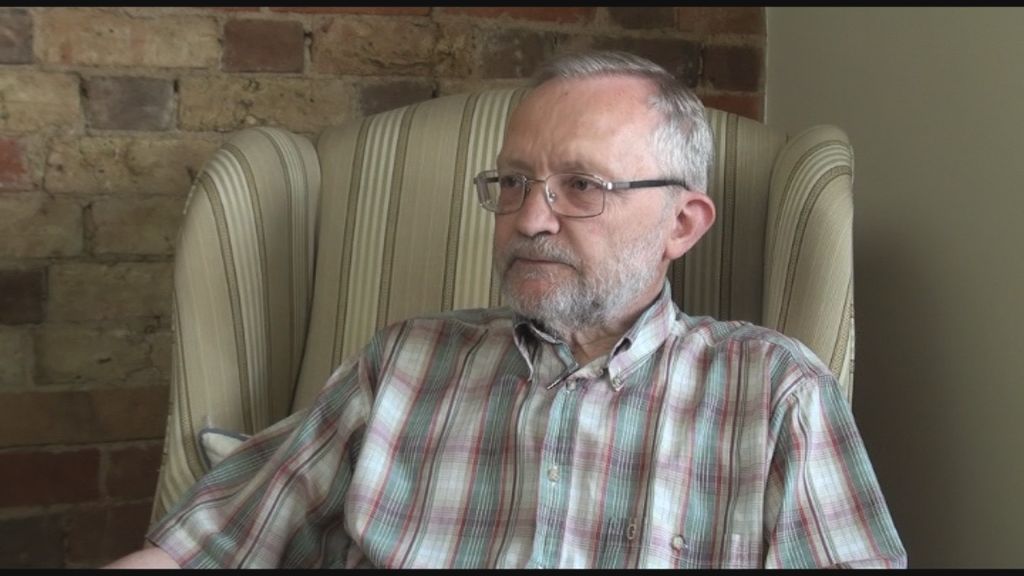
Family name: Dale
Work area/Craft/Role: Laboratory
Industry: Film
Company: Kodak, Technicolor
Brian Dale (BD)
Laboratories (Kodak, Technicolor)
BECTU No. 665
Interviewer: Martin Sheffield (MS)
Date 23/05/2014
Video Recording
00:00:00 – 00:06:10 Introductions and family background; lived close to Harrow; left school in 1967/8; Kodak were the largest employer at the time; got a job at the warehouse in Ruislip; within ten years worked within the motion pictures division and this is where his interest in the film industry began; worked with Brian Pritchard at this time; told Dennis Kimberly (his boss in motion pictures) that he wanted to mainly work behind the scenes rather than with clients; the factory at Harrow was going to stop making motion picture film and move to France; Brian’s job was to maintain quality while this transition happened; John Croft (Motion Picture) told BD to come and see Arthur Branson at the BBC who he got on with very well; BD realised he wanted to work with clients; started out working with rushes and dealing with cameramen etc; he went on the road for 18 months working with television – all of the television companies above the Thames, LWT up to Aberdeen; through this he got to know people at Rank and Technicolor; a management shakeup happened at Technicolor; a position as Technical Controller came up and BD moved from Kodak to Technicolor.
00:06:10 – 00:09:20 BD worked on Superman while at Kodak with Tony Isles who was looking after the feature industry; BD helped on the blue screen work of Superman flying which was very exciting work – separation issues in the colour film; Pinewood changed the side of the road you drive on during production of Supergirl as it was an American crew.
00:09:20 – 00:14:35 Cartlon Communications took over Technicolor circa-1990 (David Cameron worked here and BD exchanged Christmas cards with him); member of BKSTS since his motion picture role at Kodak; chaired the technical committee for the BKSTS and awarded a fellowship in the mid-1990s; front end of the business was tremendously important; release prints were key; print machines ran at 1500ft a minute developing machines 1000ft per minute; BD worked with the stock manufacturers to ensure they would cope under the pressure; sometimes BD would call Rank for advice on issues they were having.
00:14:35 – 00:20:20 Technicolor took over Metrocolor in 1987; management of Technicolor were aware that there would be a decrease in demand so there was a need to consolidate; many people were laid-off at this point; the lab was reduced to 70 staff; it was successful during this period; a major contract held by Metrocolor was lost during this transition; it kept going for three years but profits were in decline.
00:20:20 – 00:30:10 BD discusses his transition from Technical to Operations (dates are not given here); 2000-2001, BD move out to Montreux the week after September 11th; President of Technicolor in the US wanted a laboratory in a part of the word where they could produce film very inexpensively; Rank were already out in Canada at this time; the build began the winter before BD arrived; BD was there to guide operations; lab was built and running in 12 months; closed 8 years prior to the interview; BD visited the Technicolor companies worldwide on an annual basis (this was before moving to Metrocolor); MS and BD discuss the cost of dye transfer.
00:30:10 – 00:41:00 During the period as Operations Director, BD looked towards Japan for management applications, moving away from managers running departments towards self-managed teams; this was one of the most successful changes at the company; BD finally became Managing Director for Technicolor during a period of transition; they now provided rushes through telecine; BD explains the increased use of digital; when the lab was moved to Pinewood they added a space in the lab for digital prints; Metrocolor were the first to put a telecine in the plant and Technicolor soon followed; BD and MS discuss the transition to digital and the return to prints; MS mentions that the Technicolor prints which were broadcast on television at the BBC did not need to be adjusted for transmission like other prints.
00:41:00 – 00:51:30 BD has a credit on Hamlet (1996) shot on 65/70mm – all work done at Technicolor London; BD and MS discuss cinematographer Alex Thomson; MS discusses the bypass bleach effect on 1984 and how later television transmission tried to correct the colour effect; BD used a similar effect of The Last Emperor; BD talks about Derek Jarman’s Blue; MS talks about sparkle problems on an advert for Labatt’s beer staring Leslie Nielson.
00:51:30 – 01:01:30 Technicolor’s move to Pinewood from the site they’d been at since 1936; a lot of equipment had to be disposed of; the lab they had at Pinewood was the ideal size for what they needed; new negative machines were purchased for the move; BD took the executive decision to move to Pinewood to save the business; BD decided to retire on the day they moved to Pinewood as he didn’t feel he knew enough about the digital side of the business; MS talks about his brother’s work at Trident and a similar situation following the shift towards working in home studios; MS discusses Roger Deakin’s refusal to use a Sony camera for his work on James Bond.
01:01:30 – 01:11:30 Charles Parkhouse Award for his work on high-speed developers when Technicolor were leading the field; an engineer had developed a glass developing machine; they worked with Kodak on oxidation of developers, bleach accelerators; when Key Code was introduced BD created a volume of work based on approaches to using the process which had a direct impact on the industry; most of the printers at Technicolor were Bell & Howell; developers were ‘home brew’ until the later days; the strengths of Technicolor lay in the developers; Technicolor never had a 16mm printer – all printed on 35mm and split.
01:11:30 – 01:23:00 BD still stays in contact with friends from the business but has little to do with it; now has a place on the parish council; when he retired it was the right time for the business and allowed someone with a new area of expertise to step in; BD and MS discuss the problems with digital and analogue tape; MS discusses his career and the History Project.
END
Images may be subject to copyright. If you are the rights holder and wish any image to be removed, please contact us and it will be taken down promptly.
Disclaimer: The views and opinions expressed by interview participants are personal and do not necessarily reflect the views of the History Project or any of its volunteers, employees or representatives. (See details). Please also see our Takedown Policy.