
Moira Armstrong
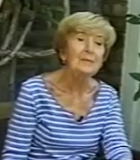
This transcription was provided in 2015 by the AHRC-funded ‘History of Women in British Film and Television project, 1933-1989’, led by Dr Melanie Bell (Principal Investigator, Leeds University) and Dr Vicky Ball (Co-Investigator, De Montfort University).
BECTU History Project Interview no: N/K Interviewee: Moira Armstrong Interviewer: N/K No of tapes: Two Duration: 01:48:32
NB: The time codes given here are estimates based on readings from the original cassette recording.
Tape 1 Side A.
[Irrelevant preliminaries]
So can you please tell me who you are?
I’m Moira Armstrong, yes and I’m a television director in...
And you were born?
In Creiff in Scotland in 1930.
Right, thank you. And were your family anything to do with the business?
Absolutely nothing at all. My mother told me that her mother-in-law used to sit and recite Robert Burn’s poetry, [Laughter] but it’s the only association I’ve ever had with anything in the theatre at all.
Right. And can you remember how the first stirrings or inklings or interests in, in the theatre and, and...?
Oh at school? Mm, I used to write little plays. They must have been awful I seem to think but, and bored my school friends by always producing them at the end of term in the school play and then started to act myself when I was a little bit older and played in, in the school play. We always did Shakespeare in the garden every summer because we had an English teacher who herself was an actress and, and did a lot of broadcasting on The BBC in, in Aberdeen. So I played Portia in The Merchant Of Venice when before I left school.
And did that continue at university?
Yes, it did, yes.
Moira Armstrong DRAFT. Tape 1 Side A
And what were you reading?
Oh I did a, an Ordinary Degree in, in, but you did a sort of what they called a cognate subject and I did English and History as a cognate, which meant the starting mark was much higher than fifty per cent so...
And the interest in the theatre grew during that time did it?
Oh yes, yes. And I left and, and joined Perth Repertory Company and was there for about two years and eventually left...
What did you do in that time?
Oh we were slaves you know.
[Laughter]
[Laughter] And we were sort of ASMs. In fact I was a student to start with, which meant they didn’t pay me anything. And then when they gave me a job as an ASM they paid me the princely sum of four pound ten a week and ten shillings extra for working on Sundays.
And did you play any parts during that time or did...?
Yes, yes, I played Bella in Worm Eye’s View, which was quite interesting and I’ve [Laughter] one horrific memory is actually doing it in Perth Prison, which was very strange because it was like you were playing to an audience of like baying animals, you know, the sort of, there was no silence while they listened to the words at all. Mm, and then we went on tour and I played in a, in a terrible sort of, I can’t remember who wrote it now but it was a farce set in South America and Russell Hunter who you people will probably know played I think it was the chief minister or something. Anyway we were all, he was stage manager and John Hart Dyke and I were the two ASMs and we both had parts in the play. So there were points in the play when there was nobody in the book [Laughter] and no telephone bells could be rung or anything because we were all on the stage. So that was about, I was there for about two years and then, as I say, I left and joined The BBC.
But that gave you presumably a general sympathy with the lot of the actor?
Oh yes, absolutely.[Laughter] And also the thing was very valuable I thought. It actually taught you how to, to make a prompt copy, how to exactly prompt people sympathetically and to be heard as well, which is important. And that was actually very useful in the days of television when I joined it, because I mean I remember being the SM on, on Maigret and in those days you had a cut key which meant that when the dialogue in fact dried up you could actually cut it and give the prompt and it started again. And you raced...
Now you’re racing ahead, you’re leaping ahead.
Oh sorry. [Laughter]
Moira Armstrong DRAFT. Tape 1 Side A
Mm, out of university?
Yes.
In to The Perth Rep?
Yes.
And then what, what brought you to London? What, what, what were your ambitions at that particular time, can you remember? I mean what, were they entirely theatrical as it were or...?
Oh yes. I mean I, I think in fact that rapidly I came to the conclusion that I really wasn’t a good enough actress to get to where I wanted to be, and I’d always been interested in directing and I used to watch the director at Perth Rep and I used to get involved in choosing music and things like that, you know, which was really that side of the business rather than acting. And I left Perth because of romantic reason. It was the sort of break up of an engagement and, and sort of went home to lick my wounds and saw an advertisement to go for an appointments board at The BBC in The Daily Telegraph, which I used to do the crossword every day just to give myself something to do. And then was selected to go down to London to be interviewed and this, then there was silence after that.
[05:00]
For how long?
Oh nothing happened for about, I suppose, a couple of months and no rejection, nothing. So my parents were down in London at The Motor Show, and I learnt afterwards, to my astonishment, that my mother who I wouldn’t have said would say ‘Boo’ to a goose, apparently went up to Portland Place and asked to see the Appointments Officer. I mean I wouldn’t have done it I don’t think, [Laughter] and said, you know, why hadn’t her daughter been told whether she’d got this appointment for the job or not? And they said ‘Oh well, we sent a letter saying she’d been, been accepted’, and my mother said ‘Well, she never got it’. And meanwhile my father, who was a great friend of Kenneth Horne, because I don’t know whether you know but Kenneth Horne actually was a director of, of Triplex Glass as well as being a comedian and father told him and Kenneth Horne said ‘Well, do you want me to do something about it’? [Laughter]
[Laughter]
So I had two prongs going. Anyway the letter eventually, they then repeated the letter and they said we can’t let you come on to the course that was starting that winter but come next May. So I joined them in May of the following year.
Ah, ha. So can you put a date to that?
Fifty-five it must be.
Moira Armstrong DRAFT. Tape 1 Side A
Ah, ha.
Yes, ’56 it must have been when I went there to do the course, yes.
And yes, right. And can you describe the atmosphere and the style of The BBC at that particular time?
Well, it was very sort of… I have to say it was patronising towards women. I mean you were, you were accepted as being a member of the workforce but there was, there was always a little ladies and gentlemen sort of attitude, and it was very current in the 1950s anyway, I mean The BBC wasn’t an exception. But they did pride themselves on the fact that they paid men and women equal, you know, there was no question of men being paid more than women, which was, I suppose, unusual for that time. And we went on a Marylebone High Street course. There were two courses, one at Broadcasting House, which I wasn’t on, and the other one was in fact in, in, held in Marylebone High Street.
And this was a general course or was it particularly to...?
A course for studio managers. And what they, when they put the advertisement in the, The Telegraph what they asked for was people with a degree and some sort of theatrical training, so I sort of fitted that.
Yes.
And that was why I applied.
Mm, mm. Mm.
And most people on, on the studio manager’s courses when I went were, were reckoned to be producer material, and that was what they were after.
Mm, my memory of The BBC at exactly that time was that it was very much a Civil Service, built in the image of the Civil Service?
Mm, yes.
With initials they were everywhere?
Oh yes, yes, there was just….
And stuff of that kind. Do you have any thoughts or memories of that ilk?
Mm, I suppose when I went to, to, I started off in Oxford Street once I’d done, got through the course and, mm, I have actually, I mean I don’t know whether it’s of any interest or not because things do happen to you when you’re doing shift work you know. When there was one night when, mm, the man called, who’s actually well known in jazz who’s sadly now dead, Alexis Korner, and Alexis was on, on duty with me that night. And we had one, depending what shift you were doing one shift always did the dawn Arabic, and in these days the dawn Arabic was in a pressing which was about this big, you know.
[Laughter]
And we always had about two or three hours in the middle of the night when we could sleep. And I was up on the fourth floor in a sort of hospital bed somewhere and Alexis and I had, had swapped shifts but he’d taken away the dawn Arabic with him and I didn’t know where it was. And I was sound asleep and the phone went and there was an engineer saying ‘There’s nobody done the pre test for dawn Arabic’, and I went, leapt downstairs all four flights and went down to what was called LG22, which was a sort of a dubbing theatre in the basement to find Alexis with, found the, the dawn Arabic and it was, we went on air two minutes late. And of course, in those days there was an apology sent by The BBC to The Foreign Office and all that. And then, then there was the, the inquest afterwards and of course, what we didn’t reveal to, to the head of, of Zoomount [ph 1A 09:42] at that time was the fact that our shift leader, who was a man called John Hill, who spent his time cooking for Noël Coward and people like that had not been there that night. And we, we refused to say, we just didn’t give, let on at all, never, never told.
No.
On him. He should have been rather grateful to us he might have been sacked. [Laughter]
[Laughter] Quite. Mm, and from Oxford Street you went to Bush House I would imagine?
Yes, we did.
Which was the headquarters of the…?
European and Overseas Service of The BBC. Not the Overseas. The, the, it was actually just the European and South American Service of The BBC there. And then because Oxford Street was about to shut down.
[10:00]
Mm.
So eventually they all moved down to Bush House. And I hated Bush House, I used to call it ‘Alcatraz on the river’.
[Laughter]
Mainly because it was so big and you felt somehow you were never going to get out of it, you know. Oh you did eventually but...
But, but enormous, you were broadcasting in an enormous number of languages.
Oh yes. And then in fact I did actually quite a lot of announcing on what was called Green Continuity Service, it was the Overseas Service of The BBC.
Weren’t they all different colours?
There were Green, Purple and Brown.
Continuity?
Continuity. I can’t remember what other colours they were. And, but green is quite interesting. I quite enjoyed it because in fact the night duty particularly was, was quite fun. And you had to do a programme parade about five o’clock in the morning, which was fifteen minutes long and time yourself on it, which was quite interesting to do. And I was there for about, I suppose, was it two years or a year and half? And then eventually I, I saw a, a… I did a attachment as an AFM in television and then eventually applied for a job and got it. And before I left Hugh Venables, who at that time was head of, of Bush House tried to persuade me to stay. But I’d done the announcer’s course by that time and he said ‘Well I think you should stay’? And ‘I don’t want to stay and be bored to death’, I said. [Laughter]
[Laughter]
So I left and went to television, in 1960 it must have been.
And floor managed and AFM’ed and, and but the floor manager was later presumably?
Well, I, well, I AFM’ed for about six months and then applied for attachment.
On what sort of shows?
Oh it was in Drama only. But when I applied for a floor managing attachment that was on General Programmes, I thought it would be a good idea to get out of Drama and just see how everything else worked and...
Well, going back to the Drama.
It was a drama post that I got.
Yes.
Yes.
Yes. I mean they were, they were drama series, plays, serials?
Everything.
Everything?
Yes. Including...
Do you remember any, any particular ones which, which stand out, ‘Maigret’?
‘Maigret’.
It certainly did. [Laughter]
Yes. In fact the opening titles of the, the shadow of the branch as he strike his match against the wall was me holding a branch of leaves. [Laughter]
[Laughter]
And I did quite a lot of the Maigrets. In fact, I worked with Andrew Osborn in his office, and because of interest in casting he used to let me do quite a lot of it quietly when he got bored or tired. And Rupert used to, in fact Rupert Davies who played Maigret used to rely on me to because I used to really hand feed him. I would draw up a little tiny camera plan of the sets for him so he knew where he was going in the, in the actual studio.
He wasn’t very hot on the lines I believe?
No, he wasn’t, [Laughter] that I learnt. So I, I used to run round with my cut key after him around the sets.
Yes. Could you just recap that story because now that it’s in context about…?
Oh I see. I see what you mean, yes.
Yes. So he dried?
Yes. If he dried you, you had to, and what you had then you had a cut key, which was a cable with a key on the end, a little sort of a stopper on it, and you could cut the sound of the studio.
Yes.
Long enough for you to actually feed the line. If you were good enough at it it meant they didn’t have to do an edit in it. And, and also because of the length of the, of the cable you had to take it, you, there was no question of it being radio controlled or anything it was actually, you know, plugged in to the wall somewhere. Then you ran round the studio with this great length of cable from set to set with, with the book in your hand and you learned how to prompt pretty, pretty well in those circumstances. I was quite glad of my training in the theatre.
And you very often see the panic in the eyes.
Panic in the eyes, oh yes.
[Laughter]
And we always knew...
Yes.
In prompting.
Yes.
Because it’s just not that, it’s, it’s just something about the flow of what the lines tells you.
Yes, yes, yes, yes.
That they’re going to go.
You would think that it would happen in rehearsal of course, then...
Oh yes, yes, yes. I remember in the theatre in fact when we were doing When We Are Married and I was on the, on the book and an actress called Chattis Alamond [ph 1A 14:06] who, who was playing the cleaner I think it was. She came in on the set and she started with the line about ‘I saw that organist down the road’, I knew just, I just knew she was going to dry. So she in fact when she actually stopped she got the line, you know...
[Laughter]
This is, it happens sometimes.
Yes, yes, yes. Apart from ‘Maigret’ which series do you remember? I can remember you were on a serial called Chloe about the French Revolution?
Oh yes, yes. Well that, that was actually quite fun because that was called The Infamous John Friend live every Tuesday evening from Studio ‘G’, I think it was, in Lime Grove. And it was quite interesting because in fact in the final episode an actor called Alexander, no David Baron not Alexander, David Baron was playing Napoleon and his wife Vivien Merchant was playing the inn-keeper’s daughter I think. And I remember Barry Foster played the lead and Margaret Tyzack was in it too. And I remember after one, I think it might have been the final episode, we were all in the club bar in Lime Grove and Barry Foster was a great friend of David Baron and said ‘Now we’ve all got to find a title for, David’s written a play and he’s stuck for the title’. So we all sort of threw up suggestions and, and because this was Harold Pinter and the play was The Birthday Party so I remember that quite clearly.
[15:24]
Mm, mm, that would be his first.
That was his first one, yes, yes.
Indeed, yes. Mm, any other particular series or serials at that time before you got on to the general area?
Mm, I remember going to, being the first AFM to go to Paris on filming of Maigret. This was done under a sort of pretext because I was going on holiday in France anyway and I offered to recce a location for them, and I was going to Cassis in, in the south of France. And because I’d done that they said they’d let me go to, to...
To shoot?
To shoot, yes. Which was quite fun.
Because everything was very, very studio bound in those days wasn’t it?
Yes.
Or mostly. I mean ‘Maigret’ was but...
Oh we’d had, you know, quite a lot of the stuff in France, yes.
Yes, yes, but they had the money.
Yes.
[Laughter]
True.
Presumably because it was sold internationally, I, I don’t remember but...
I suppose it probably was, I’m not quite sure. It wasn’t, I don’t think it was sold to America.
Yes.
But it was certainly sold to Australia and places like that, yes.
Yes, yes, so it, it cost quite a bit of money?
Mm.
Anyway let’s go on now to the floor managing job which took you out of Drama?
Yes. And I landed up doing, you know, Panorama with, and sort of met sort of people like Richard Dimbleby.
Let’s stop, sorry, can we just stop there and go back on that just and you go on to floor manager. If you can just change the angle a bit.
Oh right, yes.
Moira Armstrong DRAFT. Tape 1 Side A
Oh right.
Okay. Just tighten all this a little. I’m not miked.
Right.
So it’s quite useful if you include the question in the answer if you know…
Oh go on, yes, yes.
[Laughter] Say when John. [Pause] That’s lovely.
Are you level?
Yes.
Because the viewfinder doesn’t look level from here, but that’s, that’s just the viewfinder obviously.
Yes, no, no, no, you‘re looking very good, you’re looking very good and level.
[Laughter] And level.
And level.
I’m not asking whether I look good or not. [Laughter]
[Laughter] No, no, it is fine. Good, okay let’s, in that case we’ve been through the AFM and the Drama series?
Yes.
And serials. And then you became?
And what happened then was in, in Nineteen…, when was it now? Going back in about Nineteen…, when did BBC2 start, ‘66,’65?
BBC2 started in’64.
That’s right. Well, then just before that there were advertisements for directors, to go on the directing training course, for people to go on the directing training course including members of staff. So I applied naturally because I was interested in, in, you know, I’d learnt an awful lot being a PA.
Mm.
A PA in those days was in fact the director’s assistant, not behind a typewriter but actually in organising filming, doing the studio floor, helping with casting, and I was Jim McTaggart’s PA for about two years so I learnt a great deal from him.
A great name.
And James McTaggart for people, you know, who sadly died very young when he was forty-six.
Sorry, I’m going to have to stop for him. So we’re recording.
Thank you Alan. So then there was the advertisement for directors and personnel to do, to start Channel Two, BBC2?
Yes.
And you?
I applied for one of the traineeships I suppose because it was open to members of staff as well as people from the outside. Like for instance, you know, Ken Loach was on the course before me and various other people, Gareth Davies was another one. And, and you had to be, there was an appointments board and then if you were selected from that board you then had an individual interview with Donald Baverstock, which I had, he was a rather frightening person in those days. And, and then I was selected and we went on, I forget what time of year it was, we went on a training course in Woodstock Grove, which is very near here. And on, in those days you did three, it was six weeks of lectures and then you did three exercises and one, the two of them were set exercises, you had to do the ones that were offered you, and then the third one was your own one. And the first one was in fact a script that had never been done as Z-Cars, and I cast john Thaw in it because I thought he was a very up and coming young actor. [Laughter] And then the middle one was, mm, a training exercise in how to handle graphics, and this was the Mad Hatter’s Tea Party, and I got all my mates from radio to do the voices and put music on it and did that. Then the third one was written for me by Jim McTaggart, I’d worked for for two years as his PA.
[20:06]
Yes.
And I said to him ‘I don’t want anything realistic at all, I want something that I can use the studio’. Because I’ve always said, maintained, that in fact a television studio if used properly is actually just as exciting as the theatre, and you can be just as imaginative if you like. And unfortunately, you know, television went down the road of realism and has landed up in films. I mean it’s, that’s what happened to it.
Yes, yes, yes. Can we go back a bit and talk about what your, what PA meant in those days and your association with Jim?
Well, PA in, in those days in fact was somebody who helped the director. There was a, a production assistant that it’s called now, who in fact who typed the camera script and did all the sort of paperwork attached to, to doing a show. In fact you had your own office as a director and you had a PA and an AFM and an assistant, and they were called ‘assistants’ then not ‘production assistants’. And you in fact helped with casting, you very often helped with money and, you know, it was a training to be a director really to a certain extent.
Mm, yes.
And you learnt an awful lot about cameras and lenses and things in the studio anyway. Mm, and I worked with, with Jim McTaggart for, for two years so I learnt a great deal from him. The people, I suppose people do remember him because in fact The McTaggart Lecture still happens at Edinburgh Television Festival, but I think Jim must be whirling in his grave to see the people in fact who do the lecture nowadays. Mm, because when, when it started the Festival was for people who worked in the business, not for controllers and heads of departments, and if you go to it now that’s all you’ll find because they charge so much as an entrance fee it’s only those people can actually get paid for by the organisation they work for and...
Can we hear a bit, a bit more about, personally about Jim and his achievements in that you talk about?
Well, the lecture that’s named after him was there because in fact in those days, which was in fact, and he died in 1974 and there was an association called The Association of Directors and Producers, it started in 1972 I think, ‘72, ‘72 or ’73. And they were the people in fact who eventually inaugurated the lecture named after Jim when he’d died in 1974. I think that was it if my memory serves me right. Because in those days he was considered to be one of the best directors around. And he was, not only was he good with actors but he was very good technically, I mean he’d, he did the first production of Alice In Wonderland using what they called CSI then.
CSO?
CSO, sorry, thank you. [Laughter] I always get it wrong, CSI.
[Laughter]
That one always confuses me, yes. Colour Separation Overlay, I should remember that.
Yes.
Which was in fact how you actually put your actors in, you know, fanciful backgrounds because it’s done with two sets of pictures. It’s done with computers nowadays of course. And he did a lot of writing as well.
Yes.
He was very good at adaptations and he in fact produced the Wednesday Play. Sidney asked him to do, you know, he did thirty-five plays in one year, which is an awful lot of work and...
Moira Armstrong DRAFT. Tape 1 Side A
He did a lot of work with writers?
Oh yes.
And he encouraged?
Yes, and Tony Garnett and, and, and Ken Trodd, you know, worked for him. And I’m pretty certain that Jim produced Up The Junction, which Tony Garnett always takes credit for. I think Tony was in fact the story editor on it but I’m sure he didn’t produce it as such.
No.
So in, to a certain extent, you know, what, what he was good at, even the people who knew him still remember that.
Yes.
What else can I tell you about him?
That you talk about your experience with him in, in to...
Oh yes, well, yes. Because in fact, you know, I used to watch what he did obviously in rehearsal and I, you know, I did the camera scripts for him so that I learnt a great deal. And in fact I still do a shot list for film, it’s exactly what he did, you know, that’s what he taught me and I’ve never changed it because it seemed to me the most logical way of doing it.
Mm. Did anything surprise you on the, on the course. Do you remember there being...?
Too much I knew actually, [Laughter] which surprised me. [Laughter] Because, you know, you do you pick up things, you know, by osmosis. And I found that a lot of the technical lectures and things were things that I did know. But it was interesting, you know, particularly the other people on the course that one met. I can’t remember his name now, who’s the man who, who was Head of Light Ent…, the Light Programme on BBC.
Lennie Taylor?
With James, yes, I’ve, well yes.
Lennie Gilbert?
No, not in television.
No.
The radio. Oh, anyway he was on the course and Hugh Gaitskell’s daughter was on. Julia Gaitskell was on it as well. I don’t know what happened to her but she never, she never turned up in television.
[25:03]
No. Hugh Wheldon told me that seventy-five per cent of the people they put on those courses for BBC2...
Mm.
Either went off to ITV or abroad, or well at least fell by the way?
Oh really?
They only got twenty-five per cent out of all those courses, yes.
All those courses, yes, interesting.
But anyway you, the course finished?
Yes.
And as I remember your, you won this contract for the course was the course and a production?
Yes, provided someone wanted to give you one.
Right. [Laughter]
[Laughter]
Quite, what happened?
Well, I got offered a thing called R3, I think it was called, which was a sort of drama series set in a science lab that Andrew Osborn was producing and it had Elizabeth Sellars and Richard Wordsworth of Quatermass fame in it. And I did about I think three or four of that and at the end of, of the year Andrew said ‘I can’t keep you on directing unless you leave the staff Moira and I’ll give you a contract if you do’. So I did, left the staff and I came back on contract and worked in The BBC until 1972 I think.
Mm, mm. You told us before we started of something that happened to you immediately after the course finished, you took on a production?
Oh yes, and rather frightening in fact because a director who was doing a Wednesday Play written by Alan Plater and it was a huge set in TC1, which is a very, very large studio of a builders yard with, you imagine it, lots of escape routes for cameras and things, he had cables all tangled up. And this director was having some sort of, I don’t know, personal problems which was making his work very erratic and, and obviously was heading for a breakdown. And Sidney Newman called Jim in to the office one Monday morning and said, explained this to him and said, you know, ‘You’ve really got to do something about it’. And Jim said ‘Well, Moria’s just come off the course’, so that I was put on it which was a bit terrifying. I can’t remember the director’s name now, perhaps that’s just as well, because, well he treated me rather like a sort of pupil giving the exercises every morning when I brought in the camera script, I’d done that before. Because the deal was that he kept on talking to the actors and I would do the camera script, which is a bit insane really when you think of how you do write a camera script. However we went in to the studio in to the gallery and it was three days in for that particular one because it was reckoned to be a rather difficult production. And this director sat between the vision mixer and me for a bit until Jim eventually came in to the gallery and said ‘You can’t do this, you’ve either not, Moira’s doing it or you’re not doing it so come in to the observation gallery with us and leave her alone’, so he did. And the moment I remember was in fact after having given final notes and all the rest of it and in the dinner break before we started recording that night. And I was, was going to, making my way to the gallery and I was standing there on the back staircase of Television Centre and saying to myself ‘I could actually walk out of the building right now’. [Laughter]
[Laughter]
But I didn’t, [Laughter] I went in to the gallery and did it.
Can we hear a bit about the set up in, in the Drama group at that time? I mean Sidney was...
Sidney was Head of Drama.
Yes, yes. Which included Series and Serials and...
Oh the whole lot. So and almost everything, yes.
And there were a number of sort of star producers presumably?
Yes, yes, there were like Innes Lloyd.
Yes.
And, and Cedric Messina. And Rosie Hill was his story editor and she, I remember people used to complain about the number of times that Cedric got a credit in the newspapers and, and Rosie said ‘Well, my, my job, I’ve been instructed that any time I’m talking to the press I’ve got to mention his name at least three times’.
[Laughter]
[Laughter] So that’s how that happened..
[Laughter] Mm, so, so you went, you went freelance in, in 1970 is that, that what you said?
I went, yes, because in fact I had worked with Verity Lambert on Adam Adamant in the 1960s, Seven, ‘66, ’67, and Verity had moved to London Weekend to do Budgie and she asked me to, to come over and, and do two of those.
Right. Before that was a, a very successful and beautiful serial set in Scotland?
Oh Sunset Song?
Yes.
Yes, yes, mm.
How did that come about?
That came about, I think it was because in fact I had actually, I had met Pharic Maclaren who was the producer in Glasgow at the time. I can’t remember how I’d met him, I don’t think I’d done anything in Scotland before that. Oh, we did The Boardroom, so I met him when I was up in Scotland doing that that’s right. And Bill Craig, who was a very good writer who’s sadly not, no longer with us, had done this adaptation of Sunset Song, and the first I heard of it in fact was a director at the time called John Davies and was sitting at one of the tables in waitress service in Television Centre and he said, he said ‘Moira, have, have you read a book called Sunset Song’? And I said ‘Yes, of course, I have’, you know, and he said ‘is there a good part for my wife in it’? [Laughter] he said. And I said ‘What do you mean good’, and he said ‘Well, they’re doing a version of it in Scotland and they’ve asked me if I would like to, if I was interested’. So I immediately got on to my agent and said ‘Find out about this’.
[30:50]
Mm.
And we did, and eventually through machinations of, through Jim and through Verity as well talking to Pharic in Glasgow and saying ‘You ought to have Moira to do this because that’s, she’s a Scot. That’s the part of the country she comes from, the north east of Scotland, you know, what are you doing asking an Englishman to do it, it’s silly’?
And it’s a girl’s story?
And it’s a woman central character, yes. So eventually I was doing it and it was one of the happiest times of my life in fact because it was, it was going back if you like to, to one’s roots. And because I came from there I was a great help to people, because most of the cast, you know, didn’t come from that part of Scotland so you had to teach them a bit about the accent. I had one genuine person coming there, in Stonehaven, Victor Carin who played a lead part. And even people like Roddy McMillan and, you know, the various actors of that sort of stature were, came from Glasgow which is the west of Scotland and quite a different accent. And it was a long, you know, a hard job ironing out the west of Scotland from all their voices.
Moira Armstrong DRAFT. Tape 1 Side A
[Laughter]
But, but it was, it was one of the most satisfying things I’ve ever done because it was a very, very good script. I mean Bill I think was way ahead of his time because he did write Callan and things like that for London Weekend in the ‘60s. But because this was very close to him too he did a wonderful job I think in the adaptation because it was like a, it was a, it was a film script actually.
Yes, I remember a lot of location.
A lot of film, yes.
Indeed.
And we had a very generous time to do it of course.
In those days.
In those days, yes.
And how did you come to cast the leading lady?
Well, I had seen her in I think it was a Dr Finlay playing a German, and I’d actually… Hang on I’ve got to go back in time because in fact I’d worked with her before. In 1967, ‘68 I did a Wednesday Play by Piers Paul Read called Coincidence, and there was a part of, of a rather unpleasant Nazi’s wife in it and I cast Vivienne Heilbron who, who played eventually Chris in Sunset Song because I’d seen her in Dr Finlay’s, that was...
Right.
And she played a German in that, that was the reason, and she’s Scots of course, from Glasgow but she’s got a very good ear and she looked right. I had to convince Pharic that, that she was right, she had to come up to Glasgow and do a screen test and all that because he wasn’t convinced. Then eventually he was and she was, she was cast.
Right. Mm, and then, then you went off in to the wide world?
Yes.
I..E, London Weekend?
Yes, [Laughter] yes.
[Laughter]
Which was very strange compared to The BBC.
Mm, can you pinpoint any differences? I mean...
Well, castings. I mean I, I put in, my foot in it immediately I, I joined. Because I was sitting in this great big wide open office in, in London. Was it called London Ground it was called, it was South London, South Bank. And it was an open plan office which I’d never sat in before and I started to cast and I rang up agents and, you know, talking to them and all that and eventually I had a call from the head of casting in London Weekend saying ‘What are you doing talking to agents? Directors don’t do that’. And I said ‘Well, they do in The BBC because we don’t have any casting directors on our staff’. He said ‘Well, just do me a favour and come through our department from then on’. So that was me my knuckles being wrapped.
Do you remember any other, other differences between The BBC and commercial programmes?
Well, not, no. I mean the actual organisation of how you do it was virtually the same, you know, mm...
A lot of the companies were built in the image of The BBC.
Yes, yes, they were. And, but the studio that they did Budgie in those days was a bit of a ramshackle place in Wembley because they hadn’t moved down to their studios in South...
King’s Reach?
South Bank, King’s Reach. So it was a bit like sort of, it was terribly so untidy it was like a second hand shop, you know, there was sad old equipment was stacked in corners and things like that. [Laughter]
[35:06]
And then so you leapt about from then on from company to company and back to The BBC and away and the phrases that I’ve got in the list here shows that ‘Boys And Girls Come Out To Play’, ‘Shoulder to Shoulder’, ‘Girls of Slender Means’ I mean these are...
Well, Girls of Slender Means was Muriel Spark’s novel.
Yes, yes.
Which was again a very good adaptation by Ken Taylor, who eventually did Jewel in the Crown of course. But it was, it was really because he was very fond of Muirel Spark and it was, it was great fun to do because it was, it’s, it’s a terrific book. And, and I had a wonderful cast, Miriam Margolyes played the lead and with Jack Shepherd and James Lawrenson and Patricia Hodge, you know, so it was really a very, very good cast.
Mm, indeed. Can you tell us a bit about ‘Shoulder to Shoulder’ which is another?
Shoulder to Shoulder was Verity producing, and she was determined to have as many women on it as possible because of the subject matter of course.
Moira Armstrong DRAFT. Tape 1 Side A
Which was?
The suffragettes and the rise of the, of what happened with them and, you know, like Emily Wilding Davison being knocked down by the horses, the King’s horse in the Derby, which was my episode . And it was really the story of the Pankhursts basically, and Siân Phillips played the senior Pankhurst whose first name I can’t remember. Christabel and Sylvia were the two daughters. And it was centred round their efforts to get the vote for women and it was written by, as I say by Kay and Hugh Whitemore, I did one of his episodes. And it was, it was run by Verity as producer and the series editor was, was Ned Shepherd. And the third one was… Now I’m going to forget her name because...
Georgia Brown?
Georgia Brown, that’s right, yes. And the joke was that they all wore very big hats [Laughter] and Jim used to sort of say he’d had to recruit them as the three witches, you know, [Laughter] because they really were big hats.
Was it not Midge Mackenzie?
What did I say -Midge what?
Midge something else when she was...
Oh Midge, Midge Mackenzie this was.
Yes, yes.
Yes, that’s right.
Mm, now Verity was anxious to use as many women as possible on that?
Eileen Diss designed it.
Yes. Of whom, I mean she could walk, she walks on water as far as I’m concerned, you know.
Yes.
Mm, we’re now in to the ‘70s. The position of and the evidence and quantity of women in the business, I mean perhaps you have to say a few words about that when looking back in to the ‘60s and forward in to the ‘70s?
Oh yes, yes. Well, I think in fact that the change is more, was later.
Oh.
In the ‘80s really. I don’t...
What was the situation as you saw it at that time?
Well, I suppose in a way I was lucky because I never felt in any way prejudiced if you like because in fact I’d sort of grown up in, in the business. I mean I’d, people knew me in The BBC because I’d actually been around for quite some time. I think occasionally you would find little sort of pockets of resistance. You know, the lighting director whom I eventually got to know quite well who, you know, we had terrible arguments. I won’t say what his name is.
Oh go on.
It was John Treays in fact.
Right.
But, you know, John and I, John was really quite a tough customer and, and I think there was a resistance to, to being told by a woman what, what they wanted. Not necessarily what to do because I didn’t know enough about lighting to do that except I knew what I wanted, and we did Villette together in 1969.
A classic serial?
A classic serial, yes, which was cursed from the start because there was a, there was a union disagreement and, and every single studio day the sets were late getting in so we got behind, you know, the whole time and that was very, very hard, because it was a difficult show anyway and no, no one ever allowed, gave us the credit for actually getting through it even though we got late starts and all the rest of it.
Yes, yes, yes, you were expected to cope?
Yes.
Now, and what was, what did you see around you? You were, you were led a charmed life you know that.
[Laughter] I never feel that now.
[Laughter]Mm, but there were other female directors and other women?
Not very many. I mean June Craft was one and latterly Pru FitzGerald and Paddy Russell were two but that was all.
Mary Machin and one or two others?
Maybe, yes.
And, but they had been floor managers?
Yes.
But they had been floor managers they had been around for a long time, serials per se.
Yes, yes, yes. Well, June in fact was, had been practically brought up in serials, yes.
Yes. So...
But they didn’t do all that much. I mean June did but, you know, Mary and Paddy and, and Pru didn’t do a tremendous amount of directing, I mean they were there but they didn’t do as much as I did.
[40:06]
Yes, Joan Kemp-Welch of course, moved from company to company?
Mm, yes but hardly ever The BBC, nearly always on, on ITV.
Yes. She did a ‘Doomwatch’?
Oh did she?
For me, yes.
Oh right.
That’s how we met.
Yes.
But apart from that I mean in terms of responsible jobs in The BBC they were keen...?
Well, there was any number of, of people working on scripts, which of course, indeed there still are, predominantly women in the Script Department in fact. And a few women producers but predominantly men. It’s only now that most producers are men, are women, I mean there aren’t all that many male producers now. I mean I think the balance has gone too far the other way myself, you know, because in fact as a woman director you find yourself you either suffer because of that. You get gay men who are producers and don’t want women around or you get women producers who want men directors around and I mean so you really, you lose out on both fronts. [Laughter]
[Laughter] Right. So I’ll, I’ll hand you a, you know, sort of five or six and you can pick out your few. ‘Bevellers’, ‘After The Solo’, ‘Clay, Smeddum and Greenden’, I remember that, ‘Abide with Me’, ‘Maiden’s Trip’, ‘We Never Do What They Want’. What do you remember of those?
Well, Clay, Smeddum and Greenden was another Lewis Grassic Gibbon.
Ah.
You see, which was in fact three short stories joined together by a narrator who was a travelling grocer played by Fulton McKay, who was wonderful actually with that. And Clay was the name of one story. Smeddum and Greenden, Greenden was in fact the final story, which Jen Nielson and Brian Cox in it. The middle one Smedden had Eileen McCallum, to lead and Clay had Victor Corin as a lead.
So with that would, were those Scottish locations and, all in?
Oh yes, again in the north east again.
Yes.
Yes, and a lot of the locations I knew because I’d found them when I was doing Sunset Song. And, and the thing that really made me very angry was in fact it went on the air at the time when there was, there was a time when during the miners’ strike with Heath in, in power when there was no transmission at night at all wasn’t it? They’d stopped at something like six or seven in the evening. And then when it came back to normal again they found they were very, very short of programmes. And Alistair Milne who was Controller at that time said ‘Well, there’s Clay, Smeddum and Greenden’s ready’.
[Laughter]
So it went on the air with no pre publicity.
No.
Nothing in The Radio Times, absolutely there was no help at all. And I was just was so angry because it was a, you know, and I reckoned it was one of the best things I’d done and it just disappeared in to the ether.
And was never repeated?
No.
No, and...
They don’t repeat things from Scotland, you know, in London.
[Laughter]
Very much a, you know, there’s a great deal of, of, of sort of, I don’t know whether there’s jealousy but sort of ‘Oh well, it’s the regions’, you know.
Mm, mm. It says film here on the list. I mean was that entirely on film?
Entirely on film.
Ah, ha, ha. So it must exist somewhere?
Oh it does. I’ve got it.
Ah, lucky you.
I’ve got a DVD of it.
Ah, mm...
Which I managed to prise out of The BBC quite recently.
Right. ‘Abide With Me’, ‘Maiden’s Trip’?
That was a Critic’s Prize at, at Monte Carlo.
Ah, ha.
Aubrey Singer’s.
Oh sorry, yes.
Yes. It had, Mark Chivers who was the producer had myself in to his office, he said ‘Well, we’ll put it in’, he said ‘but it’s not going to win anything but never mind’. [Laughter] So we’d got the Critic’s Prize which was, which was nice.
Mm, mm.
And that was in fact a very nice script by Julian Mitchell, and with Cathleen Nesbit playing the lead.
Ah, ha.
And a wonderful seventeen year old schoolgirl -no, fifteen year old schoolgirl that I found in the Forest of Dean and who was just a natural. And it was a lovely hot summer 1976 or whatever it was.
Six.
Six, yes. Down in Stroud and it was, it was great fun to do.
Mm, yes. Mm, ‘One of the Boys’?
That was two plays at Thames.
Ah, ha.
For Barry Hanson and Ann Scott . And one of the boys, now which one’s the…? Yes One of the Boys was in fact the one that was virtually an OB and it was set in, most of it in a garden, a barbecue at night, day in to night so we did kind of about three days in Michael Apted’s garden. In those days, I don’t know whether he still has a house there but it was very near the studios in, in Teddington. And that was, that started off with a rugby game. I don’t really know very much about rugby.
[Laughter]
And I learned the rules very fast. [Laughter] And also it was, I remember it very clearly because there was one scene set in the bar at the rugby club and to get the right atmosphere we, we had them singing The Ball of Kerrymuir, which is a bit, all the people who’ve anything to do with rugby know is a fairly sort of scurrilous song with a lot of very rude lines and words in it. So we, I had never heard all the verses [Laughter] but I heard the whole lot of them on the night we actually filmed it. And Anne Reid was in it and Diane Fletcher were the two wives. Ken Hutchinson was the, was the lead. And it was, it was written by that writer Anita Bronson, I don’t know if she’s still writing now but she did a series about the Revenue people that ITV did.
[45:30]
Yes.
And the other one was a, was a studio piece by Pam Gems.
Ah, ha, right, ‘As Quiet As A Nun’?
A serial by Antonia Fraser.
For Thames?
For Thames with a wonderful women cast.
Patricia Hodge?
Pat Hodge, no Pat wasn’t in it.
Ah, I beg your pardon.
No, she did in fact the series after. That was the initial, the initial one with Maria Aitken playing the lead.
Yes, mm.
And James Lawrenson was the villain and there were people like Brenda Bruce. What’s that wonderful actress who was in Henry The V played the princess?
Renée Asherson?
Renée, Renée Asherson, yes.
Now were things, this is now, we’re up to the end of the ‘70s now?
Yes.
Were things beginning to change, I mean in terms of budgeting, production, the way you got jobs?
Budgeting certainly was changing, it was much tighter and they were doing that by shortening the number of days you could film.
[End of Tape 1 Side A 00:46:30] NB: The times given here are estimates based on readings from the original cassette recording.
Tape 1 Side B.
And that was a six part serial. So we did quite a lot of pre filming of what was the exterior of the convent. But Bill Palmer, who was the designer did a wonderful set. I mean it really is. I’ve seen, I mean he sent me DVDs recently that he’s managed to have done of some of the ep…, almost, all the episodes in fact. And I mean to see that set then I mean it just looks tremendously good. I mean he built a sort of tunnel in the studio which was meant to be the sort of secret passageway.
Yes, yes.
But the actual convent and staircase and the corridors, you know, they were terribly authentic looking. I mean I get very angry when people talk about these cardboard sets, they weren’t cardboard at all, you know, they are very solid and beautifully lit if you knew what you were doing.
Yes, absolutely.
Yes.
I mean were you at the mercy of the lighting man.
Yes, yes, you had to, had to get, you know, get your best one you could get a hold of, you know.
Yes, and you could, as a designer you could advise the director to a certain extent of where the, you know, the key points were?
Yes, yes. I mean that’s the interesting difference now I think between working as a television director and working in, the film as the only medium. But when you’re in a television studio and you’re in the gallery you are actually in complete control, and you say to the lighting person what you want and you tell the cameramen what the shots are. But of course, in film it’s quite different. Because a lot of the control is taken out of your hands.
Absolutely, mm.
You know it’s…
And the DOP is paid more than….
Is paid more exactly. Which is a real, you know, they don’t have to do any homework.
No.
Like the director’s slogging away every night doing the shot list for the next day, you know.
Yes, yes. Mm, ah now we come to the piece de, piece de BAFTA, ‘Testament of Youth’.
Exactly. [Laughter]
How did ‘Testament of Youth’ come about?
I had a phone call from, mm, should I introduce that for you ?
Yes.
Okay. Testament of Youth came about as a result of a phone call from Jonathan Powell who was Head of Serials, and he said ‘Have you read a book called Testament of Youth Moira’? And I said ‘Well, funny you should ask me that’, I said ‘because I have’. And I read it when I was at school, it was in the class library and I remembered it very clearly because I was very interested in the First World War and I had read, there was a book at home called Her Privates We which was written by an Australian I think in the 1930s and I had read through when I was about twelve I think because it was in the bookcase and I just got interested. And there was another book which was actually, and I used it for a lot of the photographs that we used as the graphics in Testament of Youth and it was in fact I think it was given by The Daily Express in 1933 and my family must have got it and it’s photographs of the First World War, and they are fantastic photographs in, obviously in black and white.
Yes.
And with, with a lot of captions and very interesting information in it, and the copyright sources which was very useful to, to actually get to use them. And so when he had said that I said, he said ‘Would you like to come in and talk to us about it’? So I went in to Threshold House and there was Betty Willingale who was head of Script and Classic Serials, and they said ‘We’ve had this script by Elaine Morgan and we wondered whether you would read it’. And so I took it home and read it and said yes, I thought it was wonderful and please could I do it? So I ended up doing it.
Ah, ha. Did you have any, anything to say about the script shaping the dialogue stuff, anything? In other words was there a director input?
No.
Ah.
Not in, the, the script had been worked on with Betty and Elaine before that. There was very little that we did, very little that we changed in outside rehearsal, hardly anything at all. And it was quite tricky some of it because in fact we had to do, you know, I had a very good cast so they, but there was some, some of the dialogue which was, it wasn’t stilted but it was just sort of a bit odd in places, but you always iron that out anyway.
Yes, yes, yes. So who got the producer credit for it?
Jonathan Powell.
Yes, right. Can you remember the casting process?
Yes, I mean I did the casting and we would sort of…
Because it was BBC?
Yes, there was no casting director.
[Laughter]
And Cheryl Campbell played the lead, Vera Britten. Because I’d seen her obviously in Piers Haggard’s production of, of Denis Potter’s, what was the name of it?
‘Pennies From Heaven’.
Pennies From Heaven, that’s right. And she, although she didn’t look like Vera Britten but, but she was small and a very, very good actress. Who else was in it? Emrys James, lovely Emrys James played her father.
Yes.
And Rupert Frazer played her brother Edward and Peter, mm, Woodward…
Yes.
Played Roland her fiancé. And that was going to be the other way round to begin with, but it was Jonathan who suggested that, that we swap it and make Peter play Roland and Rupert play Edward, because I had originally cast them the other way round.
[05:00]
Yes.
So we dyed Peter’s hair to blonde.
[Laughter]
And gave Rupert different coloured contact lenses because he was blue eyed and Edward was brown eyed. And who else is in it apart from that? Well, played the mother, Jane...
Wenham?
Wenham, that’s right and quite...
Lots of others?
Lots of others, yes.
Lots of other splendid people?
Yes.
And you, you had quite a bit of filming?
Yes.
Location filming and some graphic sequences?
Mm.
And beautiful in fact.
And some photo red.
Yes, yes, yes. It was a very splendid production.
Yes.
Were you pleased with it?
Oh yes. I mean I, you know, there are some productions that you get completely involved in and, and that was one because I had a very good crew, you know, and Graham Harper was my, was my PA. And I had a very good ASM, whose name escapes me suddenly who’s Joan Ward, not Joan, something Ward, she’s a producer in Children’s I think now.
Yes.
And, and Sue, who was in fact the assistant. And we just had, we had an office in, in Threshold House and it was in the winter we were prepping it of Nineteen...
Seventy-eight?
Seventy-eight it must have been. And I remember Graham coming back from Buxton and he, and I remember, also remember that there was a photograph in the front page of The Guardian that day showing Buxton, it was under six feet of snow. [Laughter]
Right.
And Graham came back and said ‘Well, I think it’s alright Moira but I couldn’t see, couldn’t see very much of it’.
[Laughter] Right. Mm, and then the BAFTAs came around?
Yes.
And then what happened?
Mm, nothing very much, nothing very startling happened. I mean it’s, it’s not...
You went that evening?
I went that evening, I went in the, in the car with, mm, who was in the car with me? Oh yes, Alec Guinness, that’s right, and the writer of Tinker, Tinker, Tailor, Soldier, Spy. Who was that, I can’t remember who it was now but he was in the taxi.
Mm, yes.
That went. We, the ceremony was at Wembley I remember in the Conference Centre. And, and met Jonathan there and Jon and I sort of both knew that we must have won it because they were, they wee so very careful where they put us and placed us in it so we could get out quite easily, and we were next to each other as well. And the only, the only clue I got was somebody, I think it was Sean Head of Drama at that...
Sutton?
Sutton. Who rang me up and said ‘You are coming Moira aren’t you’? And I said ‘Yes’, you know.
[Laughter]
Again was another clue.
Yes.
But they were very, very good at keeping it to absolutely...
Yes, yes. And then it was announced?
Yes.
What did you feel?
Hoping I wouldn’t trip going down, [Laughter] down the steps.
[Laughter]
Though in fact Jonathan stood on the hem of my dress at one point.
[Laughter]
It was, I can, I can remember it quite clearly obviously. And it was, you know, it was very exciting to get it from Princess Anne and then we sort of very, actually very heavy to carry. It’s got a sort of strange weight on top so it keeps swivelling, you know. So in those days too there wasn’t the hype that there is now.
No, no. I mean it’s incredible the amount of, of publicity in The Radio Times. Yes.
And, you know, all this red carpet and evening dresses and all that. I mean I was, I went to Monsoon and got myself a long dress, I didn’t have one, you know. [Laughter]
Yes, yes. [Laughter] And then the phone never stopped ringing?
I will say that.
[Laughter]
You know, I wasn’t, I mean I did work for Innes Lloyd who I’d always wanted to. And I did How Many Miles to Babylon for him, which was an adaptation of a, of a Jennifer Johnston novel and that was, but that was much later wasn’t it?
Yes. Well it was between…
About, ’80, ’81, ’82. ‘Minor Complications’ and ‘Something in Disguise’. Well, that was, yes, that was Richard Broke and a very good script by Peter Ransley
and, and...
Sorry, I’ve got to stop. Okay, run out of, yes, okay. Continue where we were sort of thing I suppose, yes.
Okay so what do you remember of ‘Minor Complications’, which in this list follows the BAFTA winning?
A very good script by Peter Ransley, and Peter in those days was not terribly well known. It was about a woman, it was based on, on fact.
Sorry Moira could you actually include the title?
Oh right and Minor Complications was actually based on an actual case. And again, funnily enough, I happened to have read The New Statesman article that it was based on just in, in passing. And it was about a woman in fact who had two children and married and she and her husband decided they didn’t want any more children so she went for a sterilisation operation, which she chose the, the method, which was called laparoscopy which in fact is a question of you burn the fallopian tubes to stop them producing eggs I suppose. And what happened to her when she went in to hospital, she came through the operation and gradually she was in extreme pain, her abdomen started to swell. She kept seeing a different doctor every time coming round on the wards and she was there, the operation I think was on a Thursday. By the following Tuesday she was in extreme pain and they took her in to the operating theatre, eventually convinced it was not normal because they kept on saying to her ‘Oh it’s perfectly simple, no one ever had this before’. So they took her in to an operating theatre and discovered in fact seven feet of her bowel had died because the cauterisation had actually hit the bowel and stopped the blood supply. So they had to take it away. So you imagine if you lose seven feet of your intestines it’s not terribly good, your food tends to go through you rather fast.
[11:05]
Mm, so peter had found this story and he’d, he’d fictionalised the character to a certain extent in that it was a woman who was not, she was separated, divorced from her husband but she had a boyfriend, and she had two children as well and she was a graphic designer, she did illustrations of children’s stories for books, in fact I’ve got one framed upstairs that we used in, in the piece. And Paola Dionisotti played, played the lead part. And it was a very, it was very interesting to do. We did it as an OB in, in the house which is not very far away from here in Acton and also in a hospital that is no longer in existence in Ealing, King Edward VII or whatever it was. And we used that, and it was January and I remember it was freezing cold so that everyone was talking to each other and breath coming out, you know. So that was, that was tricky.
How was that received?
Very well. It was, it was, and what was interesting was that it was received so well that Peter and a solicitor actually started a charity that’s still in existence for people who have suffered from things in the National Health Service. Because in fact the woman concerned, what she did when she was able to walk in the hospital she found her file by going through all the filing cabinets she could get hold of and found her, what the details of what had happened to her. And when she left hospital she took three years to actually get compensation. And what helped her, the sad thing, the irony if you like of the real person was that the husband was having a very long affair with another woman who he eventually left the wife for to marry her but he helped her fight the battle to get compensation from them through his, he worked for André Deutsch the publisher and he managed to get money from the company to, to support her while she was fighting the battle. And eventually she got something like, what, about thirty-eight thousand, which in those days I suppose was, for the ‘70s was quite a lot of money to compensate her for what had actually happened.
Mm. Does that link up in your mind or, or with anything else, any of the other crusading plays or, or series that you’ve done? I mean you did, is that the one that leaps to mind when you think of television just might change things?
Mm, well there was a certain perverse, slightly, slight connection with No Visible Scar I suppose. Because that was based on Sheila Cassidy’s experiences in Chile. Although it was written by a writer who had since apparently died and Innes Lloyd had got the script. And she had written a, a story about a nurse who was arrested for helping guerrillas in Chile. And it was in a way the play...
Moira Armstrong DRAFT. Tape 1 Side B
Is that g-o or g-u -guerrillas?
Guerrillas, g-u-e.
Right. [Laughter]
[Laughter] Guerrillas.
Hadn’t been helping monkeys?
No, no, no. And she had been treating their wounds in fact.
Yes, yes, yes.
And it was actually based, I mean it, I’ll try to explain this because it’s quite tricky. Julian Mitchell, who wrote Abide With Me, is, at the same time that he wrote Abide With Me had actually read this book written by Sheila Cassidy, who is a doctor in fact and had been a doctor in Chile and had been arrested by the government and tortured and taken a long time to get out through the non-services of The Foreign Office.
Mm.
[15:00]
And she in fact eventually, interestingly enough, decided she wanted to be a nun, she was a Catholic, and she went in to a convent and was not amenable to discipline and didn’t want to be a nun so she left. And she in fact is now working in a hospital in, I think it’s Plymouth or Portsmouth, it’s, it’s in fact a hospice and she deals with people who are dying of cancer. And, and I went to see her which is down in the West Country with Julian, and Julian had written this piece about it and Mark Chivers was going to produce it and it was going to be a film but couldn’t get any funding for it so the whole thing just disappeared. Then, Innes sent me the script and I said to him ‘Do you realise this is very similar to a script that Julian Mitchell wrote’.
Yes.
‘And I think you really ought to clear it with him’, you know, which I think he did but I don’t think Julian was very happy about it.
No, no.
Because in fact it was much stronger if the woman was a doctor rather than just a nurse. But what was interesting, I mean I just felt very strongly, but I met a number of people, Chilean refugees who had been tortured, because I knew, I got them to describe exactly what happened to them because we did have a torture scene in the piece in the studio. And it was , mm, you know, it was, it was quite a good play. It wasn’t, it wasn’t as good as Julian’s script at all, that was the, that was the sad thing about it because it would have been much better if we’d done the film.
And you mentioned that Mark was trying to set it up as a film?
Yes.
Had there been any other projects or offers or subjects that you’ve tried to pursue in to feature films because I know...?
There weren’t any feature films in those days.
[Laughter]
I mean there wasn’t, there was no such thing as the British film industry really.
No, no.
When I was in fact directing. I must have come in at the wrong time.
What, film directing?
Yes, well, film directing, but no one was offering me a feature film.
[Laughter]
And has never done so either, you know.
Right.
I mean that was the one area that women could not get in to apart from Muriel Box, but that’s because her husband owned a company, you know.
Mm, mm. Right, Freud we come to now?
Yes.
Which is a six parter?
Yes, mm.
How did that come about?
It was in fact, mm, offered to me by… Who was the head of the sort of Science part of Drama, Peter, what was it?
Oh I don’t, not Little, Peter, it’s not Littlejohn, mm, Peter...
But he, he was in fact down, he was in actually in Kensington House up the road.
Yes, yes, yes.
And was head of the, they did the one about the atomic bomb and all that.
Moira Armstrong DRAFT. Tape 1 Side B
‘The Explorers’, yes, yes, yes.
And there’s this name, I keep forgetting his name and shouldn’t.
‘Littlejohn’, no.
No.
It’s the cameraman, sorry. It will, it will come.
Anyway, and it was a script.
Yes.
They came in and said would I like to do it, you know.
Yes, ah, ha.
And it was written by, I’m going to forget his name, Carey Harrison.
Right. Son of?
Son of Rex Harrison. Very difficult person.
[Laughter] Must be in the blood.
Oh, I mean an ego the size of a to Buckingham Palace I mean. And, and terribly intractable. I mean you really, I mean, and another he rang up when I was doing it and he’d seen the opening titles which I thought were very good, and he was berating me for… I said, I said, eventually I just said to him ‘Listen, you wrote the script that’s the end of your commitment, you do not dictate what the titles are going to be that’s my job’, you know, I was really riled with him. I mean I bent over backwards because in fact he insisted, and the producer agreed and we were all quite pleased actually because he dealt with Freud in a terribly oblique way which was actually very clever but it was very difficult to understand on the, on the surface, of, on the page. And I let him come in each episode the first day before we actually started any work on it and he would in fact go through the script and explain to us what he intended to say.
This was after the read through?
After the read through, yes. So we, we, he did that. And then that, you know, not many producers and directors would have allowed that but, but he did. And it helped everybody, I quite, I knew that it would, it certainly helped me. I mean it was, it was really quite a tricky script to do. And I thought David was terribly good, David Suchet as Freud, it was one of the best things I think he’s ever done. I mean Hercule Poirot’s a snip compared to doing Freud.
[Laughter] Yes.
Because he had to do him right from the age of twenty-six to when he died when he must have been about eighty-six I think it was. And, you know, his make-up, I remember unfortunately the final day in the studio for the final episode he had to go, we had to do one scene when he was twenty-six and we had to go into, he had to go in to make-up for three hours to actually get ready for when he was eighty-six, because it was actually very complicated make-up.
Really. You couldn’t do it the other way round, no?
No, there was some reason, I can’t remember what it was now, but we couldn’t do it the other way round. But that was a year of my life really because it took a whole year to do. It wasn’t received very well in this country but it was received terribly well in North America.
[20:00]
Oh.
You know, there were sort of rave reviews in the Canadian papers and the American papers but they didn’t like it here. It was sold all over Europe and dubbed. I remember hearing that, that someone in Spain saying that their gardener had watched every single episode religiously. [Laughter] I thought imagine any gardeners in this country watching a, that sort of series about Freud.
Yes. mm, anything else to say about it?
I had practically every Jewish actor in London in it. [Laughter]
[Laughter] Yes, I’ll bet.
And every single member of The RSC I could get hold of as well, you know. It was a very, very star studded cast actually.
Yes, yes, yes, I remember. Can we say a few words, or can you say a few words about overall relationships with producers? I mean, mm, I, I’ve always found that the most difficult and the most and the best relationship as it were.
Yes.
Mm, down the years. I mean you’ve obviously had...
I’ve had tricky ones as well.
You’ve had tricky ones as well, dear me, et cetera, et cetera.
Yes, as well as, as good ones.
Anything, any particular moments stick out? I had a terrible argument with Richard Bates who’s produced Bluebell.
Moira Armstrong DRAFT. Tape 1 Side B
Let’s go on to ‘Bluebell’ then.
Yes, okay. I suppose in a way that must be what 1985 wasn’t it, ’85, ’86?
Eighty-five.
Eighty-five. That was the beginning of the increase in power of producers. Because up until that time the director really ran things, you know, with the producer, but apart from Cedric Messina who was a, turned out to be a bit of a megalomaniac. But on the whole they worked, and very often they did more than one production at the same time, you know, which meant you were left to your own devices a lot of the time, which you wanted to do anyway because that was your job. But, but 1985 was the beginning of the encroachment of the producer on the director’s life, which I think has become impossible now, well from a director’s point of view it’s impossible, not for the producer’s obviously.
Yes, yes.
And Richard Bates I suppose was the first person I’d come across who actually thought that he ran everything. And he talked to the, I remember getting angry with him because he talked to the graphics designer for the titles behind my back, which I thought was not on, you know, and naive little me, you know.
Mm. [Laughter]
I mean I, I look back on my life now and then reckon what I ought to have done then was change track and become a producer. Because in fact that was when it really...
Yes.
Mattered, and in point of fact producers matter now more than anybody.
Yes, yes, yes. That’s the one that sticks out? That’s, you see that as the sea change when you, when you’re working...?
Yes. Then gradually through the ‘80s and in to the ‘90s it’s got worse and worse.
Yes, yes.
And now you’re lucky if you ever know who had directed anything, you know.
Yes, yes, true, true. Would you like to sit back a bit?
What, that way? I can’t because, because of the clematis.
I can’t see you. Okay I was just thinking you were….
I’ve got to go in the sun again.
In the sun again.
How’s that?
That’s okay.
Okay?
Yes, mm, I don’t want you to be distracted. Mm, let’s go on to, fine? Go on now to the production of ‘Bluebell’? Oh right, okay. I was asked to do Bluebell in fact... Hang on, are you alright? Yes.
Ready, ready?
Sorry.
I was asked to do Bluebell I think about a year before we actually started work on it. And I was, to begin with I was very reluctant because it, it struck me that it was one of these, it was going to be one of those productions where there wasn’t enough money to do it properly.
What was the subject Moira? Bluebell was about Madame Bluebell who ran the Bluebell Dancers in Paris. Thank you.
I thought everybody would know that. [Laughter]
[Laughter]
And, mm, and it was about her, her life really and how she came to be where she was. It was written by a man who I think wrote film crits, it wasn’t a very good script I didn’t think. And I’d said a provisional ‘yes’ to Richard Bates hoping that something else would come along [Laughter] and, and nothing did in the interim that was of the same attract script. What I mean by that it wasn’t very attractive obviously because I liked dancing and, you know, the idea of tracing this woman’s journey through her life was interesting anyway. Mm, so we started, I think it must have been, I remember going to Paris in January, very cold, with Richard and the writer to do a sort of recce of, you know, things that we wanted to see. And then we started work here and...
Was she still alive?
Oh yes, very much so. And in fact Anthony Van Laast who did the choreography and myself went to visit her in her flat and spent an evening at The Lido as her guest, and we saw the show and all the rest of it and then had dinner, which, it was great fun, you know, it was quite extraordinary. Because we went in at, I think it was about nine in the evening, you had dinner first and then the show and you came out at about one to find the queue for the next show outside, extraordinary. And she was obviously, I mean even, although she, I don’t think she was anything to do with that particular show she was obviously respected a great deal by the people who ran The Lido. And she’d she was demonstrating dance steps, and there she was she must have been about seventy-five or six I think and, and demonstrating this as she went to do the splits. Terribly easily, I mean there was no, I mean extraordinary. [Laughter] Anthony Van Laast’s eyes sort of came out on stalks when he saw this.
[25:48]
But it was, it was a very difficult show to do because we had two rehearsal rooms, one was for the dance routines and the other one was for the, for the drama bits in between. And what the people who organised it didn’t realise is you’ve got to warm up to dance, you know you can’t just go straight in to the routines and things. And likewise the actress playing Bluebell, you know, Carolyn Pickles she need, needed time from having done a bit of acting in the morning to, to actually join the dance rehearsal she needed to warm up as well. So there was a lot of time that in fact needed to be built in to the timetable and wasn’t. And the same thing in fact when we did the routines for the, for the theatre, for The Folies Bergère and for, for the early scenes and we used theatres like for instance the one in Halifax and the one in, in, oh, mm, oh Harrogate, that’s right. Because the Harrogate one was in fact meant to be the theatre in Germany and the one in Halifax was meant to be the actual interior of The Folies Bergère. And what people again hadn’t realised that you, you can’t set and strike three steps in a theatre, you know, in the matter of thirty seconds, you want say half an hour, you know.
[Laughter]
It takes a long time. And, you know, I, I did something which I suppose was really very tactless but I got so angry that nobody would listen to me about the amount of time we’d need that I sent a memo to Jonathan Powell, which I suppose Richard Bates was practically seething when he saw, but I just said, you know, in spite of the fact that I’d actually advised time built in no one would listen to me, and that if we overran it certainly wasn’t going to be my fault, you know. Which is probably why I’ve never worked for Richard Bates since. [Laughter] Nobody’s ever asked me to do a Frost because Richard has, you know, got his feet under, well under the table at Yorkshire Television, mm. And what else? That was in fact a whole year too of my life.
Yes, of course.
And then immediately after it I did Inside Story and I was actually editing Bluebell at the same time as I was prepping Inside Story, mm ...
So go back to ‘Bluebell’. Was it filmed entirely in England then even though it was set in...?
No, we went to Paris.
You did?
Oh we did, yes.
I remember you built something in a…
And we went to Cherbourg as well.
Ah, ha. Mm.
We built at Elstree, we built a Paris street.
Yes.
And, and a café. Because we reckoned it was going to be too difficult to do it in Paris.
Yes, yes.
And so I said ‘Well, we’ve got to have somewhere that we can actually have a street outside so we’ve got traffic’. So we used...
Period traffic?
Period traffic, exactly. So we used a part of Elstree and built this café that you could actually, you know, a proper French café with big glass windows and had the street outside.
Mm, that I remember, mm, ‘Inside Story’, a six part serial it says.
It was in fact by Peter Ransley again.
Ah.
And was about a woman editor of a tabloid, Francesca Annis played the lead and Roy Marsden played the man who apparently gave her the job. And in, in this story he was meant to be an American like a sort of Murdoch character, he’d made his money in America and he came back to this country and wanted a woman to be tabloid, editor of this tabloid. Roy Marsden did not want to play an American, refused, said it was against his principles. Mm, we couldn’t move him, we tried.
This was after?
This is...
After you’ve, when you started rehearsals?
Well, he was, Roy Marsden was a given.
Oh.
I didn’t cast him.
Ah right.
The last thing I’d do.
[Laughter]
Seventeen weeks with Roy Marsden is not to be repeated. Mm, because he was one of these people I can’t stand who claim they’re very feminist and in fact they’re the biggest male chauvinist pigs you can possibly come across and disguised, you know.
Right, right.
And I remember Harry Andrews who played one of the leads said ‘Oh in America for ten years, why haven’t you got an accent’? [Laughter]
[Laughter]
Roy didn’t have an answer for that one. And I remember being very amused at, when the main crits and there were notices after it went out. It was a Sunday night and I remember one of the critics talking about it and saying ‘You’d never have a woman editor of a tabloid and certainly not one as good looking as Francesca Annis’, I thought it was a bit stupid.
[30:15]
[Laughter]
How many women editors do we have now?
Yes, yes.
And how many of them are very good looking.
Quite, quite.
Interesting.
Quite, mm.
There are about six of them now I imagine.
Yes, I think a lot.
Mm.
Indeed, indeed. Mm, then, but Boon. You did, you had a guest appearance on…
Yes, indeed. I’d rather not remember that David.
[Laughter]
That was a bread and butter, you know.
Yes, yes.
It wasn’t something I got very interested in.
Mm, ‘Dunroamin'? Dunroamin' Rising? ‘Rising’.
Oh yes, that was a very good script. Set in an old people’s home in Scotland about a man who had been a sort of red Clydesider landing up in the home and it was so set in sort of Thatcher times so the idea of the catering staff were going to be privatised in the script. And his character in fact starts a sort of strike, a hunger strike. Meanwhile they actually, you know, kept a lot of spare food under the bed but in fact they didn’t partake of any of the meals supplied and eventually they won. They got the local television station to come in and all that. And Russell Hunter played the lead and it was a, it was a very good story, a very, they, they haven’t repeated that one either. There’s another one.
Mm, that was Scottish, mm.
Scottish, exactly, yes.
And did you do it up there or was it...?
Yes, yes. We, we used in fact what had been a convent in, in Glasgow.
And that was all on film?
Yes.
And then you did the David Hare play, ‘Knuckle’?
Knuckle, yes. That was a rather extraordinary piece. That was with Tim Roth and Emma Thompson, yes.
Mm, and done as a studio play?
Yes, yes.
And by now they were getting fairly rare I should think?
Very rare, yes.
Indeed. That was Play of The Month I think or something. ‘Theatre Night’ it said? Theatre Night, yes. Mm… What do you remember of dealings with the author and...?
Not, no David, he came in to the, to when we were doing camera rehearsal but he didn’t come in otherwise. I suppose he, he wasn’t really interested, it was one of his very early pieces and I think he felt that, you know, that really he rather not know, it weren’t done at all. It’s been, been done in the theatre not all that long before that they did actually ask me to do it and I said ‘No’, because I’d read it I thought ‘I don’t want to do this’, you know.
[Laughter]
And then it was offered to me by, mm, Colin oh...
Shindler, no.
No, not Colin Shindler.
No?
Colin, one of the producers at The BBC.
Yes, yes.
I can’t remember his second name.
Yes.
Dreadful to forget that. It was actually three people, Colin and two other people, they were producing it as a triumvirate. And it was, it was, it wasn’t a particularly happy production for me.
Ah, ha.
It was a very, it’s a very difficult piece really. And it, my heart really wasn’t in it. It was quite fun in getting to know Tim Roth and Emma Thompson, you know, Emma I liked and in fact I knew her mother very well, Phyllida Law.
Yes.
Who’d been in Abide With Me in fact. And also in a detective I’d done and she played along with, not John Castle and lovely Gordon Jackson, and it was Josephine Taylor’s Singing Sands that’s right, yes. But then Tim Roth I had to teach him how to do a slow foxtrot and then repeat it. [Laughter]
[Laughter]
[Laughter] I remember quite distinctly I said ‘I’ll show you how to do it’.
[Laughter]
And then of course, he went on to get on with his life and Emma as well.
Mm, yes, indeed, yes. Another film, Mountain and the Molehill?
Yes, that was, I enjoyed doing that, that was great fun. And set in, in wartime.
Can you name it? Sorry, can you name it?
Just before the invasion. Mountain and the Molehill it was called. And it was based again on fact on, and I met the man, grown up schoolboy concerned. And what had actually happened was that he had been evacuated to the south coast just before the invasion in 1944 and he, the headmaster of his school, he was one of the setters of the crossword in The Daily Telegraph, The Daily Telegraph, and he in fact used to get this boy help him set the clues. Meanwhile this boy, and in this fictional thing two of his friends, I mean he didn’t actually have any friends in, in real life at all who were doing what he did. But he got very involved with the Americans in their camp that was set up quite near where he was. Ad he got to, there were photographs on the wall of the coast of France exactly where the invasion was. I mean security must have been terribly lax.[Laughter]
[Laughter]
And he heard them talking about the code name, you know, all these things.
Mm, yes.
Which of course, when he was with the headmaster and they were doing clues he suggested things which eventually landed up, as I say, in The Daily Telegraph crossword. MI5, or was it Six, and certainly they spotted it and they got really worried because they didn’t know whether in fact their security had been blown by the Germans.
[35:12]
Mm.
And they sent down two MI6 men down to question the headmaster, and they came back and said that they thought he was completely… But they didn’t know and they were, they were not sure until the actual invasion happened that there might have been a leak, you know.
Mm, mm. And the headmaster wasn’t aware of...?
No, he had no idea.
Where, so it must have come from the boy?
He had no idea that they meant anything, you know.
No, mm.
Because they seemed to him just, just words.
Yes, yes.
Not names of beaches and things like that.
Oh dear.
And Mulberry, he knew exactly that.
Yes.
And that was one of them, yes.
Yes, yes.
Mm, but it was a very good script and fun to do. And I had a very, very good cameraman and, you know, it was, it was really very enjoyable. Lovely weather down in, set somewhere near Devizes. In fact the school we, we used was a school in Devizes.
Mm, ‘To Each His Own’, HTV?
Well, that was a, a film for Peter Graham Scott.
Mm, producing for HTV?
HTV at that time, yes. And it, it was a script based on an idea which had been given I think by, mm, it was a, it was a kind, it was some sort of connection with a French television company or film company and it was an idea that they had handed to HTV and Peter had had written. And it was about two boys who were twins who’d got split up when they were very, very young and they had been brought up by two different sets of parents, and it was how one parent found the other twin. It was one of these things that really… Peter was impossible I have to say. I mean I knew, I knew him terribly well because having done Troubleshooters with him but, but...
And ‘The Onedin Line’?
And The Onedin, well, I only did one Onedin Line in fact.
Yes, yes.
But I did more Troubleshooters and I had been to the Far East with him on Troubleshooters as well. But he was working for Pat Dromgoole who was head of HTV at the time and he and, and that company had sold their soul for a mess of pottage to the Americans. You know, they had been doing, you know, sort of stuff for the Americans for years, never did anything of their own. But this particular thing...
Was that a co-production with France?
Sort of, yes. And they didn’t, I mean I didn’t see them there when we were doing it but they were involved somehow in the financial thing. But there was, it was scheduled for far to few days for what you had to do, you were dealing with children again.
Yes, yes, yes.
You know, I mean it was just impossible, I got very ratty. [Laughter] And become very wet because it rained every day in February in Cardiff I remember.
[Laughter] Gosh. The Safe, A Safe House I don’t remember, docu drama?
Well, it was about the Maguires.
Oh, of course.
Yes.
Yes, yes, I remember that.
And it went out in August the year of the May Enquiry in to it.
Mm, yes, you need to enlarge on that point?
It was about the Maguires who’d, who, Annie Maguire was accused of being a bomb maker in the early ‘70s.
In?
In the Guildford bombing and various other IRA things that happened at that time. And the reason, I’m going to forget names now, the reason in fact that, that MI5 were very interested in her was that, I can’t remember the actual names of people, mm, he had an extraordinary name. Now the film that Daniel Day Lewis did about My Father’s…
Yes, yes.
Was based on this character.
Right, right.
And who was a relation of Annie Maguire, that was the point. They had got, they’d in fact, the police had arrested two men, one of whom was a nephew of Annie Maguire and Paul, the second name I can’t remember, I should have looked it up out of my sources, but who’s since married one of the Kennedy lot in America.
Oh yes.
And the, the nephew in fact... Annie had in fact, he’d stayed with her and he’d stolen money out of a children’s money box and Annie had told him to leave. So when the police were questioning him and his friend Paul about their possible involvement in the Guildford he named Annie out of sheer spite. So they set up a police sort of...
Observation?
Surveillance operation. They didn’t see anything of course, but eventually the, the police homed in on the house the night she had… She looked after two children, relations, and the father was there and another friend and they were all arrested and they were all questioned and they were all sentenced to prison, and Annie went to prison for fourteen years. Now if you’d met Annie Maguire you’d no more find a bomb maker than fly in the air, you know. And her two sons, John and the other one, they were all sent to prison. And it was just a disgrace. I mean if you, if you read the sort of questions and the reasons why they thought she was involved and you found out from her, you know, the fact that she had these very thin surgical gloves because she suffered from eczema since she’d worked, did work as a cleaner, so she used these gloves. They claimed she got the gloves because she was, you know, handling gunpowder and all that, it was just nonsense. And so that, and we shot that, it was...
[40:57]
Who played Annie?
Oh.
[Laughter]That’s alright, don’t worry.
Oh don’t ask me questions like that.
[Laughter]
Because in fact I’d, I’d used a lot of Irish actors.
Yes, yes.
And I, and I cast it. I went to Belfast and, and interviewed quite a lot of, of actors who in fact are based in Northern Ireland. And, and what we did was... In fact the house that we lived in was in Kensal Road but the local council, which is Westminster, and as we all know what the Westminster Council’s political affiliation is, and the last thing they wanted was a, was a film about someone they considered a terrorist, you know.
Yes.
So we found a house that was roughly the same sort of size in Harlesden. Now it needed to be somewhere with no trees or anything in the street because we did it in June, hot, first day of shooting was heat wave. And we did all the exteriors of the house and views from windows and things like that there, and then we went to Carrickfergus in Northern Ireland and used, built the house interior in a gymnasium in a school.
Right.
And shot that and did a certain… And we used a courtroom in Armagh. And where we were doing it, I mean Armagh was a pretty scary place.
Yes, yes.
You know, and the courtroom was too and the police were very jumpy because they knew that with a film company there it was awfully easy for the IRA to come in, you know. So we were guarded, you know, from morn to night.
Okay. Mm, ‘The Bill’, do you want to say anything about ‘The Bill’?
Mm, it was rather like being back at The BBC.
[Laughter]
Because in fact there was, it was, you know, in the days when Michael Chapman was the head of The Bill it was run, you know, very much like an ITV, a television company in that you, everybody had their own office, you had your own staff. Mm, it was exceedingly efficiently organised I thought. And also it was quite nice seeing other directors, you know, during the working day. I mean there was a big canteen and the cast all came in and, and we met the other directors and, you know, swapped stories and all the rest of it..
Yes.
You know, a lot of that sort of corporate life you don’t have as a director now.
No, no..
It’s a very lonely life compared to what it used to be.
Yes, yes, indeed. ‘Countess Alice’?
A film with, with Wendy Hiller, or Dame Wendy as she was called from day one to the end.
[Laughter]
[Laughter] Even when I told her that she’d been my heroine when I was at school and had seen her in I Know Where I’m Going, I said ‘I used to try my eyebrows to do what yours do. [Laughter]
[Laughter]
She wasn’t impressed. [Laughter] She didn’t become Wendy after that at all.
Oh.
And Zoë Wanamaker whom I got to like enormously.
Yes.
Nice, a nice piece. Somehow people didn’t, George Faber who was head of, I think he was Head of Single Plays at that time.
By, by then they were all on film?
Were all on film anyway, yes. Mm, I don’t think he liked it very much and I’m sure it was, I think it was the structure that he didn’t like.
Mm, what was it, what was it about obviously?
Countess Alice, this was about a woman pre 1914/18 War who had gone on holiday, like a lot of, of upper class girls did, and had met this German aristocrat and had married him. And when the Second World War happened she was still in Germany and spoke obviously fluent German and had a, a daughter quite, how old was the daughter then? She was just quite young at that. Anyway when the Russians invaded, because their estate was in Prussia and when the Russians invaded she in fact, the husband was killed by the Russians and she in fact left with her daughter, you found out later you didn’t in fact know that at the time, because the daughter was ostensibly Zoë Wanamaker grown up.
[45:07]
Yes, yes.
And living with Alice in a flat in London.
Yes. That’s where the main part of the story took place.
That’s right, yes. And she in fact, Countess Alice who was, you know, managed to make a little money by teaching German as a, as a sort of language teacher. And Zoë Wanamaker in spite of her Armani clothes worked in a library. [Laughter]
[Laughter]
She insisted having clothes by Armani. And that’s only, two people, you know, they made, and the budget went on those two people to a certain extent. And this story then and eventually you discovered in fact that Zoë Wanamaker wasn’t actually her daughter, but the daughter had died. And in the, the flight from the Russians Countess Alice had actually taken this, this child of refugees, the refugees had died, and taken her with her to England and brought her up as her daughter, but she wasn’t in fact.
No.
And in fact the piece was really about the reconciliation if you like of the daughter to her so-called mother. And she discovered the fact that she wasn’t the daughter. She insisted, when East Germany opened their borders she insisted on, she wanted to go to Germany to find out where she’d come from, and, and Countess Alice said she didn’t want anything, obviously didn’t want her to do that. Ad eventually the daughter goes off by herself to Germany, goes to where the estate was to...
[End of Tape 1 Side B 00:46:20] NB: The time codes given here are estimates based on readings from the original cassette recording.
Tape 2 Side A.
…discover in fact that it was, had been taken over by the East Germans and is lived in by one, one person alone. And goes off in to the woods where the graveyard is to do, and finds her own grave. That’s the, the trick of what happened.
Yes, yes.
And comes back to England.
Yes.
You know, absolutely very bitter and what, you know, ‘What’s going on’?.
Right.
And that’s when she, she’s told the story.
And you shot this entirely in England did you?
Yes. We found a house which looked Germanic in Suffolk, and it was winter and it was cold.
[Laughter]
Very cold.
[Laughter]
Lovely cameraman John Bailey and, and…
A small cast?
A small cast. Yes, very small.
Mm, now Beyond, ‘Body and Soul’, a six part serial?
Yes, Kristin Scott-Thomas.
Ah.
Who went, went on to be very, very famous. And a difficult lady.
Oh.
I think possibly a lot nicer now she’s famous. I think in fact that half her problem was she was so ambitious that she virtually sort of, you know, trod over anybody who was in the way. [Laughter] And she and Amanda Redmond did not get on.
Ah.
So the last two weeks of, of the shoot it was just the two of them and two children and a house in Bradford, you know, which was tough. And, but it was about, it was based on a, on a sort of airport novel, Mm, but in fact the basis of it was pretty sound because the writer had been, lived next door to a Carmelite nun who was actually out of the convent, who was working in the, in the big wide world and had got to know her, her name was Sister Giles. And Sister Giles was our, was our…
Advisor?
Advisor on it. And in fact she came to my house, the first time I met her, and I talked to her on the telephone and she came, turned up at the door and there was this so-called nun in turquoise eye shadow. [Laughter]
[Laughter]
And civilian clothes on. But the only thing that indicated that she might have been a nun was a wooden cross on a chain, you know. Great fun, terribly nice and a very, very good adviser because she didn’t give you unnecessary advice. Because she’d actually trained as an actress herself at The Central School.
Ah, yes.
So she knew really what were the important things. And she came on the filming with us and was there all the time, but I insisted on having her there all the time, I didn’t want to get it all wrong. Because in fact whether, actually the first episode was all set in the convent, and the sixth episode we went back to the convent so she was there living in the hotel, in The Queens Hotel in Leeds.
[Laughter] Yes.
And got to know all the cast, you know.
I know it well.
Mm.
Now we’re coming to the end of the list that I have, mm…
I don’t remember quite, I don’t know why they haven’t repeated Body And Soul on UK Drama or something like that, because in fact it got regular audiences on a Thursday night of six or seven million and…
Really? It was made for Carlton?
Yes, really part of it was the trouble.
Mm, ‘Peak Practice’ and then as I remember I mean you’re in to guesting in, in… I did Village Affairs since then. Yes, it’s not listed.
It is in the other one, you’ve got…
Oh it is, I beg your pardon.
I think so.
‘Safe House’, ‘Bluebell’, Inside Story’.
Well, it’s, it’s the other way round in the other one, it starts more recently.
Yes, yes.
Yes.
I’ve got that but I can’…
It is there.
‘Village Affair’?
Yes. With Joanna Trollope.
Yes, yes. It doesn’t have any date on it but anyway would you like to talk about that?
Yes.
Yes, I’m sure you would. [Laughter]
Mm, Village Affair was a novel by Joanna Trollope which was as shot in, in Hambledon, just about thirty, I think the actual sort of distance of London it’s allowed, mm, I think it’s about forty miles. And it had Sophie Ward and Kerry Fox as the two female leads. Lovely Rosalie Crutchey, who sadly is dead, and Barbara Jefford, Michael Gough. And it’s, it’s an interesting story, it’s, it’s a story about a woman who was married and had two children, married in fact to Nick, mm… Oh who plays Inspector Lindley now.
Parker?
Parker, Nick, Nicholas Parker, yes. He played her husband. And it was about a woman who, you know, ostensibly is heterosexual, discovers in fact that she’s a lesbian and Kerry Fox is the daughter of the local aristo who she likes seduces her, and that’s basically the story. And the character played by Nick had a brother played by Jeremy… Who’s now very well known in Hollywood.
Oh yes, I know.
You know who I mean.
Yes, I can’t remember his name, yes. Gone over there.
A name like Bentham but it’s not.
It’s not Northam?
Northam.
Yes.
Jeremy Northam, that’s right.
Yes.
Who plays the nasty brother, which he did very well. [Laughter]
Yes.
There was a very good scene around the dining room table when he actually susses out the situation between the Sophie Ward character, the wife, and the Kerry Fox character. And then, and the husband doesn’t really know what’s going on, you know, but it’s a very interesting scene.
[05:06]
Is it a single film?
Yes.
Because that’s not clear from this.
Yes. I can’t remember who in fact did the adaptation, oh, the adaptation was done by Alma Cullen, and it was done, the producing company was the Warner Sisters who I haven’t seen since, I don’t know what’s happened to them their company must have folded. But it was, really it was again it was lovely weather, you know.
Yes.
And it’s a very pretty part of, of England, I mean really is.
How was it received?
Very well. It was repeated. It was, unfortunately when it first went out The BBC had just done The Choir, I think it was, and everyone was saying ‘Why do we have to have another Joanna Trollope’? you know.
Ah.
So we went out rather under a cloud because of that. And we went out on Easter Monday, not an awfully good time to go out.
No.
But they did repeat it again, Carlton, on, I’ll think about this, sort of three months later and got much better viewing figures because it was on a decent day, you know.
Yes, yes, mm. Mm, ‘Where the Heart Is’ ‘Last Detective’? Last Detective, well, that’s where I met up a very good producer. Ah.
Deirdre Keir, who’s Andrew Keir’s daughter. Now Deirdre in fact has, came up through Granada as, you know, production manager sort of and she really knows her onions.
Yes.
And she’s very good at getting a unit to work together, one of the most important things a producer can do I think, and an awfully nice woman, I really admired her enormously. And was a very, and I was very happy doing that Last Detective. Less so the one I did with the next year, a different producer whose name I will not mention.
[Laughter]
Mm, because he’s, he’s right up to be awfully important in television .
Right.
But he, because he, because he’s a director and should never produce, and he couldn’t stop trying to direct, you know. And you can’t turn round and say ‘Look Dick, push off’, if in fact his wife is the actual boss of the company that you’re working for, you know, it’s impossible. And, you know, he had that sort of blackmail over everybody, nobody could turn round and say ‘Look, you know, stop what you’re doing, it’s wrong’. But he was a rather, that’s why it was less happy.
Sorry, it’s gone off. Okay.
A portmanteau version, right.
Good lord, yes, there we go, it is running thankfully.
Okay.
So in the recent years it’s been guest appearances on ongoing series?
Mm.
With the producer very much in charge and…
Well not actually in the case of ‘Where The Heart Is.
Ah, right.
Funnily, one of, one of the advantages of doing it exactly was apart, but the actual producer is, is really the line producer because in fact the executive is Damien Timmer who is Head of Drama, London Weekend, and the company is called London Weekend but actually it’s United Television. It’s Granada South, you know, the big sort of monolith that television is now. And Damien is in fact a curious man, very, very shy I think basically, never really looks you in the eye. He’s incredibly, I mean he’s very clever and, and very orientated and focused, is that word they always use nowadays. Like spends half the night watching soaps and tapes and, you know, will, will, comes back with the most impossible notes. When he first sent me some notes, you know, E-mailed them to me when I was, sent him a fine cut you couldn’t believe it. You know, I, I was a bit sort of, I wasn’t rude but I was quite abrupt about the things I, if I didn’t agree with something I just said ‘No, I’m not going to do that’, you know, and give a reason why not. And, and Damien claimed, I mean he’s actually seen an awful lot of my work anyway, I mean I found that out when I was talking to him and, you know, claims to be very much a fan. So the way I’ve used that, you know. I mean I’ve more or less, I’ve often said to him ‘If you think I’m as good as you say you are, you know, you should let me do this’, you know.
Yes, mm.
So he’s, he’s actually learnt to trust me. And I, and I trust him. And a lot of, of what he says is absolutely right, you know.
Yes.
But I don’t think, I think he patronises the audience and I think in fact he makes things too easy for them and he doesn’t let the script work by itself.
Right.
He tends to have things to be spelt out. You have to say you’re going to do something, you do it and then you talk about it afterwards, you know.
It’s the American method isn’t it?
I mean it’s just awful, you know. I mean I actually sat and watched Where The Heart Is, the first one on Sunday, I’ve never actually watched it I have to admit. Occasionally I watch my own but not very much. I’ll have it on then I’ll come in from the kitchen and look and see what’s happening next and go back again, you know. But I watched the one on Sunday because I’d known about the history of it. Apparently it had originally been a very good script which Paul Walker, the director, had loved doing all that. And then suddenly, and Michelle herself said how good it was. When suddenly it came back from Damien that ‘I was very worried because it was very downbeat and people wouldn’t like them’, so they, they completely tore the script apart and we did re-shoot after re-shoot. And, you know, I was dealing with the cast who said ‘Can’t tell you what it’s like Moira this is awful’, you know. So I watched out of interest to see what it was like and I could see what had happened that they had actually, you know, put on this extra storyline to try and lighten the basic story of a child who’s got a hole in the heart and was probably going to die at the age of seven, you know, real heart strings story, an enchanting child playing it, you know. But in fact it was very messy because it was all over the place.
[10:24]
As a result of fiddling?
Because, and because I think that Damien doesn’t think the audience can take a simple storyline. Now I always found, having done enough series by now, that the most successful ones are the ones that have got a very strong central story and one sub plot that’s to do with the actual people in the, in the series.
Yes.
But that’s how to get the audience, so if it’s a strong enough story they will watch it. You don’t actually have to go in to each family and say ‘What’s happened today’, you know, but he feels you have to sort of plonk, and it’s very tedious. And you keep on saying ‘But they don’t need that Damien’. ‘Oh I think’, and it’s constant battles, you know.
Yes, yes.
But, as I say, the day to day running of it and actual shooting of it, you know, and one’s left entirely on one’s own.
Sure.
The casting you’re not though.
Ah, ha.
The casting, and I might as well not bother casting. And the casting director and myself, you know, say ‘Well, we’ve put in who we like’, and it comes back. He never comes to casting, he has to have tapes sent to him. I’ve only actually cast on a tape once and I know why I don’t approve of it because you just don’t know what the person’s like at all.
Interviewee’s name DRAFT Tape 2 Side A
Yes, no, yes, yes.
You have to talk to them.
I see, yes. And would you say that was one of the great changes over the years the fact that the casting has been taken away?
Oh yes. Because in fact the executives always claim that Network Centre insist on what they call high profile casting, you know.
Yes, right.
Because it, but you see I mean The BBC do it too.
Yes, oh yes.
You know, and even theatres now. In fact you, the cast is in a programme for a, for a play and in the brackets is what they’ve been in television.
Yes, yes.
Or what, you know, there’s never any, why not just…?
Indeed, indeed. I was hearing just this weekend about Bleak House.
Yes.
And The BBC apparently had insisted that the principal characters were all ex-soap stars.
Oh really?
And fortunately the producer and director held to their guns and cast who they, who you saw.
Yes. I wonder who they wanted from the soap, it would have been interesting to have known wouldn’t it?
No idea, no idea, no idea. I could find out.
But you see they’re so afraid controllers, controller level that they won’t get the audiences unless they in fact produce faces that people know. The number of letters you see from, in The Radio Times they don’t actually listen to their audience.
No.
People write in saying why do we have to see these people?
Yes.
And Alison Graham, who I’ve learnt to respect in The Radio Times because she doesn’t mind saying what she thinks of any old thing, you know, and she can be quite sort of funny as well as being very sharp. And she’s often said ‘Why do we have to see these people again and again’, you know. I mean they didn’t, I mean people used to watch television up until I mean only ten years ago, you know, they didn’t have to know who was in something.
No.
Or what they’d done before.
Indeed. Mm, any other huge differences that you can point to in over the years?
Money.
[Laughter]
The contracts, which were so rude because they’re, they’re made up by lawyers who’ve got no knowledge of the business at all. But I mean you’re treated, in the contract everything, all the onus is on your side, nothing on the actual… I mean the thing that really gets me nowadays is the lateness of scripts. That’s part of the company’s side of the bargain. You are meant, as a first class director, it says in the contract, to carry out your work to the best of your possible abilities. But how can you do that if the script is like, you know, two weeks late and you waste two weeks of your prep time trying to get it right.
Yes.
And that’s one of the things that I’ve noticed. And also story editors who come straight out of university and think that’s how it’s run.
Yes, yes.
And you, you tell them that’s not how it used to be run. They think you’re an old fogy, you know, and they say ‘Oh we’ve had the script for the production meeting’. You say ‘Yes’.
[Laughter]
That’s the final planning meeting, you know.
Yes, quite, yes. [Laughter] Right, and we’ve mentioned along the way the deposition of women in the business and the and, you know, the numbers of…
Yes.
Mm, that has changed?
Oh yes, enormously. I mean you’ve got enormous number of controllers who are women now. More than men I think.
Mm.
You know, enormous salaries too they’ve got, you know, it’s extraordinary. And it’s that, I mean they talk about the rich and the poor in this country, that’s a very good example of it in television. The BBC at one time the heads of department and the managers and even the DG weren’t paid enormous salaries at all and there was a much closer feeling of, there was no them and us then.
No.
I remember the beginning of the rot was the first, the PA’s strike in about, way back in…
Sixty-four?
Yes, and after that it just began to change.
Yes.
And now you see the DG’s salary is, what? Six hundred and sixty six thousand per year. You know, what can he do with all that money? Have a very nice pension, he’s going to have an awfully nice retirement, you know.
[15:12]
Yes, yes, yes. And you spoke of the retirement word, the ‘R’ word you’ve mentioned Moira, are you contemplating that at all?
No, not, I mean as long as people want me to work I’ll work, you know, because in fact I enjoy it, I don’t really like being… And people say ‘Are you still working’, and you think ‘Why do I look as though I’m not’? [Laughter]
[Laughter]
Obviously one looks so ancient they think you must be retired, you know, but in fact it’s, it’s something I don’t want to do.
Yes, thank you very much.
Right, thank you.
That’s been a splendid couple of hours, thank you.
I’m getting hotter and hotter here. [Laughter]
Yes, you would.
Interviewee’s name DRAFT Tape 2 Side A
[End of Tape 2 Side A 00:15:42]
Transcript Queries – Moira Armstrong
Page/Time
Query
Tape 1 Side
A
5
09:42
‘Zoomount’? Spelling/Doubtful Word – Company in TV/Films
8
14:06
‘Chattis Alamond’? Spelling/Doubtful Word – Actress.
Moira Armstrong Biog No. 556
Moira Armstrong was born in Crieff, Perth & Kinross, in Scotland and raised in North East Scotland and had a radio and television career which expanded over 50 years. However, her working life got off to a rocky start as her acceptance letter for a BBC job got lost in the post. It was only due the intervention of her mother, who complained to the BBC at Portland Place, that her misplaced letter was found. Her first BBC role was in radio where she trained as a BBC Radio Continuity Announcer. She then moved onto Thames Television as a Directorial Assistant but returned to the BBC for a directing course where she became one of the first female directors.
Her early shows were Dr Finlay’s Casebook (1962), Z-Cars (1962). Other prolific credits were on episodes of Armchair Theatre, The Onedin Line, Dunroamin’ Rising (1988), Lark Rise to Candleford (2008), Where the Heart Is, The Bill, Midsomer Murders, the Wednesday Play, Adam Adamant Lives!, Beryl’s Lot and the TV film The Countess of Alice (1992).
For a full list of her filmography see: https://www2.bfi.org.uk/films-tv-people/4ce2b9ef8e6f5
Sunset Song (1971) was an adaptation of Lewis Grassic Gibbon’s novel and provided the Scottish director an opportunity to return to Scotland to film and was considered to be one of her favourites. It was also the first series to be recorded in colour by BBC Scotland, together with their first nude scene.
Her TV series of Muriel Spark’s novel, The Girls of Slender Means (1975), was unusual in that it had a cast of strong female characters, played by Miriam Margolyes, Patricia Hodge and Mary Tamm, who were fighting for survival in war-torn London.
In 1980 she won, with Jonathan Powell, a BAFTA for the Best Drama Series/Serial for another book adaption, Testament of Youth (1979), a biography of Vera Brittain’s account of being a nurse in the First World War.
For Further Information see:
LP
Images may be subject to copyright. If you are the rights holder and wish any image to be removed, please contact us and it will be taken down promptly.
Disclaimer: The views and opinions expressed by interview participants are personal and do not necessarily reflect the views of the History Project or any of its volunteers, employees or representatives. (See details). Please also see our Takedown Policy.