
Philip Saville
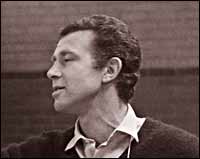
Forenames(s): Philip
Family name: Saville
Work area/Craft/Role: Actor, Director, Screen Writer
Industry: Film, TV, Radio
Company: ABC TV, BBC
Websites: BFI Screenonline, British Television Drama, The Independent, IMDb, BFI, Crosswalk, Pebble Mill, Forgotten TV Drama
Family name: Saville
Work area/Craft/Role: Actor, Director, Screen Writer
Industry: Film, TV, Radio
Company: ABC TV, BBC
Websites: BFI Screenonline, British Television Drama, The Independent, IMDb, BFI, Crosswalk, Pebble Mill, Forgotten TV Drama
| Full name | Alexander Philip Saville (born Alexander Philip Saffer) Wikipedia+2The Guardian+2 |
| Also known as | Philip Savile (alternate spelling) Wikipedia+1 |
| Date of Birth | 28 October 1930 (though some sources note 1927) Forgotten Television Drama+2Wikipedia+2 |
| Place of Birth | London, England Forgotten Television Drama+2The Guardian+2 |
| Date of Death | 22 December 2016 The Guardian+2Wikipedia+2 |
| Nationality | British Wikipedia+1 |
Early Life & Education
- Saville was born to Louis Saffer, a travelling salesman in the clothing trade, and Sadie Kathleen (“Kay”) Saffer (née Tanenberg), who worked in Fortnum & Mason. Wikipedia+2The Guardian+2
- He studied science at the University of London. Forgotten Television Drama+2The Guardian+2
- Also trained at RADA (Royal Academy of Dramatic Art). Forgotten Television Drama+2The Guardian+2
- Did national service with the Royal Corps of Signals; his service was cut short by a serious knee injury involving an armoured vehicle. Wikipedia+1
Career Highlights
Saville’s career spanned over 50 years and crossed mediums (stage, TV, film). Key points:
- Acting & Early Work
- He acted in films from around 1948, while still young, including small parts. Forgotten Television Drama+1
- Early involvement with theatre and acting informed much of his later directing work. Forgotten Television Drama+1
- Television Directing & Innovation
- In the 1950s, he directed Curtains for Harry (1955), which he co-wrote with his then-wife Jane Arden and Richard Lester. Forgotten Television Drama+2The Guardian+2
- He directed many episodes of Armchair Theatre (1956-1972), about 45 plays, which helped establish his reputation. Wikipedia+2Forgotten Television Drama+2
- Some early ground-breaking works:
- A Night Out (1960), by Harold Pinter, for Armchair Theatre Wikipedia+2The Guardian+2
- The Madhouse on Castle Street (1963) for the BBC — noted for psychological focus and bringing Bob Dylan over to act/sing. The Guardian+2Forgotten Television Drama+2
- Hamlet at Elsinore (1964) — significant for being recorded entirely on location at Kronborg Castle, Denmark. The Guardian+2Wikipedia+2
- He was also known for technical innovation: experimenting with camera work (instability, mirrors, unusual angles), using new video technologies, mixing location shooting with video, etc. The Guardian+2Forgotten Television Drama+2
- Major Productions & BAFTA Awards
- Boys from the Blackstuff (1982) — one of his most acclaimed series; won a BAFTA for Best Drama Serial. The series portrayed the impact of unemployment in Liverpool, very socially aware and gritty. Wikipedia+1
- The Life and Loves of a She-Devil (1986) — also won the BAFTA for Best Drama Series. bafta.org+2Wikipedia+2
- Other notable works: The Buccaneers (1995), My Uncle Silas, The Gospel of John (2003) among others. Forgotten Television Drama+1
- Feature Films
- He directed several feature films:
- Stop the World, I Want to Get Off (1966) Wikipedia+2Telegraph+2
- Oedipus the King (1967) with Christopher Plummer and Orson Welles. The Guardian+2Wikipedia+2
- The Best House in London (1969) Forgotten Television Drama+1
- The Fruit Machine (1988) Forgotten Television Drama+1
- Metroland (1997) Forgotten Television Drama+1
- He directed several feature films:
Style, Themes & Impact
- Saville was renowned for pioneering visual style in television: bringing more dynamic, cinematic approaches into TV drama, using location, complex camera movements, video experimentation. The Guardian+2Forgotten Television Drama+2
- He often chose material that was socially and psychologically intense: exploring marginalized voices; dealing with class, unemployment, identity, social realism. Boys from the Blackstuff is a prime example. The Guardian+1
- Willingness to experiment: he embraced technical risk, new recording methods, location video, etc. Forgotten Television Drama+1
Personal Life
- Saville was married to Jane Arden from 1947; they collaborated early in his career. Forgotten Television Drama+1
- Later had relationships including with Pauline Boty, and with Diana Rigg in the 1960s. Wikipedia+1
- In 1987 he married Nina Francis (née Zuckerman). Forgotten Television Drama+2IMDb+2
- Children: he had four children. Wikipedia+1
Later Years & Legacy
- Even into the 2000s he was still directing; worked on The Gospel of John (2003), My Uncle Silas, etc. Forgotten Television Drama+1
- Also made Pinter’s Progress (2009), a documentary about Harold Pinter. Forgotten Television Drama+1
- Received an honorary degree (Royal Holloway, University of London) in December 2016 for his contribution to British television drama. Forgotten Television Drama
- Critics often regard him as one of Britain’s most inventive and influential TV directors of the second half of the 20th century. Wikipedia+1
Obituary: The Guardian, Directors UK
Images may be subject to copyright. If you are the rights holder and wish any image to be removed, please contact us and it will be taken down promptly.
Disclaimer: The views and opinions expressed by interview participants are personal and do not necessarily reflect the views of the History Project or any of its volunteers, employees or representatives. (See details). Please also see our Takedown Policy.