
Stanley Watkins
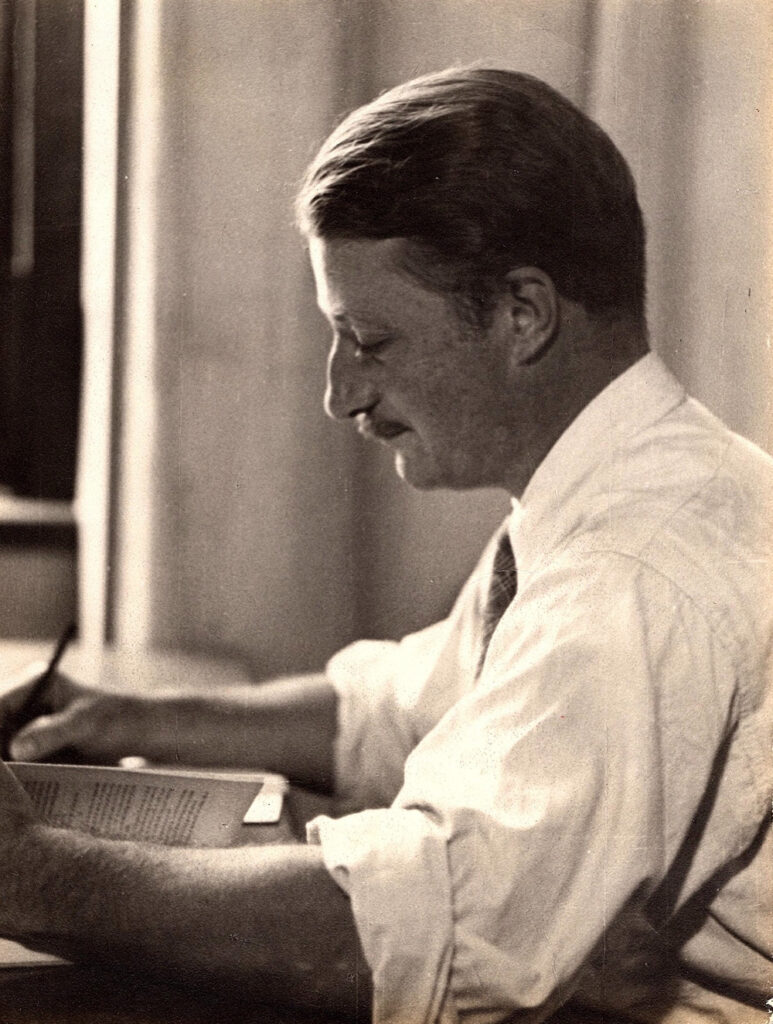
Family name: Watkins
Websites: Synthtopia, Dulwich Society Biography., Open Plaques, Stan Watkins Word Press
Interview date(s): 13 March 1970
Interviewer(s): Tim Aymes
Production Media: audio
Duration (mins): 84
BEHP transcript Disclaimer
This transcript has been produced automatically using Otter.
It provides a basic, but unverified or proofread transcript of the interview. Therefore, the British Entertainment History Project (BEHP) accepts no liability for any misinterpretation of the content of this interview.
However, the BEHP wants to make every effort to improve the quality of these transcripts and would welcome any voluntary offers to proofread this and/or other interviews. If you want to help, please contact BEHP Secretary, sue.malden@btinternet.com.
Stanley Watkins 0:00
When it started off, it was right after the First World War. Well before that, about 1919, 12 or so, Arnold, one of our heads of our departments in the labs, had said that now that we got a good amplifier, because he, you see, you know, leader Forrest was the man who invented the three electors, yes, 12, three element tube. Well, he, he was, he used to be a Bell Lab. Man, you see, used to be employed by Bell Labs before that Western Electric it was then. It wasn't Bell Labs till 1925 but he was employed there. And He came to us with this because he couldn't do anything more with it, really. And Arnold, then a man took it up, you see, and we paid the forest, where we bought the three electron, the three element tube. Bought it from the forest and developed it, and Arnold developed it into the telephone repeater. And it was through that, you see, that we could do long distance telephony for the first time.
Tim Aymes 1:23
Well, there was a connection between San Francisco.
Stanley Watkins 1:28
I forget where the first connection was made. I wasn't in that enemy then, because I wasn't there. I didn't go to the labs till 1911 and I wasn't in that sort of business till about 1919, 20, but the we produced an amplifier, see? And Arnold did. And so he said, now that we've got this Arnold, or craft, I think the trolley craft said, now that we've got an amplifier, it ought to be possible to make much better liquor records than we had before. And nothing was done for quite a while because the war started. See and during the war, other things were came along, microphones. You see the condenser Mike during the war. During that time, or just may have been just at the end of it, but it all grew out of the work that was done in a hurry during the war, you see, and loud speakers were beginning to be developed, and so they we had everything you needed to get started on recording. So we craft, who was head of one of the groups and one of the labs, decided to go ahead and develop better records. And so he took the head of the heads of the at&t, and that were, again, it some of them, they were, I didn't like the idea it wasn't telephone. They didn't realise that some of them that you have to do everything to do with sound if you're going to do make a good telephone. And so they were, again it. And so Korda took a loft somewhere near the labs, which he called the phonic lab, got some friends of his to put up the money, and we started there. We didn't actually start in the labs. We went on for quite a little while in the in the phonic Lab, which was inside the
Tim Aymes 3:36
other labs. What's your your The first electronic, electric recordings ever made. Because I have a feeling, did you know the fabulous photograph by Ronald Gillen, which is he wrote a book called The Fabulous phonograph, and he says that in 1919, yeah, there was a British recording made using a remote pickup of the Armistice Day. Oh, yeah. I wonder if this was previously, you don't,
Stanley Watkins 4:01
presumably, weren't in the field. Then, No, I never heard that at all. Heard about it. You don't know who did
Stanley Watkins 4:15
it until a decent amplifier came along. They hadn't enough power. You couldn't do it so you could, you had to strain everything, all through the system. And so the result wasn't really good. I saw, I saw talking pictures in 99 Yes, ever saw an ordinary photograph? No acoustic phonograph you see, tied him with a picture machine. She was a bush. The it was an Edison up in the booth. So they had, they had a motor, drove the projector, and then they had a silk belt ran along. On the top of the theatre and down onto the stage. I had a little little gob of paint on the on the black cord so that they could look out through the objection room and see whether it was going all right. Every now and then the court. I heard that in 19 109 and of course, it was very poor. Synchronology wasn't good, and people loved it, but they didn't think anything of it.
Tim Aymes 5:36
Just Cecil Hepworth produced talking pictures every friday from that 1907 the studios at Walton On , Thames. They are all sort of incredible experiences.
Stanley Watkins 5:47
You see, the trouble, trouble with the early attempts was that the sound couldn't be made simultaneously, because to get a record. You see, before electrical recording came along, your men had to talk into a horn right up close. You see, well, he couldn't make picture while he was doing that, so you had to do it afterwards. So you never got good synchronism. There were lots and lots to attempt.
Tim Aymes 6:20
Do you know? Do you know? Do you know how many of these early attempts were successful?
Stanley Watkins 6:26
There must have been quite a lot because, because when we picked on the name vital phone, that was after trying 400 different names, and they were all patented, yes,
Tim Aymes 6:45
put about 12 sides on before 1920 selection.
Stanley Watkins 6:50
And when we did pick Vidaphone, I believe somebody turned up, it has been copyrighted, so we had to pay him $200
Tim Aymes 7:09
yes, Two British experiments. It was the first World War I.
Stanley Watkins 7:24
Yes, yes. Well, everybody was trying Yes, but you see, I hope, I won't blow your thing up. You see, the reason they couldn't do it was that they hadn't got the either equipment or the techniques to work it out, even though they had an amplifier. You see, they hadn't worked out. And we had in the labs. You see, we've been developing transmission engineering, electrical transmission engineering, and it was, it was so easy for the boys in the labs to go ahead and develop something, whether it was electrical or mechanical, because you use the same technique we did in working on a mechanical system, but nobody else had that experience or knew anything about it. Well after we started, of course, a lot of them came along, like RCA and so on. But they they would just follow, following on.
Tim Aymes 8:27
Did RCA have any connection with the valve patent?
Stanley Watkins 8:29
With which patent ?
Tim Aymes 8:31
The patent of the valve, the three, three element,
Stanley Watkins 8:35
I don't know whether they had, they had an arrangement with us, some arrangement across patents and so on, and they may have had something to do with that. I shouldn't be surprised, because at that time, I remember going to General Electric, although General Electric was their company, and having meetings with people there, but I'm very vague now as to what it was all about 50 years ago.
Tim Aymes 9:05
The original speed that you chose was 75 feet per second, and it had to be changed. It's not right. I was wondering, actually, you did choose 19.
Stanley Watkins 9:14
It's very funny. We we had to decide on something or other when we made our first programme, you see between 1925 and so Vidaphone had been formed by that time, the head of Vidaphone was Walter Rich, and the chief engine, The chief projectionist in Warner Brothers was Jack Kiley and so Rich, and I and Jack Kiley and someone from the labs, I think it was Maxfield, I think, but we don't remember, definitely, got together with Jack Kiley one day, and we said, how fast do they run films now? And he said, Well, they taken 16 frames a second, and they reproduce them in the first run houses at about 80 or 90 feet a minute, and in the small houses anything from 100 up, according to how many shows they have to get in during the day, see. And so we thought it over, and we picked 90 in the stage. That had to be a good guess, you see. And a funny thing is, I heard two days after we had settled on that the Radio Corporation, no, not Radio Corporation, the Acoustic Society of America and thetechnicians or someone of America. I forget who it was.
Stanley Watkins 10:48
Now we're going to trying to standardise on 80, 80, 80 feet a second for the picture, and something like 70 or 60, or something like that, the sound they they hadn't, they hadn't cut. You see, the work with, all more or less undercover, and they hadn't known. They didn't know whose talk is coming along, so they were just going to standardise on something which wouldn't work.
Tim Aymes 11:29
Why did you choose 33 and a third?
Stanley Watkins 11:31
Why did we what?
Tim Aymes 11:32
choose 33 and a third?
Stanley Watkins 11:32
Well, you see, we made a study of sizes of record, how much you could get on them and so on. Of course you see that no height, no long play, no little, just little, little needle in it was all 78 RPM design, and we got together and found out what relations between the size of record, length of time playing, and so on. And then we went to the phonograph companies, and they were doing all their pressing, you see, and everything, and said, What's the biggest record you can make? And they said, that's 516 inches about and so it was 16 or 17 inches they could make. And so we worked it out, and came to about 31 or 32 or something like that, revolution second. And so the revolution a minute. And so then at that time, these people, in the picture that Fowler and fan and steel co were doing the these fellows were working out the method of coupling machine and record together, you see. And they decided, with their gears and things, the 33 and a third was a good thing. So we picked
Tim Aymes 13:11
on that first word, direct coupling.
Stanley Watkins 13:15
It was a motor which drove the projection machine and the camera, it drove the record directly and then through a complicated gearing and filter, mechanical filter, which was a great piece of work, that was Harrison did that. Harrison, his fellows, did that in the labs, and you had to cut out all the vibration getting back into the record. Very critical. And so that happened the third thing. And the third happened to be picked because it fitted in with the gears. I seem to put it still you
Tim Aymes 14:00
when, when did you first seen separate motors for the camera and the
Stanley Watkins 14:04
separate what?
Tim Aymes 14:05
motors in synchronisation
Stanley Watkins 14:08
for recording? You mean?
Stanley Watkins 14:12
Oh, well, it must have been. This was only for projection. We never did it this way or recording it.
Tim Aymes 14:25
You never used the direct drive.
Stanley Watkins 14:27
No, I don't think so. I felt I can remember we never did. I may be wrong, but I don't think we did. No, I'm pretty sure not. No, we had had separate ones, and they worked out a system which would tie the tie the two motors together. You see which was used afterwards, and that was, you used for years.
Tim Aymes 14:55
Still is,
Stanley Watkins 14:57
I imagine it is along the. I don't know, but I think it must be, yeah, yes, because I remember, I remember watching in the Warner Brothers studio, watching them dubbing some picture in which they had eight turntables and someone standing at each turntable, you know, and switching them on just at the right a room full of turn tapes all running synchronism. It was, I think it was, I wouldn't be sure about this, but I think it was something similar to the system that used to open and shut the locks on the Panama Canal. I have I heard that, I wouldn't be sure,
Tim Aymes 15:45
only to treat me is that RCA formed RKO their own company, yeah, but Western Emerick never got round to forming their own company, but making sound pictures? Well, no, you see.
Stanley Watkins 15:57
You see, they that was one of the things, because the higher ups in the American telecom Telegraph Company you see, which had old Western Electric, which was the manufacturing company, and Bell Labs and everything, were again, it you see, they didn't want to, they didn't want to get out into a field that was outside, the coat on Well, Western Electric, did you see, they finally softened up enough, so Western Electric did, but they didn't. They brought in people from the outside to form a company, and Rich was one of them that they brought in, you see, to form a company, and he and the Warner Brothers met, and they clicked. And so between them, they formed the fighter farm, so. And that was but of course, all the work was done, all the technical work was done by us in the Western Electric and after 25 in the Bell Labs,
Tim Aymes 17:01
how many companies did rich approach before Warner Brothers were ready to take it
Stanley Watkins 17:05
out? Oh, no one. That was after we had signed with Warner Brothers. Prior to this, how he hadn't done anything? No, no, our people found him and brought him in to make the deal the thing,
Tim Aymes 17:21
without giving the impression that rich went round to the other companies and then tried to, no, no, no, they
Stanley Watkins 17:29
it wasn't any use. Because when, when we made our first experimental talk, as you see in the labs, we were, we worked in phonic lab, at first for electric recording. And then we took that into the labs, when they softened up, you see, and allowed us to do it, which was better. And then when we had we made the first talkies in the labs by ourselves, without anybody outside, coming in. And then we got a few of them. We had people singing and talking and little band who was the first person? You recorded the first person? Well, it's rather difficult to be sure of that. Now, it was a group of Maxfield and Sawyer, I think, and three of our fellows, you see, I was in charge of that under Max field. He gave me the talking side of it, talking picture side of it said, you run that, see, and we made the first thing with him in it, you see, because we want to do that, but it wasn't good. Something or other. It didn't synchronise. Something went wrong, you see, so the second one which, and that was the one which, the first one which was all right, was me alone. So I was the first director.
Tim Aymes 18:54
Films still exist,
Stanley Watkins 18:57
I don't suppose so. No, I had a tin whistle and a Goon, and I talked about it, I said, told what it was all about, you see, and I played tune on the tin whistle and handled the Goon. Incidentally, this stuff that you are writing up is not going to get published, no, because if it were, there are certain things that I wouldn't because I'm writing or have written my autobiography. Now, I don't know it's because I haven't got a publisher yet, but it's in the hands of publishers. It's being worked out, you see, and or it'll be sometime before it comes.
Tim Aymes 19:35
I was going to ask you if you were writing your autobiography actually. Well,
Stanley Watkins 19:39
I wrote it about 10 years ago, a big one, rather about 150,000 words. It was a big book, and I put it up to two or three publishers, or half a dozen publishers or so, they all turned it down. They said we there are lots of things in it that ought to be published, but we don't want all this talk about your relatives, your friends and. Games and everything like that. People aren't interested. Well, it's not true, of course, because everyone that I showed it to couldn't put it down. I would like to read it. And even people that didn't know me well, just friends of friends, where they wanted to read again, you see. But the publishers are very snotty that way. They got to be sure. And so then I cut it down. You see, then my one of the fellows that's in these pictures here wrote to me or wrote on a tape. Why didn't I write this story and show that the Bell Labs did this job, not these other people that I've talked about so much now. And so I decided that I'd cut this down now. I've got it. It's not a biography, and it's only about 55,000 words or so, which is goes between my early life and for the year I spent in California in 19 102 on a ranch, and that sort of thing, you know, and then goes into this, and I'm calling it a saga of sound, at least that's my present title, because it's, you see, I worked on this recording, talking pictures, loud speakers, public address systems For theatres and all that sort of thing, hearing aids for the Deaf, and visible speech in before I retired from the labs and that have all assumed my time in the labs, I was working on sound, you see, and I'm making story of it so. But this is not going to be published. I don't mind anecdotes, but, but I wouldn't want to get out just before
Tim Aymes 21:44
this is really an analytical what I'm doing, an analytical approach to the subject, and I want yours to clarify some of the points. Yeah, yeah.
Stanley Watkins 21:51
Well, the stuff, of course, you've got that, then you've got Hi. Fi, yes.
Tim Aymes 22:00
What do you have any connection with movie town when that was bought up by Western
Stanley Watkins 22:03
Electric? Well, that's interesting, because it wasn't bought up by Western Electric. It wasn't, no, no, it was still. It was Fox's but you see, Fox started out with a sound on film, which wasn't too good. They had a method of flashing lamp.
Tim Aymes 22:26
This was Liga forest,
Stanley Watkins 22:30
I don't know. No, it was Fox case. It was case, yes, I think so, yes, because it was Fox case that we worked with the man named sponnible. He's still alive. Yes, one of them, I worked with him a lot. When you see they, they came out with the when, let me put it another way, when we got our talkies, elementary talk is you see two. One, we asked the motion picture people to come look at them at the Labs in New York. And most of the big bugs from studios came in, and they all said same thing. This is very interesting, very, very interesting, but we're all right, Jack, we don't want it. The public don't wish to improve that. The public don't want talking pictures you see. So they all just like little dogs with lapos. They all just went and when the but one of our engineers on the west coast was a personal friend of Sam Warner, and he brought him to New York once, say, oh, told him when he came to New York to look at us, we got something. So Sam came and saw it, see, and immediately he saw it. He it was sold. He knew what was wanted to see. So he wired his brothers to come to New York. He didn't tell them what it was, because it wouldn't come. They came and Harry Warner fell all over it, you see. He said, This is it. But no talking in the picture. No, no, no. But music. Great music, great orchestra, as you see in all the little houses. And he was very interesting when he got a little band. He He looked at this, he said, it's wonderful when that fellow plays down, comes from there, and that one plays he comes.
Stanley Watkins 24:31
And so then we went ahead with fighter phone. But you see, we were doing it on discs. We had also in the lab, has been developing on film at the same time. Was, quote, was just quite as old as the lab, as the disc one. It was done by another, another good little group.
Tim Aymes 24:52
See the chapel in Charles ll
Stanley Watkins 24:56
Noel no Crandall was the one that. Did the the discs, the film on the film stuff, a variable area, you know, the variable density, I mean. And then during the period, this was, you see, when we first came out with Don Juan and the vidaphone, it was in 26 August. 26 six, yes, August the 26th six, six, you'll find it to put the fifth some places. The fifth was a private preview. The sixth was the day after that came out. You see all the producers said, Oh, it's just a flash in the pan. And Fox was the only one that didn't. Fox were going ahead and they were doing this thing on film. Well now we are the one that we developed on film, use the light valve, and they used a flashing lamp, and it wasn't too good, and they weren't getting very good results. So they, we worked with them a lot. I used to spend a lot of time in the fox case labs with Bonneville, the and we when they brought out what price glory. For instance, we done it over onto disk for them, you see, taken it over and dubbed it onto disk and put it out on disk. You see, but movie tone came out with film. They still but then they used our system, as far as I can remember, tea. In 27 before The Jazz Singer, because the jazz singer was the thing of course that threw them over and The Jazz Singer, we had a higher time after the jazz singer, because they all rushed in. You see, they they tried for a little while to do something themselves, and found they couldn't. Of course, there was
Tim Aymes 27:10
an agreement. Wasn't there between there's an agreement between the five, five companies not to produce Sal I
Stanley Watkins 27:16
suppose they had, yes, yes. They hadn't been a term. Thought there were, but there were other companies also that were interested. But they they tried. They tried to do it themselves. They tried to make sounds fully with their Nepal. Of course, they couldn't do it. Then any facilities. And then they suddenly came to us. I remember that very well, because we when we started up the first week after they had collapsed, we said, well, we put an order in for studio equipment. So we put an order in for five and before the order was tight. Went up to 10, you see, and it was up to 50. Or you do where it
Tim Aymes 28:06
was. Why would the companies choose sound on film rather than sound on disc? Ah,
Stanley Watkins 28:10
I ll tell you about that after a minute. The the when they started out, you see, well, the Western Electric had developed enough of equipment, far enough ahead, you see, so they could go ahead, and they took over all this work of getting out these equipments. And they were a lot of equipment, and they did wonderful work. Wonderful work, the rest of NATTKE, because I suppose if you, if you're too, if you've got the kind of an organisation that can make telephone equipment by the million and so on, they can do almost anything. And so they did well. Now you said, why didn't they start on film? That was two reasons. One was that in the experimental stages, then the sound off disc was better than sound off film, quite considerably. But the real controlling reason was the fact that you, when you'd made a disc, you cut a wax, all you had to do was to throw that to a Phonograph Company and say, press up 100 but when it came to a film, you had to teach the film laboratories. First of all, you had to work out with Kodak, where you worked a lot with Eastman. The techniques for doing it all had to be done scientifically. You see the development, and you had to change the method of doing the picture too, because. They got to be all together on one print, you see, and so and these film laboratories were mostly run by elderly gentlemen who knew that knew everything. And so it was very difficult to put them over one remember, there was one case in Italy, for instance, when we had the studio there, we went to the film processing place, showed him what had to be done. He said, impossible. I cannot do it. Reaction right away, but he came around and gradually taught him to do it. So it took several years before you could get the techniques worked out and the laboratories, film laboratories take it up.
Tim Aymes 30:46
When was the first soundtrack made with variable area,
Stanley Watkins 30:52
variable density? Well, when the first soundtrack was made in our labs, of course, around the same time as our disk and commercially, not commercially. No, when was, I don't know when it was. I can't remember, and I haven't anything in my diaries about that, because I wasn't intimately connected with by that
Tim Aymes 31:11
time, I saw a film called Hollywood review of 1929 at the National Film theatre, made by MGM, and that was made the sound on film. I do know that definitely, it was very interesting film. It had some colour inserts,
Stanley Watkins 31:25
or 3929 29 Yeah, yeah. Well, that must have been a very early one, yeah. And it was in 28 that change began, I think. And it took some time. And of course, for several years, theatres had to be equipped with both, because they were likely to get a disc film come along, or a film One, and that was a bit of a trial. I
Stanley Watkins 32:17
How far have you got in your studies
Tim Aymes 32:19
with this? I've done about 12,000 words. Another six or seven to do. It's very interesting, fascinating subject. Are you on your last year? I'm on my first year, actually, first year,
Stanley Watkins 32:34
yes, starting it early. How many 1000 words you're going to be doing when you about 2025?
Tim Aymes 32:40
It's a fascinating subject.
Stanley Watkins 32:44
Yeah, have you got all the access to the papers on the technique of it, the technical side of it? I have got a lot Yes, because I didn't say the the Bel Air record has back in 1925 to about 1928 or so. I ll show you them. I've got them all marked. They've got papers on all those things you see, and well worth your while to look them over.
Tim Aymes 33:20
Think I can probably get it out from the patient's office. She has a whole selection,
Stanley Watkins 33:26
yes, or if you want, if you want to come here sometime, and you've got the time, you could sit and singer, perfectly. Welcome to that. But you can probably get it? I don't know where they have collection. I suppose the cinematograph society has patents.
Tim Aymes 33:48
Office has a complete library of technical literature.
Stanley Watkins 33:56
Well, I ll show you the ones anyway, and you can get an idea. Make a list of them you see, because I would have to do this in connection, because my memory is very poor,
Tim Aymes 34:07
Seems to be ery good. You told me,
Unknown Speaker 34:11
refreshing it.
Tim Aymes 34:18
Why did some few companies take up RCA equipment in 1928.
Stanley Watkins 34:27
Well I won't be quoted on that, but it was probably because it was cheaper and I I don't know what other reason there might be. Certainly the certainly the RCA equipment at that time was nothing like it could it was very they were just staggering on. Behind, you see, and they hadn't. They had access to our patents. I think, you see, we had an interchange business with General Electric they had access to our patents. But that's not enough. You've got to have the experience.
Tim Aymes 35:14
One thing that struck me, it looks as though the film producers didn't have enough money to invest in sound equipment, so they therefore told the companies that they didn't think it would succeed, so they wouldn't find form their own sound well,
Stanley Watkins 35:27
there's a lot of that they, they, they, of course, they had a lot of money tied up in silent films, and they used, they used the excuse that the public didn't want it was some of them thought that was true, I think, but, but when they when they when they did flop, then that went whole hog. But besides the five big the big five, there were several others. There were Christie companies, which, afterwards went broke. We had taken over, I think, and other smaller companies, and that went over. But ours was an expensive business, and we kept it that way. We didn't try to try to cheapen it. You see, RCA, I'm afraid we're very naughty in that way. Well, this is not for publication, but when, when they when we came over here, you see, RCA came over also went over here, long for I was in charge of all the engineering side of it. Oh, you came over here? Yes, I came over here in 29 and I was in charge of all the engineering side of it. We had about 400 men on it, about 300 of whom were theatre. RCA had four, it was that sort of thing. They didn't do it, you know, they just didn't go
Tim Aymes 37:09
for it. Did you know A Man Called Bernard Brown? He wrote, he had a connection with installation, and he wrote a book in 1929 about installing equipment. It's very interesting.
Stanley Watkins 37:21
Well, I probably did, I can't record it right away.
Tim Aymes 37:28
He was saying, personally, people didn't choose the Western Electric
Stanley Watkins 37:31
equipment, yeah, but the RCA were under bidding us a lot and not doing good job.
Tim Aymes 37:41
There's another film called British talking pictures. I think they did some installation. Is this?
Stanley Watkins 37:47
Right? British talking pictures? I remember their name, but I can't remember anything about them. Goon British
Tim Aymes 37:53
were Yes. Do you know anything about the early Goon British sound films? Don't know anything about it. They made a sound film 1926 using sound on film. It very good, but nobody seems to know what happened to the film. It was due to be shown August, in August, 26 I think, and the times gives a notice that it's going to be shown. And then nothing at all. I can't find any information about it.
Stanley Watkins 38:17
So it's strange. I imagine it must have been, it must have been either ran out of money or or they must have realised it wasn't good enough. I don't know
Tim Aymes 38:30
it was made on clang to this equipment. Yeah, when did the war between Western Electric and clang to this start?
Stanley Watkins 38:38
Well, I don't know exactly when it started, but I know that when, when we came over here and I had, I was working for two companies, then both Bell System companies, you see, it was Western Electric limited In this country, which I was the director of, in charge of all the all the engineering and manufacturing and all that sort of thing. And there was electrical research products early, which I was recording manager for Europe. So I had to go to the various countries and and see about it. But by the time I was over here in 1929 we were out of
Stanley Watkins 39:31
Germany. When the war was over, we found it was impossible for either of us to work in the other country because of the patent situation. So we could perform an agreement. They would keep, we'd keep out of Germany and the German speaking countries and some other countries, I forget which now and we they would keep out of the United States and England and some other countries. I don't know what it was. So I never did anything in Germany, except I did go there and. And had a very nice time with the son of Karl Gaya, the film laboratory man in Germany, went over there to visit see. He came to London, and then invited me over, and I went there. I saw their film laboratories, and it was a show up for hours and Americans because they were perfect. I mean, everything was just exactly right. Everything was spotlessly clean. Everything was done by automatically, you know,
Tim Aymes 40:37
beautiful job. I see read an article in cinema today of 1929 which describes the German studios and they had a sound recording then, which had got sleeping accommodation for the crew and hot and cold water in it. I
Stanley Watkins 40:56
remember when I was there asking Carl young guy, what's his name? What the car I forget the son's name. What do you think about Hitler? And he said, well, the communists are so they follow my father around, and they're spying on us all the time and so on. We that's why we back Hitler. Well, I think that was propaganda. I don't know, but that's what he said.
Tim Aymes 41:32
Because Hitler took over the German film industry about 1933
Stanley Watkins 41:36
Oh, he must have done, yes, I
Tim Aymes 41:45
always. I want to ask you knew anything about Blattner, a fellow named Blatner. Blattner, yes, who invented the well, he developed the magnaphone, the early magnetic recorder for use with talking pictures. I wonder if you knew
Stanley Watkins 41:59
anything about that. Now, wait a minute, which platform is this? I think I met him. Yes, please. Well, we queried you is because one of the men in the labs who did as much as anybody for development of loudspeakers. Was David Blatner.
Tim Aymes 42:25
Oh, there was a, there's a Blattner thumb loudspeaker.
Stanley Watkins 42:27
Yes, nice. Well, that was Blattner, our laboratory
Tim Aymes 42:31
man, apparently he must have, he developed it for Cine Tobias, I think that loud speaker.
Stanley Watkins 42:36
Oh, no. Well, that's the other man, because our man did nothing except for the labs.
Tim Aymes 42:42
Yes, he made the I don't actually if he actually made any talking pictures, synchronised talking pictures with using magnetic recording tape, but I think he made some synchronised ones just with music. Oh,
Stanley Watkins 42:53
wait a minute, I remember him now. He's coming back. Came to London, and I met him there. He committed suicide, didn't he? I don't know. Company may have failed. He did eventually, for some reason or other. But I met him, I know, and and we talked about the recording. And we were recording on tape, you know, but it was, it was iron tape. I BBC were using it
Tim Aymes 43:24
too. The still a designed it, still a designed it, or still a designed it style,
Stanley Watkins 43:30
yes, yeah, that's right. I think
Tim Aymes 43:35
they have a lot of trouble with the tape flipping against the camera and they went out of synchronisation. There are a lot of companies in my lot of companies I think that formed in 1928 in Britain to make talking pictures. Oh, yeah, nearly all of them went bust. Yes, I was reading that the public lost one and a quarter million pounds on talking picture. 29 they invested two and a quarter
Stanley Watkins 44:01
million. Yes, we had a theatre in Regent Street. Was it? Think it was in Regent Street that we did all put all our pictures in when we first came over here, we had a number of shorts of Bernard Shaw. Bernard Shaw Mussolini. I'm sure talking about Mussolini,
Tim Aymes 44:29
that's one of the enlargement, yeah, sure. You know,
Stanley Watkins 44:33
he came up to the walked from a long distance over to the camera. Walked slowly up to the camera. Good. Afternoon. He talked about Mussolini. He talked about Mussolini. He said. He said, No, I you know. I know Mr. Mr. Mussolini. You see Mussolini? The trouble with Mr. Mussolini is that his face. Will not change. It always looks so severe. Now I can make a face like that. That is my Mussolini face, but I can change it.
Stanley Watkins 45:17
And Gertrude Lawson.
Tim Aymes 45:22
But why did why was Fox so interested in Mussolini? Because he's
Stanley Watkins 45:27
no I don't know. Lot of people were that time, course, that time Mussolini was doing a wonderful job for Italy, because I had to go there on. People wanted to make studios there. I had to go and survey them and tell them how to do it, and so on. And that was during the Mussolini period, you see. And everything was running perfectly in Italy. Then there was no no late trains or anything, and there were no bandits. You could go anywhere in the country with safety, and it was doing a wonderful job. Then, of course, he went mad after the business with Hitler.
Stanley Watkins 46:14
The only really funny thing about Mussolini, as I remember, was he had a crack band of trumpeters that used to go through the streets, and they playing trumpets, all of that, I forget what he called them, and they were, they did it at the double all through the streets, and they were playing trumpets. You couldn't help it. Very funny sight there.
Tim Aymes 46:45
Did Fox ever taking photographs of them with sound?
Stanley Watkins 46:49
I suppose so. Yes,
Stanley Watkins 46:56
no, I don't know much about Fox, except we are, the way we worked, was powder ball and we, oh, yes, we had quite a lot to do with them, trying out our system, pairing it with theirs. They finally agreed that it was they gave up their flashing lamp and took our light valve, you see, and we gave them amplifiers because they weren't capable originally.
Tim Aymes 47:20
They got his patents from Germany,
Stanley Watkins 47:24
yes, I think so. And then
Tim Aymes 47:26
you have the agreement, presumably, with Clang, so you haven't got any pains.
Tim Aymes 47:37
When was the last Vitaphone picture made? Microphone, yeah.
Stanley Watkins 47:52
I suppose it must have been just wondering when rich got out. I I know he got out with $4 million which was his profit and the undertaking. And several people have said that he didn't contribute anything. He was a financial well, he brought the money in. But they, they, he got out, and they got the Warner Brothers with Warner Brothers in, but Warner Brothers and rich were quite a long time were odds. After a while they were, they didn't get on so well as they did at first. I don't know why. Must have been something to the finances. I've seen a film of it must have been. I should think it was in early 28 that they, that they went to Western Lake. No, it was earlier than that, because he was, I'm sure he was out of it before the jazz singer came on. I think so.
Tim Aymes 49:07
I've seen a film of which was made in June 1930 which is a jubilee of Warner Brothers, and they had one of one of Warner's daughters, and she was Little Miss Vitaphone. So presumably they were making uniform pictures in June 1930 so unless, I suppose it was very soon after that they turned over to sound on film.
Stanley Watkins 49:27
Yeah.
Tim Aymes 49:32
What system did Warners take up after they stopped using sound on disc?
Stanley Watkins 49:37
Well, they quarrelled with us. They didn't like, of course, the other producers all coming in, they thought they ought to be but then they were at the loggerheads with us, and by the time the jazz singer were. Produced. They were, I think they were using RCA by that time you went over to RCA, and we lost them. But when "Jazz Singer" was being rehearsed in the theatre. We were at odds, and they gave special orders to the New York office because some of the brothers were there, usually running the rehearsals, not to let that fellow Watkins get in the theatre. Really, we were immediately at odds so that I was persona non grata, but then Sam Warner he died, yes, he got, he overworked that's the trouble. And the brothers in New York heard, had a wire to say that he was sinking. So they dashed off Hollywood, you see. And then the poor Warner Brothers in New York came to me said, for heaven sake, come and run these rehearsals for us.
Tim Aymes 51:27
I believe He died just before the showing of the "Jazz Singer"
Stanley Watkins 51:31
Yes during the rehearsal of the "Jazz Singer", you see, it was during the rehearsal
Tim Aymes 51:36
for the projection of it
Tim Aymes 51:38
the projection of the
Stanley Watkins 51:39
Yes in the theatre, oh, yes, several days working it up, you know, and and then when they did have the opening, the final rehearsals, I was sitting there with Jolson on one side of me and Silvers on the other, the musical man, arguing backwards and forwards and that sort of thing. I had a phone up to the booth, you see, and a button to press, whether you want to sound up or sound down. And if I had done what they wanted me to do, I think the fellows in the booth would have gone around the bed, because I pretended to push buttons. Didn't do anything. Of course, quite satisfied when it came out.
Tim Aymes 52:23
Did you play this with two projectors just as one as a reserve?
Stanley Watkins 52:26
Well, in not that, not suggesting No, but in "Don Juan", we had four, yeah, two and two. That's right,
Tim Aymes 52:36
yeah, I believe that Will Hays once spoke to the banjo acompliment, didn't he? Yeah, one of the pictures
Stanley Watkins 52:43
Will hay. Yeah, that's why I saw that film 90 times, because Rich said, Stanley, you better stay in this theatre and watch to see that doesn't happen. I can do about it, I don't know, but I stayed there long.
Tim Aymes 53:06
And how did Johnson actually get to actually making the first talking part on it?
Stanley Watkins 53:15
Well, I don't think anybody knows what happened? But he when he sang a song, one of his songs, and the applause, of course, thrown into the film, and he said, Wait a minute. Wait a minute. You ain't heard nothing yet. And then later on, when he's talking to his old mother, he's at a piano, you see, and he's playing her the things that he's going to do in the theatre. And then he reels off a lot of ad lib stuff. It's on that disc that I have hanging on the wall. I managed to save that. Or somebody brought it over from Hollywood to me. And yes, he said. He kept on. How do you like that, Mama? How do you like this is the way I'm going to play it in the theatre. I'm old, Jazzy like you know. Then suddenly, the old man, his father, the rabbi, comes in the door. Says, stop. He said, then there's a title goes on to see, to see my son being a jazz singer and so on. Then slow music. Of course, when that happened, it was obvious. Then other producers knew that game was up. There was nothing they could do about it, but people wanted that they are going to get it. And I don't know why, how it happened, but Sam persuaded the brothers to let him stay in. I said, Oh,
Tim Aymes 55:05
revolutionised,
Stanley Watkins 55:08
before Sam had to die. Just then when it happened, nice man.
Tim Aymes 55:17
You knew him, well, oh yes,
Stanley Watkins 55:18
because I worked for him all the time. I was with vidaphone. He was in charge, and I was chief engineer, reporting to him, and he was the producer. Yes, I knew him very
Stanley Watkins 55:38
well. Victor liked all the Warner Brothers fairly well, but Sam and the old one, Harry,
Tim Aymes 55:48
Were you there when he first saw the equipment? Were you there when he first saw the talking picture equipment you were with?
Stanley Watkins 55:55
When Sam did Yes, oh yeah, yeah, yeah. This
Tim Aymes 55:58
is when you first met him. Yeah. That's
Stanley Watkins 56:02
when I first met Edison too. He came in to see the records.
Tim Aymes 56:10
How long did you have to wait before you got the records back from processing in the early days?
Stanley Watkins 56:21
Not long, I can't remember now, but I should think it was a matter of couple of weeks, or something like that. They were keyed up to it.
Tim Aymes 56:30
What happened when Victor were taken over by RCA because you were using RCA for the victor rather for your pressings, weren't you? Yes, well,
Stanley Watkins 56:41
they I think we must have gone over to film before they went over to RCA. I think so, because during my contact with them, there was never any talk of them going over to RCA. Well, they didn't, of course, the they were just pressing records for us. They weren't doing anything else. They were providing stars, providing singer and so on. But it was an interesting time. You see the first we, when we first started out, we had Pathe doing our pressing, but they couldn't make a big record. They couldn't make a big record, so we changed over to Colombia, and then they changed over from Colombia to Victor, much against my wishes, because Victor wasn't as good. Their records had more surface. Lois Columbia had the patent of the cheap material with a very expensive material on top. They had the patent for that. Victor couldn't use it. You see, Victor couldn't get records was quiet. They were all shell act records. Then, you see, but then we changed over to Victor because they wanted the artists, all these things get done by the by the commercial people you know, and they don't even tell you about it until it's almost too late.
Tim Aymes 58:22
Did Victor score many films for other companies? Did they have the equipment to score them all? No, they didn't do any. I thought like that. I thought some of the companies went to Victor and have their films scored if they were silent.
Stanley Watkins 58:34
Oh, some of the companies may have done we didn't. Well I see, no, we did all ourselves. No, all that Victor did was provide us with pressings. And I remember them bringing in equipment into the opera house once to show us that their according equipment was better now than it turned out to be the other way around. So they took it away again. You didn't happen to see the Don Juan film when it was produced. The other day,
Tim Aymes 59:09
I went to see it. I made a special arrangement about Goon see it, and I was going to get the 830 performance. And of course, they didn't show it at 830 they showed at 630 most disappointed at that,
Stanley Watkins 59:20
because you would have been, you would have been astonished at the quality. Oh, I took the trouble to find out from the headquarters, from Hollywood, whether that was the original recording, and it was recording dubbed onto film.
Tim Aymes 59:43
Well, it wasn't much static on it. No,
Stanley Watkins 59:47
they cut it out. Somehow, they managed to cut it out without losing much of the highest stuff.
Tim Aymes 59:52
When I saw the Hollywood, Hollywood review of 1929, originally, it was originally on film, and they made a disc version, and it. Seems the National Film Archives have the disc version, which they then transferred onto film for showing. But this had a lot of static, not high noise on it.
Stanley Watkins 1:00:09
Yes, well, I don't know how they did it, but they very good. The only thing that dated it so much was the movement and the very hair met. Yeah. But as far as the actual photography and the sound, it was Magnusson. This was
Tim Aymes 1:00:32
done on one complete run through the sound. Was it well, 11 minute sections? No, it was just continuous, yes. But you did when you did when you recorded it. You recorded minute section, yeah, or
Stanley Watkins 1:00:44
whatever the length of the reel was, anything from eight to 11.
Tim Aymes 1:00:48
Was there any difficulty? Later? Presumes a lot of difficulty in cutting a disc to fit onto the picture with synchronisation. If you had
Stanley Watkins 1:00:59
with the disc, you couldn't cut. You couldn't do anything at all, no. Had to transfer them unless you, unless you did them over. But that was the reason that some of the first films were rather stiff, because they weren't any quick changes.
Tim Aymes 1:01:21
More tea. No, thank you very much. Very nice, dear. When
Tim Aymes 1:01:34
did you first use condenser microphones?
Stanley Watkins 1:01:39
Well, we were using them in the Brooklyn studio, because I can show you a photograph, because it's a mic hanging up over the actors. I think it's in there. Not sure
Tim Aymes 1:02:01
that's a rather bad copy. Is that the one,
Stanley Watkins 1:02:04
well, that's in the opera house. That's in the Opera House, this is Krafty Kraft and Herman Hillier Korda. They got him to make a lecture talking about her. He was the head of the group you see that did it in the labs, Edward B craft. And in fact, when they were thinking of Neame for the the records I suggested, Eddie craft wasn't taken up. We were very dignified then, and he recognised anybody else, let me see. Oh, yeah, sure. That's sitting down. Is Ed du pare, camera man? Cameraman, yes, that is, can't remember his name. He was a chief electrician. I think Frank Murphy, is that right? Murphy? Yes, I think that's Frank Murphy. I'm not quite sure. I get people mixed up. Nobody else. I don't know who the directors and things were there or this. I know this man, but I can't remember his name. He was sort of in charge of the Opera House, sort of Manager.
Tim Aymes 1:03:21
This is a carbon Mike thing.
Stanley Watkins 1:03:25
No, that's condenser. That's a condenser above it.
Tim Aymes 1:03:27
Ah, I see as I've got confused there are these, because the early carbons do look like that.
Stanley Watkins 1:03:32
Yes, but anyone that's got a box above it is the condenser. That's the amplifier, first stage,
Tim Aymes 1:03:43
and then you later develop the tube one. Then the tube one was later developed. The the
Stanley Watkins 1:03:49
tube one came a little later. No, I don't know. I'm not sure. Well, they were both probably in use, you see. But the one that I was going to show you show, it shows, very definitely, the wires, the cords hanging the microphone up with which they were adjusted. But I find it and
Tim Aymes 1:04:11
these were, were incandescent lamps were there rather than carbon arcs.
Stanley Watkins 1:04:16
Oh, yes, they were. We had to change over to incandescent because of the very noise
Tim Aymes 1:04:22
was it? Was this merely the noise, the electrical noise,
Stanley Watkins 1:04:27
or the mechanical noise, both the the arcs, of course, every now and they go, you see, not only mechanically, but electrically, and the Mercury's would go. Pop, pop, you see, and they do that suddenly in the middle of a reel or something. So we changed over. And Warner's chief engineer in Hollywood managed to round up these electric lamps, lot of them, and then worked perfectly after that. That was early in the game. And
Tim Aymes 1:04:58
everybody changed over. And after that, everybody changed to incandescent after that, oh, yeah, of course.
Stanley Watkins 1:05:07
But this was before. Was anybody else you see? Well, if you don't want any more tea, let's go in the other room again for a little while, chasing a girl ran around the bedroom and the she suddenly said, haven't you got a sister? You see, just the sort of thing that the caption, right. They were doing that all the time. You see, until they got real
Tim Aymes 1:05:38
writers in. You see, which had been about 1930 I
Stanley Watkins 1:05:41
suppose. Well, a little early in that, but they did 1928 and 29 they were, they were making a lot of
Tim Aymes 1:05:51
rather silly talk, just talking for the sake of it, and
Stanley Watkins 1:05:55
a film that you ought to see if you can possibly get hold of it. I don't know whether the National Film Theatre has it is once in a lifetime. I think that's the name of it. It's a film about a small group of vaudeville artists who go to Hollywood in order to teach the talkies how to talk. And Jack ok is one of the leaders of it, and girl that I used to know quite well, Alan McMahon and a couple of others, and the things that happened after the absolute hoot Jack, hokey, sort of takes over Hollywood when he gets there. He's a dumb person, sort of person. And when he gets on the right side of one of the studio managers and so on, and can do what he likes, so that they're going to have a film that wants some aeroplanes see. And that was rather unusual in those days. And so what does he do when he orders every aeroplane in the country? They all come in Hollywood like this, flocks and flocks and flocks. Of course, the studio producers, managers are throwing their arms up, well, hell are we going to do with these? Then all of a sudden, the other producers want aeroplanes, you see, so they've got the field, and another time he he they're going to change over there, studio to sound, you see. So it's going to be such a job to get rid of all these studios and build them up again and so on, so on. What are we going to do about it? So he says, What burns the whole lot?
Tim Aymes 1:07:57
I was transit,
Stanley Watkins 1:08:01
yeah, and you could tell. You could tell at the start, when they got actors and actresses who had been in silent pictures and were teaching them to speak, you could tell that they were being taught because they pronounced their words so carefully, they said, Oh yes, I think so.
Tim Aymes 1:08:27
What's the equipment limiting the people, very much. Did the equipment limiting very much? Was it? What did the equipment limit the actors? Very
Tim Aymes 1:08:33
much? Well, of course, it did
Stanley Watkins 1:08:34
at the very start, before, before any directional Mikes came into action, you see, because you had to, at the very beginning, if you had a big set, you had to put a mic in some flowers on the table, another one on the staircase and so on. And they had to time their speeches so that they said them when they were coming past these nights, you see, that was a bit of a nuisance, but got over that. I must find that
Stanley Watkins 1:09:15
picture
Stanley Watkins 1:09:19
where the devil was it in the Brooklyn Studios, where there's
Stanley Watkins 1:09:36
Mike, there's Henry McCray who came over to from Universal to make a make a serial in England. And here he is looking for the Son. See. The Paris studios, those pictures I took of Joan of Arc, I was standing on top of the Paramount news truck with my camera over my head upside down, took little pictures, and these enlargements. Here's the loudspeakers while they were doing the battle, which John was captured. Loudspeakers were playing music from trouble in paradise, which I thought was very appropriate. This was actually for a production, was it? Or whether this was a parade, or they actually for film production? Oh, it wasn't fulfilled. No, this is a sort of celebration, a neutral, yeah. Quinn, I know quin Cine. Roy, oh, they were news for your cameras there. But it was the celebration had nothing to do with movies, and it
Tim Aymes 1:10:59
was movie 10 that was recorded on with movie 10 and Paramount news,
Stanley Watkins 1:11:08
well, Paramount news and other news reveals were there nothing to do with the show? I
Stanley Watkins 1:11:29
a man and wife were song and dance act going around the world doing song and dance act. They want to get into a business thing. And he said, Well, I I once fixed the shower of Besche as motorcycle points. So I said, Okay, I ll give you a job if you were willing to take, take, this was in New York, willing to take a sort of Erwin boys job at $25 a week. He said, OK. And within a few years he was head of the my manufacturing group in London was about over 100 men. And under him, factory there
Tim Aymes 1:12:10
you manufactured projection equipment, presumably rather than,
Stanley Watkins 1:12:14
well, we, we manufactured quite a lot of equipment, because the equipment that came over from New York was not suitable. You see, didn't meet with the requirements. For one thing you were hunting, the voltage was wrong and and then there were requirements here that wouldn't weren't met by it. We had to change it in some way or another. You know, rules. And also, I'm afraid, they have the habit of sending over some rather inferior stuff they didn't want to use over to England. So we set up our equipment factory, and we were building everything except light valves. Everything else. The only thing we wouldn't track was light
Tim Aymes 1:13:03
vehicles because they were too specialised. Mullard, presumably. Mullard, you were your suppliers were there for Western Electric in America.
Stanley Watkins 1:13:12
Well, they'd spiders.
Stanley Watkins 1:13:22
Yeah. So it's been an interesting job. When
Tim Aymes 1:13:31
did you move out of the talking pictures, or did you stay until the end before you retire?
Stanley Watkins 1:13:38
No, I was here until 1936 on them and then the Bell System. They had been having a fight with the antitrust people, you know, for about 14 years. 15 years, it had gone on. They spent millions of dollars and fighting it and so on. They wanted to break up. They wanted to take Western Electric away from the Bell System. And the Bell System said, No, you can't run the telephone industry all over this huge country and keep it running and make it improve it and so on, unless you have one manufacturing company you see, and they finally came to an agreement that they could West Nick could stay, but they had to give up all the non telephone stuff they were doing. So they sold out the theatre business to the employees. There were several 100 of them, you see, and they took it over, became what they call themselves.
Stanley Watkins 1:14:53
But they took the employees, took it over and and we financed them, you see, until they could. Get themselves going. What happened about installing the studio equipment? Well, we kept the recording. That was the only thing we were allowed to keep that. Agreement was that we should keep that because that was a relatively small part. And of course, we had lots of patterns and so on. We had them, but all the theatre business and so on, hundreds of employees were sold out to themselves, and it worked, all right. Did you
Tim Aymes 1:15:31
have a patent for the cone loud speaker rather than the horn time?
Stanley Watkins 1:15:35
Well, of course there were patents for all those things, but there were no fundamental patterns at all. You see, the only patterns were for items like the light Bell and one or two things like that, vast number of patents. But they're all for little, little items. You see, anyone could go ahead and make talkies, provided they didn't violate those particular patterns, you see, but I was never active on the outside of it.
Tim Aymes 1:16:10
Did you meet Eugene Lauste? The who last? The French think you pronounce it that way, l, A U, S, T, E,
Stanley Watkins 1:16:17
Lauste? Yes, no. I didn't know he was really behind all my time. I met was the man who made, made the the I can't remember names now.
Tim Aymes 1:16:53
What did he do? The German,
Stanley Watkins 1:16:56
oh, just met him. He was, he met he, well, he was very prominent in the film business and the theatre business, too, very, very famous in the 30s. Do
Tim Aymes 1:17:12
you know much about Lois work? Do you think?
Stanley Watkins 1:17:16
No, I don't really. I looked it up in passing, as it were, but I never studied the old
Tim Aymes 1:17:25
he's meant to be very much the father of the sound films.
Stanley Watkins 1:17:29
Yeah, oh yes. He did a lot.
Tim Aymes 1:17:32
He let his paintings run out. I'm not quite certain, but I believe that bell later took him on. The Bell Laboratories later took him on when he was about in 1935 or so, after a lot of newspaper fuss about the originator of sound pictures being living in poverty. Well, they may have done. They gave him a banquet. I think
Stanley Watkins 1:17:53
you see 1929 I came over here, and then I was didn't know what was going on in America, except when I visited back there. And then in 1936 they gave up the talkie business, practically, and now went back to New York and got into other things. There was a bit of a muddle to that time. They told me that, well, I had to get back. Yeah, I've been over here seven years, I think, and they only the men who went on foreign service were only allowed three years without being an Englishman. You see, they didn't mind so much. So I stayed seven years, and then all of a sudden it was, well, now you've got to go back to New York and eat over there, and you've got to get out in two weeks.
Stanley Watkins 1:18:49
Oh, very important. And the the
Stanley Watkins 1:18:54
only booking I could get was a suite on the Queen Mary the most expensive suite on the thing. Company couldn't go back on it. They said I had to get over there. I had two beds and two bed, bathroom and all sorts of things there. When I got over there, there was one man to meet me, and I knew you, was one of my assistants before he came. Said, I thought you might be coming on this boat, so I took a chance. I went back to the office. Oh, they said, you back? They were in a muddle. And they said, Well, no, well, I don't know what we're going to do now with you see, but you better. We'll get you and I'll give you an office and you can get acquainted again. They gave me a nice office, and sat there, I. Know, visited few friends. And after about a week of that, couple of weeks or so, I got fed up. I said, Well, look here, I'm going home, you see, and I ll call you up about once a week, see if you have anything you want. Oh, that's a fine idea. So I went home.
Stanley Watkins 1:20:19
And after about two or three weeks of that, I just didn't call. I said, Well, I kept on getting my salary, you see, time. And then I was home five months in such a model, you see, they had, couldn't handle the people that were thrown out of the work as it were, and I had a wonderful time. I built bookcases and fitted up a house and so on, and back to the garden and everything. A matter of fact, I had it due, because when they put you on foreign service, you were allowed three weeks extra vacation every year. Well, that mounted up to about five months, half seven years, you see. So that was all right. Then, when? Then they, they called me up and said, Oh, John Mills wants you. And he was an old friend of mine from the labs. He was in charge of publicity. And the World's Fair was coming on. World's Fair New York and the San Francisco exposition coming on in a couple of years, and he had this machine that was being built to produce speech by hand the polar and so he said, they they built this thing, and they can't make it work. I want you to take it over and make it work. And so I did what I've got, a film of that, I mean, a tape of that extraordinary thing. Took about a year for me to get an instrument used when I was on the publicity job for about a year before I retired, we made, we took photographs and displayed them on a on a screen, on a screen, on a screen, sort of like television screen. And we had a little talk with them, you see. And that was done on a steel loop. And we had that, but I didn't use much in magnetic
Tim Aymes 1:23:00
just about coming in,
Stanley Watkins 1:23:04
just about coming in. Yes,
Tim Aymes 1:23:09
The Germans did a lot of research during the war
Stanley Watkins 1:23:11
Yes, yes. There was a German that had a tape, came to this country and the BBC used it was ??? Stiller,
Tim Aymes 1:23:28
That would be the 1930s Yes.
Stanley Watkins 1:23:33
Well, I met him, and he's the one that I understand committed suicide later I'm not sure. I'm not sure. I think the name doesn't seem right. Somehow, I know Stiller as a name connected with tape, but I don't think it was he.
Tim Aymes 1:23:58
It might have been Blackner had a licence from Stiller,
Stanley Watkins 1:24:02
well, then it must have been Blackner.
Tim Aymes 1:24:03
to use magnetic recording for talking pictures.
Speaker 1 1:24:07
Yeah. Stiller, I don't Stiller held of a.
End of recording
Stanley Watkins: Pioneer of Sound Film Engineering
Stanley Watkins stands as a towering, if often unsung, pioneer in the development of motion picture sound and electrical recording technology in the early twentieth century. His journey from the laboratories of early telephony to the front lines of “talking picture” revolution illustrates not just a life of technical innovation, but a career profoundly shaped by restless curiosity and perseverance in the face of massive industry transformation.
Born in St John's Wood in London in 1888, Watkins was drawn into the age of invention at a formative moment. He entered the legendary Bell Laboratories—originally Western Electric—after 1911, immersing himself in what would become a lifelong pursuit: perfecting the transmission of sound, whether for telephony, recording, or eventually synchronization with moving pictures. He was witness to and participant in a period marked by the invention and refinement of the amplifier, the condenser microphone, and the loudspeaker—innovations catalyzed by the needs of a world at war and, later, the booming entertainment industry. Watkins saw first-hand the leap from an age where weak human voices barely powered crude recording horns to an era where “about ten million people talking at the same time would produce just enough power to light a single 100-watt lamp.” The introduction of the electric amplifier before World War I changed everything, and Watkins was among those poised to capitalize on these emerging technologies
Watkins’ early work centered on gramophone records. By 1924, under the guidance of colleagues at Bell Labs, his group produced an electrical method for making records, a process soon adopted industry-wide and credited with rescuing the ailing record business. No longer did performers have to “sing or play into a metal horn,” their volumes carefully modulated to avoid overwhelming the delicate mechanics. With electric recording, artists could perform as they would on stage, and orchestras could be of any size. The quality leap was immense. Reflecting on these early years, Watkins regretted only not holding on to more of their first results, tokens of what would soon be historical transformations
From record-making, it was a short but daunting step to “talking pictures.” Bell Labs regularly sent lectures and demonstrations to universities, Watkins among them, to attract young talent. An animated silent film about an electric amplifier, paired with a gramophone-recorded commentary, led Watkins to ponder: “Why not make a real talking picture?” The challenge was synchronization. Early attempts to match sound and image—employing hand-cranked counters and constant tweaking in projection rooms—were workable for lectures, but woefully inadequate for feature films demanding split-second precision.
Watkins and his colleagues engineered electrical and mechanical interlocks to keep sound and motion pictures tightly in sync. He established experimental studios at Bell Labs, cobbling together equipment, improvising soundproofing by moving noisy cameras outside or draping carpets over walls, and even starring in some of the first technical demos, to his great amusement—“I was not only the first producer, but also one of the first actors on our system.”
Hollywood was initially skeptical: major studios dismissed synchronized sound as a mere novelty, convinced the public did not want talking pictures. But Sam Warner—of Warner Brothers—not only recognized the potential, but rallied his siblings to invest in Watkins’ system. Thus began the fruitful partnership between Bell Labs, Western Electric, and Warner Brothers. In 1926 the Vitaphone Corporation was born, and Watkins, on leave from the labs, helped build the team that would bring talking pictures to American audiences
Their first feature, Don Juan, was still a silent film accompanied by a full orchestra and record-synced sound effects—music, not dialogue. Massive technical and logistical hurdles abounded: Brooklyn studios were enveloped in glass, echoing with uncontrolled reverberations; when the company moved to the Manhattan Opera House, subway construction disrupted quiet with subterranean blasts. The team solved these with ingenuity, soundproofing with carpets, battling intrusive noise from arc lamps and mercury vapor lights, and even wrangling rogue crickets brought in for sound effects.
As these experiments progressed, Watkins and colleagues standardized critical elements of film and sound engineering. The decision to run film at 24 frames per second—a rate still fundamental to the industry—was reached through a mixture of technical calculation and practical consultation with projectionists at Warner’s flagship theatres. Likewise, the diameter and rotation speed of discs—33 1/3 RPM—had as much to do with compatibility with existing phonograph technology and mechanical necessities as with any scientific imperative. The ultimate test was public success. Don Juan played to packed houses; subsequent releases, especially The Jazz Singer featuring Al Jolson, proved not only technically achievable but wildly popular with audiences, forcing the skeptics in Hollywood to pivot overnight to sound film technology.
Watkins’ sense of humor and adventure shines throughout his recollections. He tells of an opening in Chicago plagued by a bomb threat—projectionists, loyal to Western Electric, reassured him that they would “plant a few guns about the theatre as a matter of routine.” He observed, with amusement, that while the promise of sound made studios reverberate to a new tempo, silence became the rarefied goal as soon as recording began.
His technical career did not stop there. He supervised, at various times, the introduction of condenser microphones (pioneered in their Brooklyn studios), public address systems, and loudspeaker design. As Western Electric and Bell Labs adjusted to shifting markets, antitrust cases, and the growing global demand for sound film technology, Watkins found himself in charge of hundreds of engineers, responsible for manufacturing and installing sound and projection equipment across Europe and the UK. He recounted building entire equipment factories in Britain, adapting American technology to local standards, and overseeing a technical workforce that peaked at over 400 people.
Watkins was also immersed in the patent battles and standardization efforts that defined this era—negotiating agreements that shaped the competitive boundaries between the US, Britain, and Germany, and collaborating with European laboratories. His technical expertise was often called upon by international clients, creating enduring technical networks across continents.
Beyond his role in engineering breakthroughs, Stanley Watkins was a passionate chronicler—penning a massive autobiography, “Saga of Sound.” He lamented publishers’ preference for strictly technical tales over his storytelling about relatives, friends, and games, reflecting his belief that great innovation is always rooted in human experience.
Watkins retired from Bell Labs after decades directing scientific and practical projects—highlighting wheelchairs for the deaf, evolving public address systems, and experiments in television-like displays. Even in retirement, he continued to support the Worlds Fair and other showcases, always advocating for the next advance in communication and technology.
Stanley Watkins’ legacy is embedded in every cinematic experience that marries picture with sound. His relentless ingenuity, courage in the face of daunting setbacks, and generosity as a storyteller ensure his contributions, though sometimes unheralded, remain foundational to the industry he helped create.
Images may be subject to copyright. If you are the rights holder and wish any image to be removed, please contact us and it will be taken down promptly.
Disclaimer: The views and opinions expressed by interview participants are personal and do not necessarily reflect the views of the History Project or any of its volunteers, employees or representatives. (See details). Please also see our Takedown Policy.